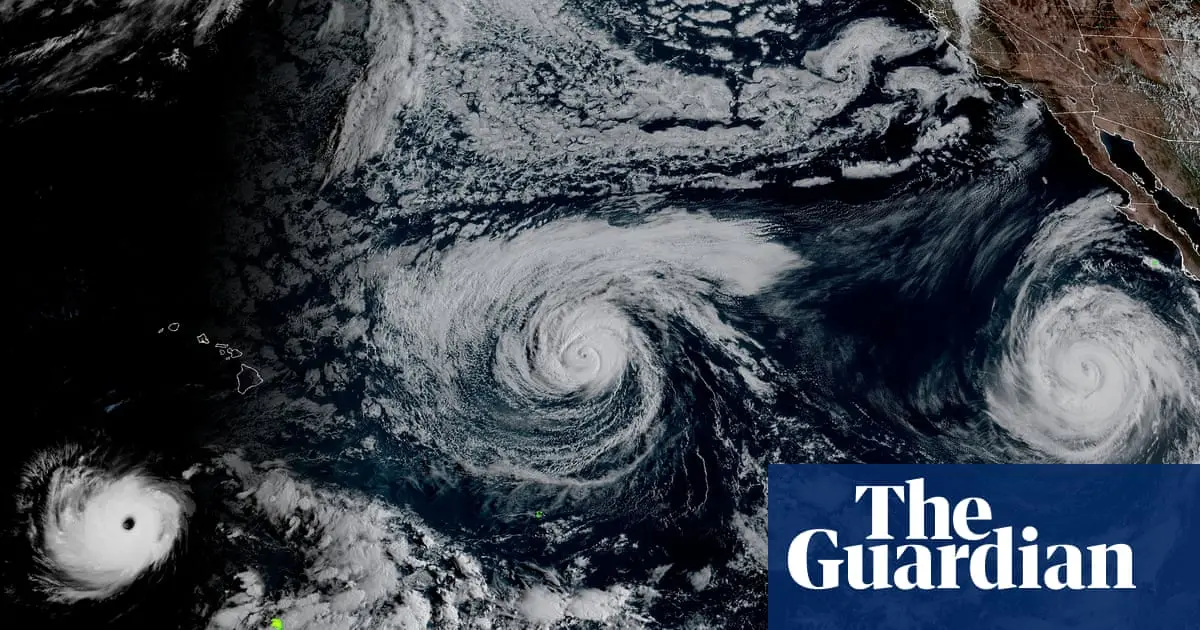
British intelligence chiefs warned government ministers about the catastrophic effects that the collapse of vital ecosystems around the world, driven by the climate crisis and the overexploitation of nature, could have on national security. Their report, which should have been published almost a year ago, was suppressed under Keir Starmer. The government is now briefing other countries' foreign ministers on the findings, seeking broader international support for more coordinated action to address the risks.
This is the first report of its kind, prepared by the UK's Joint Intelligence Committee, the interdepartmental advisory body that oversees intelligence agencies and monitors national security. The Guardian saw part of the report and spoke to people familiar with its contents. According to them, it warns of food shortages, conflict, mass migration and other threats, extending even to the risk of nuclear war or a breakdown in social cohesion.
These threats are not presented as a distant or unlikely possibility. The report says catastrophic effects, for example on the UK's food supply, could emerge as early as 2030. The country imports about 40% of its food, leaving it vulnerable to disruptions in global production.
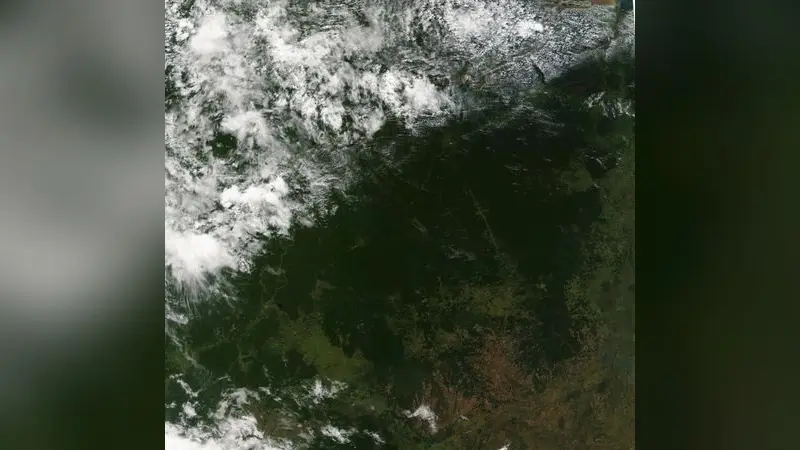
The report examined scenarios such as the collapse of the Amazon rainforest, which scientists warn may be approaching a transition from rainforest to a savannah-like system because of warming and deforestation. It also examined the emergence of new pandemics from deforested and overexploited areas, border disputes between countries affected by the climate crisis, the growing influence of Russia and China in critical mineral supply chains, and domestic tensions in the UK.
The collapse of ecosystems abroad, with a particular focus also on the Congo basin, could cause mass migration from areas that are no longer habitable. This in turn could trigger unrest, “more polarised and populist politics in the UK and its allies”, and greater pressure on national infrastructure. Conflicts could arise from competition for scarce food supplies.
One person who had seen the full report described it to the Guardian as “apocalyptic”.
The report was due to be published in full last October, ahead of the Cop30 climate summit in Belém, Brazil. However, Downing Street officials intervened at the last minute and blocked its publication. The Guardian revealed key findings through leaks at the time, as other media outlets later did, but nothing was officially released until January, when, after several freedom of information requests had been rejected, a partial summary was given to the think tank Green Alliance.
Scientists have issued many warnings about droughts, floods, storms and heatwaves if global warming exceeds 1.5°C above preindustrial levels. The difference here is that the warning comes from the Joint Intelligence Committee, the body responsible for national security. The committee examined the climate and nature crises in terms of their potential to harm the UK's security and defence, and concluded that the country is inadequately prepared.
The government has not issued an official response to the report. The fact that it has not been published means ministers can hide from its implications, according to Green MP Adrian Ramsay, who has repeatedly called for its publication. A parliamentary committee also tried to persuade ministers to disclose the findings and their response.
Meanwhile, the UK has cut overseas development aid, hurting the vulnerable countries where many of these ecosystems are located. International climate finance was reduced from a total of £11.6 billion for 2021–2026 to about £2 billion a year for the next two years, while protections for spending on nature and forests were removed.
This week, however, the government took its first steps to respond to the findings. Foreign Secretary and former Energy and Climate Secretary Ed Miliband, with the support of Prime Minister Andy Burnham, briefed foreign ministries from around the world, including those of the EU, Kenya and Australia, at a closed meeting at the UN General Assembly in New York. Ministers did not receive full copies, but oral summaries of the findings. Miliband also announced £330 million for the Global Environment Facility and £400 million for Brazil's Tropical Forests Forever Facility.
Jonathan Hall of Conservation International UK said the decision to abandon the established practice of allocating a substantial share of climate aid to nature and forests was “completely unjustified”, and that a clear target must be restored so that at least a third of British climate aid goes to natural ecosystems and tropical forests.

Comments