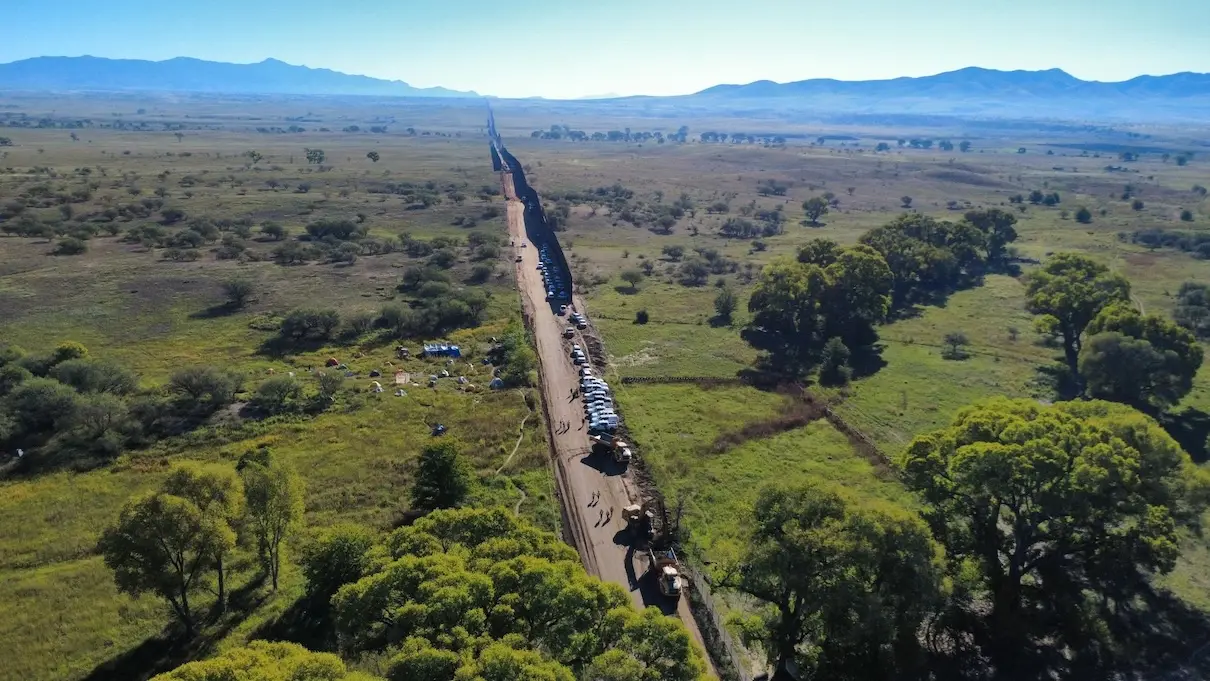
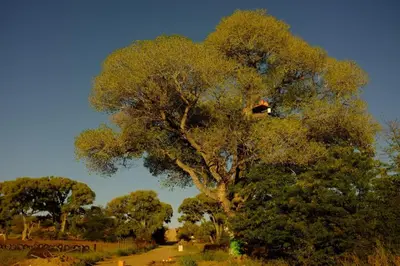
In Arizona's San Rafael Valley, a group of activists resisted construction of the new US border wall for weeks, defending centuries-old cottonwoods and the area's role as a wildlife corridor. The protest came to a head when a tree about 200 years old, known as "Grandmother Tree," was felled, prompting strong reactions on social media. One activist lived for more than 70 days in the tree's high branches, preventing contractors from cutting it down, while other activists sent him food and water using pulleys.
The tree occupation began on July 28, after workers had already cut down three of the four cottonwoods in the wall's path. The wall consists of two parallel steel walls, each about 9 meters high, with a security zone between them. According to the activists, helicopters, drones, Border Patrol agents and local police forces were operating in the area.
From the outset, the movement has linked environmental and social issues. Many of the activists participate in No More Deaths, an organization that provides water and assistance to migrants crossing the border, while others support the Tohono O'odham Nation's efforts to stop construction of the wall on Indigenous lands.
On August 18, the tree occupation became international when a Mexican environmental activist occupied one of the cottonwoods in the neighboring state of Sonora. Environmental activist Kate Scott described the temporary occupation as a powerful message of international solidarity. The cottonwoods became symbols of international friendship, as the branches of a tree in the US touched those of another in Mexico.
The San Rafael Valley is a well-known corridor for species such as jaguars, ocelots and the western yellow-billed cuckoo, which move between Arizona and Sonora without recognizing political borders. However, the US Department of Homeland Security waived dozens of federal laws, including the Endangered Species Act, invoking the REAL ID Act to speed up construction.
On September 14, protesters dressed as endangered species stood in front of the machinery, shouting "we're trying to cross the border" and "we will go extinct." Three were arrested on charges of disturbing the peace but were released the following day.
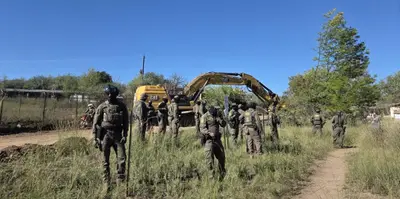
On October 5, according to two anonymous activists, Border Patrol agents sealed off the area around Grandmother Tree without showing protesters a warrant or court order and removed the activist from the tree using a crane truck before it was felled. The following day, an activist once again occupied a cottonwood in La Noria, Sonora, which they named "Abuela" (Spanish for grandmother), continuing the resistance.
Despite the loss, the activists stress that hope has not been lost: one of the felled trees had already produced new shoots, which they were able to use for cuttings. "The land will regenerate," an anonymous activist said. For them, the cottonwoods symbolize the resilience of the border region's ecological communities, while Abuela represents the continuing resistance to a wall that "breaks apart communities of people, plants and animals connected across the border."
The commentary's author, Meg Perret, an assistant professor at Texas A&M University, argues that protecting biodiversity in the border region requires recognizing both ecological and social connectivity: just as the wall fragments the natural landscape, US border policy divides local communities whose ties extend across the border.

Comments