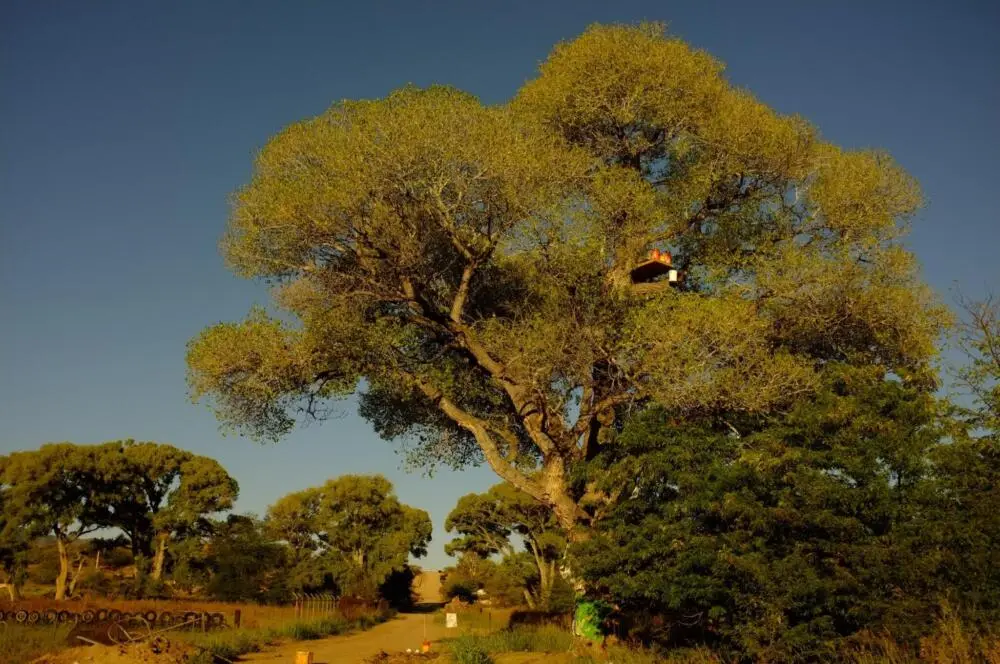
The last of four large poplar trees standing in the path of a new border wall in southern Arizona was uprooted on Monday, despite months of campaigning by activists to save it. The tree was removed to build a 30-foot-high barrier on the US border with Mexico. The other three poplars had been uprooted in July.
Activist Kate Scott and other protesters had been camping since June on private land near the base of the tree in the San Rafael Valley. They called the poplars 'grandmothers' and, according to Scott, the trees were more than 150 years old. Their crowns rose above the grassland along a stretch of the border east of Nogales.
As Scott described it, federal agents, some with their faces covered, arrived early on Monday morning and demanded that the camp be dismantled. Protesters shouted as workers uprooted the last poplar. She described the scene as extremely violent and said at least ten people were detained that day, while several were injured during the confrontation. An activist at the site said two more protesters were detained the following morning when work resumed.
The construction is part of the expansion of the border wall during President Trump's second term. Congress has approved $47 billion for hundreds of miles of new wall. In some places, a second 30-foot-high steel barrier is being built alongside an existing wall.
A spokesperson for U.S. Customs and Border Protection (CBP) said the agency recognizes the importance of protecting the environment, wildlife and cultural resources during construction. According to the federal government's statement, a survey before work began found no evidence of migratory bird nests in the trees. The spokesperson did not comment on the arrests.
Opposition over the project's environmental costs extends beyond these particular poplars. Local border communities allege that the federal government is rushing construction and causing environmental damage. In the summer, New Mexico officials said federal contractors had illegally depleted aquifer reserves by drilling wells without permits to supply the wall construction work.
For its part, CBP argued that unauthorized crossings also create environmental risks, linking them to litter, pollution and damage to sensitive habitats and agricultural land. Scott said the loss of the trees had strengthened the resolve of those opposing construction. In her view, it had also spurred greater involvement among people who had been following and supporting efforts to protect them.


Comments