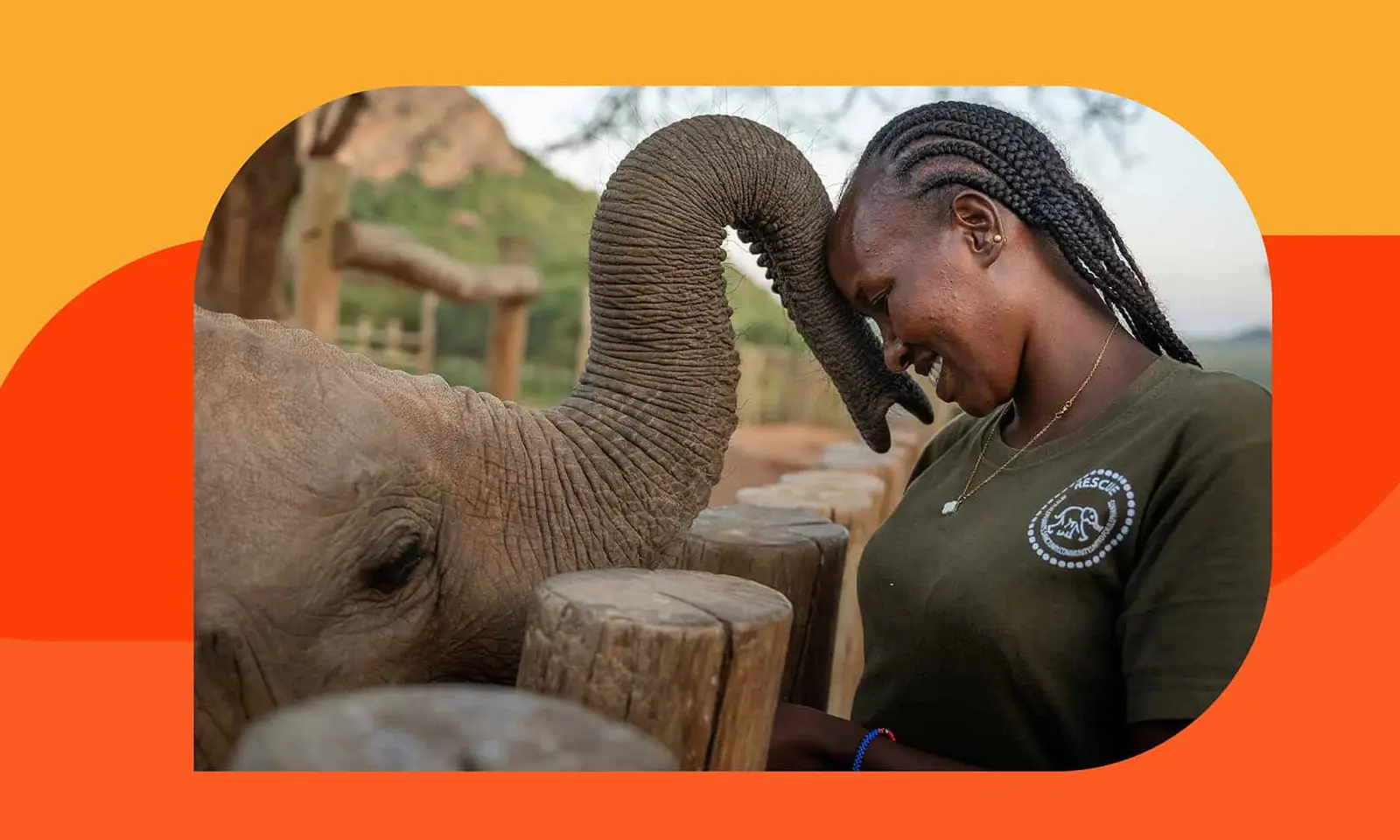
Dorothy Lowakutuk, one of Africa’s first female elephant keepers, recalls the night she drove through rain-soaked plains to reach Nemparwai, a newborn calf that had fallen into a well and arrived at Reteti elephant sanctuary in northern Kenya with swollen eyes and a bruised body. For two days Lowakutuk stayed beside her, talking and singing, until the calf finally scooped milk from her cupped hands. The keeper describes Nemparwai as 'my baby': the elephant would lie across her legs to sleep and would not feed unless she was near.
Reteti is not just a place where orphaned elephants are raised. According to Positive News, it is Africa’s first Indigenous-owned elephant sanctuary and part of a wider grassroots movement that places local communities at the centre of conservation. The surrounding landscape is home to Samburu pastoralists, who have long moved with the seasons and dug wells in dry riverbeds. It is also a patriarchal society, and Lowakutuk says she grew up wanting a different future after her father died and her mother struggled to support five children. She trained in community development and social work rather than seeking a city job, aiming to return knowledge to her community.
Reteti was founded in 2016 by Samburu elders working with conservationist Katie Rowe. Its board is 90% local, with the Sarara Foundation as operating and funding partner and other stakeholders including the Kenya Wildlife Service and Save the Elephants. The board decides staffing, management and how tourism revenue is split: 40% for operating costs and 60% for community projects. Lowakutuk began in the kitchens and now works as a keeper and visitor guide, preparing elephants for life in the wild until they are released between the ages of seven and nine.
She says those farewells feel like letting go of a child and that elephants taught her a different kind of leadership. 'Leadership has to grow from inside you, and then you’re chosen by your good deeds, not your bad ones,' she says. Last year Reteti returned 13 young elephants to the rangelands; since opening, it has reunited 60 stranded calves with their mothers. In the wider region, a mix of modern conservation, land management and Samburu bush knowledge has helped elephant numbers recover from a few hundred 30 years ago to more than 6,000, alongside leopards, lions, rare Grévy’s zebras and gerenuk.
The sanctuary’s economic footprint is also local. It employs 110 staff from Samburu communities, and around 1,250 'milk mamas' supply more than 20,000 litres of goat milk each month for the orphaned calves. Last year almost $342,000 was paid directly to Samburu women, many of whom opened bank accounts for the first time. Eco-tourism revenue has funded classrooms, bursaries and a touring Montessori school. Lowakutuk says Reteti has made women 'people to be believed in' and turned her into a community ambassador as well as an elephant ambassador.
Resson Duff of Maliasili, a nonprofit supporting community-led conservation, argues these tangible benefits give people a lasting stake in protecting landscapes. She points to other African examples: Herp Conservation Ghana helped establish the country’s first amphibian reserve on donated land, while Strong Roots Congo has supported 23 community forests spanning 600,000 hectares despite conflict. Duff says conservation has a multiplier effect across food security, health and rights, and that excluding communities creates enmity.
Reteti sits within Namunyak Community Conservancy, an 850,000-acre area established by Samburu elders in the 1990s to tackle poaching, restore degraded rangelands and provide alternative livelihoods. Under Kenya’s 2016 Community Land Act, the Samburu now have legal ownership and divide the territory into six zones run by local representatives who make decisions on land management, livestock movements and water access. Titus Letaapo of the Sarara Foundation says attitudes have shifted: communities once saw wildlife negatively because national parks cost them land and grazing, but now they own tourism facilities, receive salaries and see classrooms built.
Yet challenges remain. Dr Dilys Roe of the International Institute for Environment and Development says communities are asserting their rights, but power struggles persist because wildlife and land are valuable and governments or private agencies may not want to hand over control. The Northern Rangelands Trust, which supports community conservancies, has faced criticism over land rights, grazing restrictions and carbon project transparency. NRT says it does not own community land or impose a single grazing plan and that carbon revenues are decided by community governance structures. Namunyak left the NRT in 2022.
Against the wider pressures of climate change, human expansion and shrinking livestock corridors, Lowakutuk says the answer is simple: the people who walk the landscape every day understand the boundaries between wildlife and communities. 'They should be given priority, and respected in their decision-making,' she says. 'Empower them to talk about how they feel about conservation, and how it impacts them. That’s how you change the narrative.'

Comments