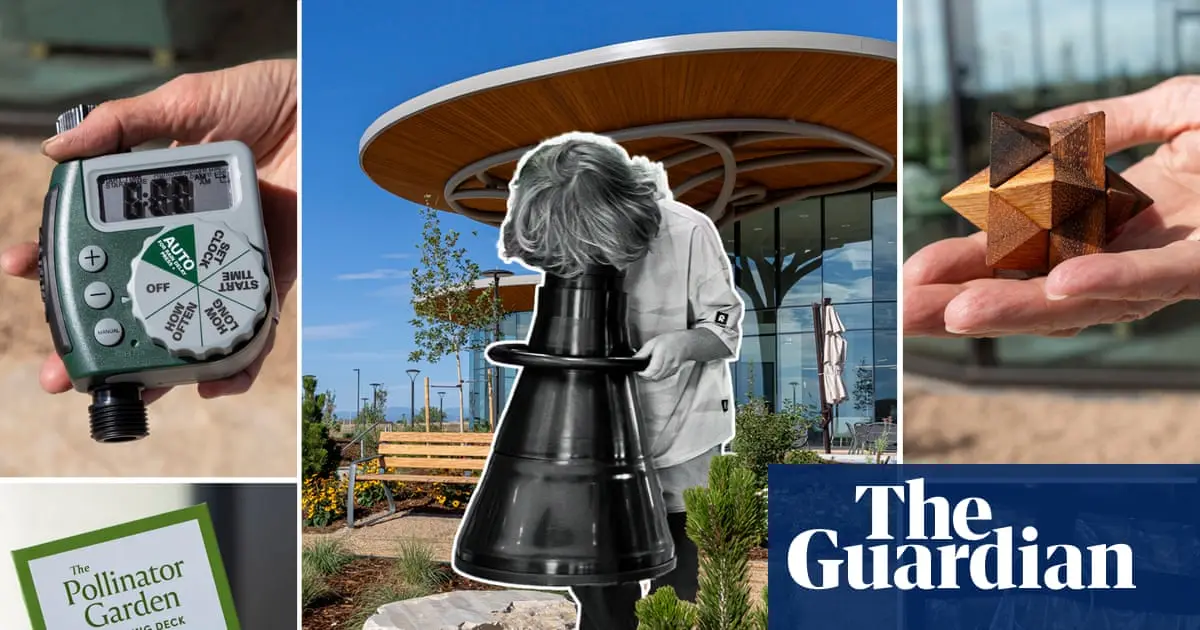
The first public nature library in the United States has been open since August in Adams County, Colorado, aiming to reduce the barriers separating people from nature. Mark Fink, executive director of Anythink Libraries, explains that many people cannot easily get out into nature and that the library wants to help them learn about the birds and plants in their neighborhood without needing a three-day trip to the mountains.
The collection includes around 40,000 items, mostly books, as well as 850 “try it” kits with birdwatching equipment, gardening tools, wildlife cameras, hiking equipment, microscopes and hammocks. The building is made of local stone, has 370 solar panels on its roof and uses a geothermal heating and cooling system. It stands on a former six-hectare ranch, with a hiking trail and eight gardens, including a sensory garden, a pollinator garden and gardens with plants from Colorado and the Rocky Mountains. Inside, children play among boulders from a local quarry, while free workshops cover activities such as birdwatching, gardening and hiking.
Fink also connects the project to the climate debate: as scientific studies on climate change are often challenged in the US, the library wants to give people the opportunity to learn for themselves about the climate, human impact on the Earth and ways to mitigate climate change. He says even twenty minutes in nature improves physical and mental health, while research shows that people who have more contact with nature are more likely to want to protect it.
Paula Jensen visited the library with her mother, 88-year-old Jeanette. She says it is difficult for an older woman to go up into the mountains, but the quiet rock garden was accessible with a walker. Her mother, who loves reading and puzzles, was impressed that she could borrow a wooden puzzle and a Danielle Steel book for free — she could not believe everything was free. Because of water shortages in Colorado, Jensen plans to borrow a book on designing a drought-tolerant garden.
Anna Amici, a scientist at a science education company, came with her husband Prashant and their two-year-old daughter Asha. She says Asha is growing up in a world where she will have to make difficult decisions about protecting the environment, and she would prefer her daughter to do so out of love for nature rather than a sense of doom. The family borrowed a pollinator garden planning kit and bird guides because they are thinking of replacing the lawn that dried out over the summer. Little Asha climbed on the boulders and played in the mud; later, the family created a patch of mud in their own garden. Amici plans to borrow a stargazing kit.
Nataliya Zasadko, a photographer and content creator focusing on family outdoor adventures, came with her seven-year-old son Marko. She thinks lending tents and hammocks is an excellent idea because camping equipment is expensive and many people do not know whether it is worth investing in. They borrowed a camera with a macro lens, which encouraged her son to photograph bees and flowers, and a GPS device, which Marko used to plan their route on an alpine trail, Santa Fe Peak, and guide them. The device would have cost 300 to 400 dollars and the camera 500, so borrowing them saved a considerable amount of money. They plan to borrow snowshoes and ice cleats in winter.
Alex Bueno, who came from Nebraska with his wife Monse and their six-year-old son Edgar, says that in Cuba, where he is from, nature seems wilder and more untouched than in the US. He and his son read books about insects, how they live and why they matter, which Bueno thinks could help Edgar be less afraid of them. He would like a library like this near Nebraska, too.
Ricarose Roque, a professor at the University of Colorado Boulder, studies children, learning and technology and visited the library with her seven-year-old son Miles. He is interested in natural disasters and borrowed a book about wildfires and a fire detection device that actually measures humidity, temperature, wind speed and wind direction. They plan to borrow night vision binoculars for hiking at dusk. Thanks to a bird book, Roque learned for the first time what a Steller's jay is and saw one. She says being able to borrow camping equipment makes the idea of camping in the mountains less daunting for her family.
The responses of early visitors show that the library serves as a lending collection, an education center and a shared resource that makes access to the outdoors more equitable. It is funded by a local property tax, and everything is free; for families struggling financially, this access is especially valuable. Colorado's example shows how a library can bring people closer to nature and environmental knowledge.

Comments