Wangari Maathai (1 April 1940 – 25 September 2011) was a Kenyan social, environmental and political activist who founded the Green Belt Movement, a nongovernmental organization focused on tree planting, environmental protection and women’s rights. In 2004, she became the first African woman to win the Nobel Peace Prize for her contribution to sustainable development, democracy and peace.
She was born into a Kikuyu family in a village in central Kenya. Through the Kennedy Airlift program, funded by Senator John F. Kennedy, she was selected among around 300 Kenyans to study in the United States. She studied biology at Mount St. Scholastica College in Kansas and earned a master’s degree in biology from the University of Pittsburgh, where she first encountered environmental restoration through efforts to clean up the city’s air. After returning to Kenya, she became the first woman in East and Central Africa to earn a doctorate, in veterinary anatomy from the University of Nairobi.
Early in her career, a job she had been promised was given to someone else; she believed this was due to prejudice based on her gender and ethnicity. She married Mwangi Mathai and had three children, but the marriage ended in divorce in 1979. Her husband reportedly believed she was “too strong-willed for a woman” and that “he could not control her.” Maathai was sentenced to six months in prison for contempt of court but was released after three days. Despite these difficulties, she continued teaching at the university and participating in social organizations.
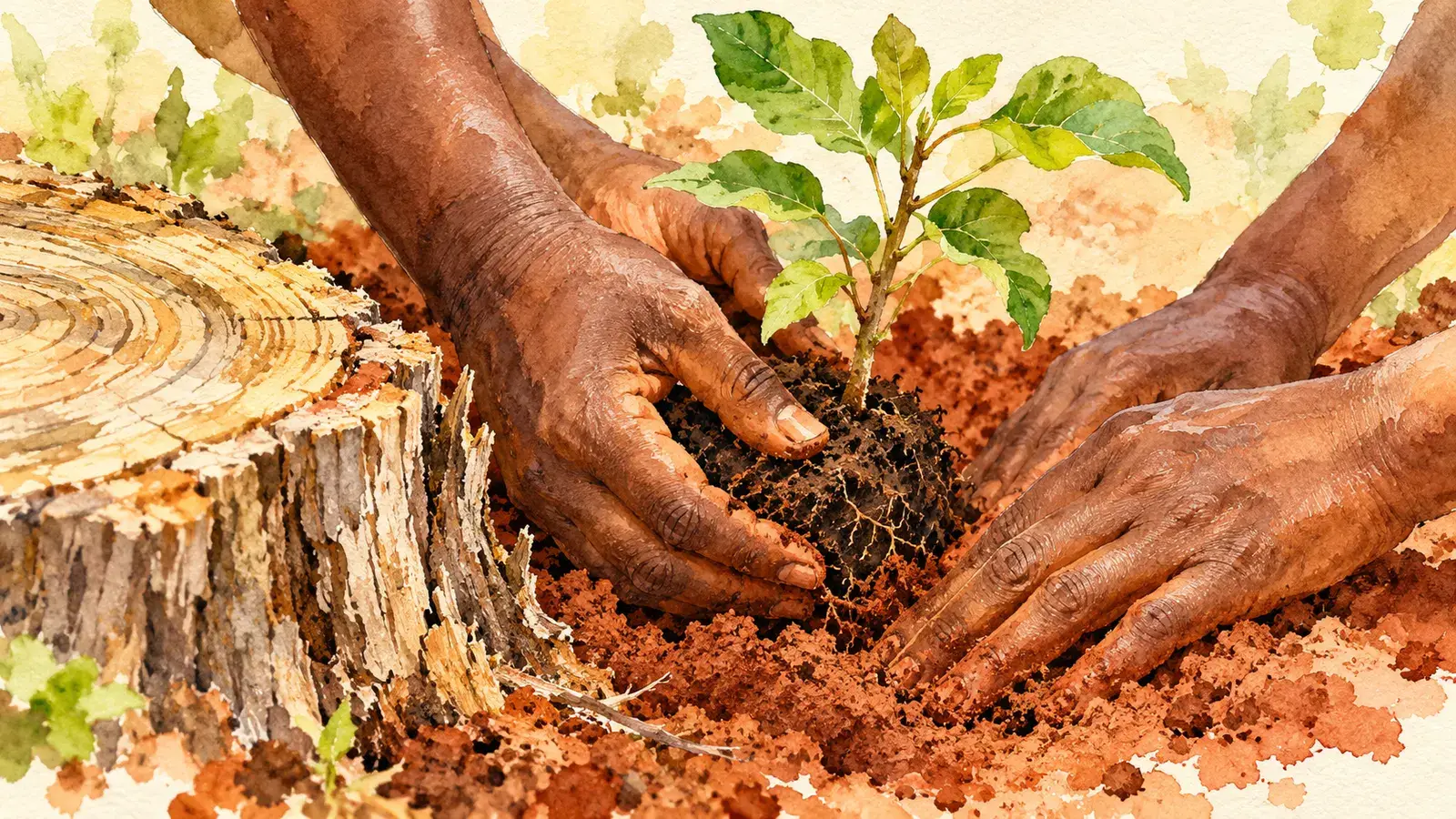
In 1977, speaking to the National Council of Women of Kenya, she proposed mass tree planting to address environmental degradation and create jobs. On 5 June 1977, World Environment Day, a march from central Nairobi culminated in the planting of seven trees in honor of historic community leaders. This was the birth of the Green Belt Movement. Maathai encouraged Kenyan women to establish nurseries and paid a small allowance for each seedling that was later planted elsewhere.
The movement quickly became linked to the fight against desertification, deforestation, water crises and hunger in rural areas. With funding from the United Nations Environment Programme and the Norwegian forestry association, it expanded across Africa through the Pan-African Green Belt Network. Representatives from fifteen African countries traveled to Kenya to learn how to establish similar programs in their own communities.
Maathai openly challenged President Daniel arap Moi’s one-party regime. In 1989, she opposed the construction of a 60-story complex in Uhuru Park, which would also include a statue of the president. Her letters to foreign organizations and her persistence led to international pressure, and the project was canceled in 1990. Through the media, the government called her “mad,” while the president said those opposing the project had “insects in their heads.”
In 1992, she joined a hunger strike at Freedom Corner calling for the release of political prisoners; police beat her, causing her to lose consciousness and be hospitalized. Despite the persecution, she continued to defend public forests. In 1999, she led protests against the privatization of Karura Forest and was attacked by guards, but the international outcry led to a ban on allocating public land.
In 2002, she was elected to parliament with the Rainbow Coalition, winning 98% of the vote in her constituency, and served as assistant minister for Environment and Natural Resources until 2005. In 2004, the Norwegian Nobel Committee awarded Maathai the Nobel Peace Prize, recognizing that her environmental activism was also a struggle for democracy and peace.
In her book Replenishing the Earth: Spiritual Values for Healing Ourselves and the World (2010), she linked ecology with spiritual values, Christianity and the indigenous Kikuyu religion, arguing that communities must take responsibility for their actions and mobilize to meet their local needs.
She died of ovarian cancer in 2011, leaving behind a movement that had spread beyond Kenya and a legacy showing that planting a tree can become an act of political resistance, economic empowerment and spiritual exploration.

Comments