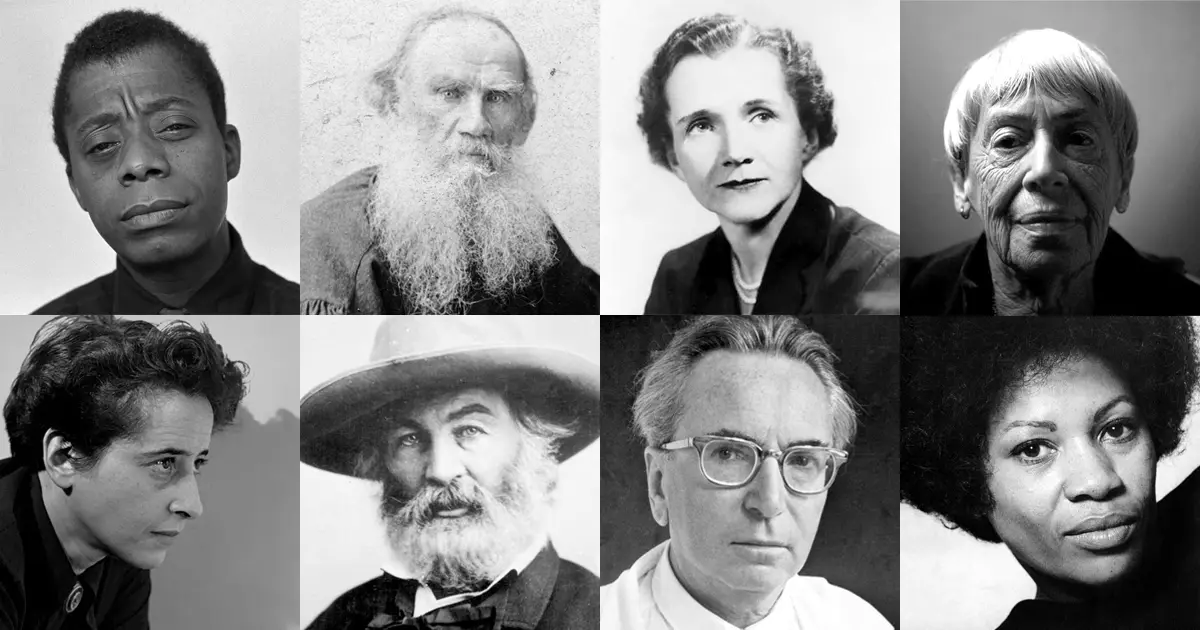
On January 1, 2022, The Marginalian published an essay titled “Resolutions for a Life Worth Living”, which turns the wisdom of people who lived before us into suggestions for how to live now. The central idea is that philosophy, as a love of wisdom, can serve as a resolution in reverse: instead of wondering what we will do in the future, we consider how we would wish we had lived.
Hannah Arendt, who arrived in the US as a refugee from Nazi Germany, examines in her work on Saint Augustine how attachment to the illusion of permanence limits life. She writes that those who fear death fear life itself, since life comes to know itself through anxiety. Love, she points out, seeks fearlessness, and this exists only in the calm of the present, in the “now”.
Toni Morrison, the first writer with Black skin and XX chromosomes to win a Nobel Prize, celebrates the body in her novel Beloved as a deeper starting point for self-respect. She urges us to love our hands, mouth, the back of our neck and even our internal organs, because this flesh needs love. The heart, she writes, is the prize: we must love it more than our eyes, feet or lungs.
Viktor Frankl, a psychiatrist who survived a concentration camp, argues in lectures recently published as Yes to Life that we give meaning to life not only through our actions, but also through our devoted love of the beautiful, the great and the good. He describes a thought experiment: if someone asked a listener deeply moved by their favorite symphony whether their life had meaning, the only answer would be that it was worth living for that moment alone. The same applies, he says, to nature or the presence of a particular person.
In the final years of his life, Leo Tolstoy collected sayings by thinkers alongside his own reflections in A Calendar of Wisdom. There, he notes that the kinder and more considerate a person is, the more kindness they see in others; kindness makes mysterious things clear, difficult things easy and boring things joyful. When faced with evil, he advises, we should respond with kindness, because this destroys the pleasure an evil person takes in their wrongdoing.
James Baldwin sees behind the cruelty between people our inability to bear the fact that we are human, vulnerable and mortal. Yet he believes that only love can save us: we are saved by one another sometimes, even if not often. In a poetic piece, he adds that the earth shifts, the light changes, the sea grinds against the rock; the moment we stop holding one another, the sea swallows us and the light goes out.
Rachel Carson, a marine biologist and the author of Silent Spring, writes in her letters that writing is lonely work: the creator cuts themselves off from everyone and faces their subject alone, in a place that can be a little frightening. She does not, however, regard solitude as a bad thing; on the contrary, anyone who wants to be truly creative needs this inner isolation, and its rewards are rich and particularly satisfying.
Ursula K. Le Guin reminds us that human communication is not simply a transfer of information but a relationship between speaker and listener, embedded in a language, a society and a culture. Speech, she explains, is a bodily process that creates an intimate sphere around those listening; words are events that change both people. The essay contrasts this power of conversation with written exchanges of messages, which are suitable for practical matters but fail in emotionally delicate moments.
Seneca advises his friend Lucilius not to be miserable before a crisis arrives, because we suffer more often in imagination than in reality. The greatest harm of unnecessary worry, he warns, is that we keep ourselves constantly on alert instead of living.
Centuries later, Bertrand Russell suggests gradually broadening our interests so that the walls of the ego recede and our life joins with something larger, like a river flowing into the sea.
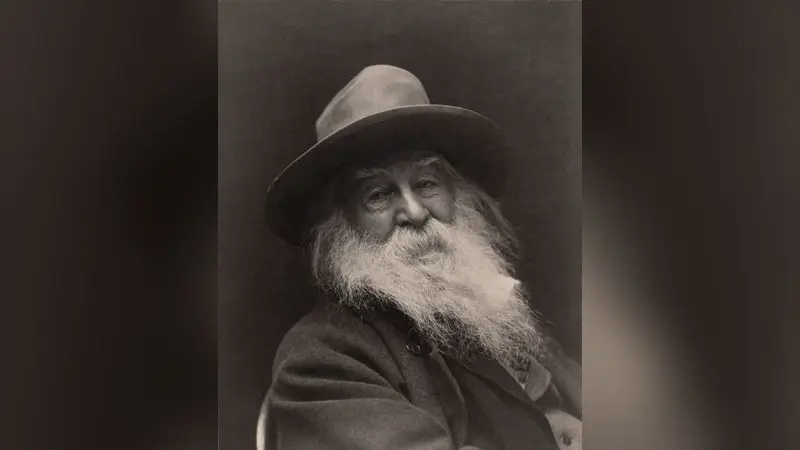
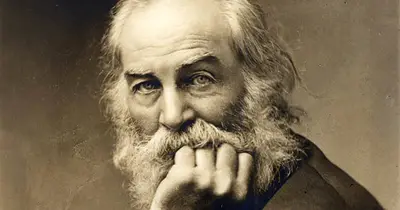
The essay's tenth idea comes from Walt Whitman, who urges us to love the earth, the sun and animals, to reexamine what we have been taught and to reject whatever insults our soul. The eleventh, broader ethos concerns interpreting others charitably and understanding them, and invokes Thich Nhat Hanh, who reminds us that understanding is another name for love. Seeing others more charitably and choosing understanding over being right is, the essay concludes, the greatest gift we can give one another.
Comments