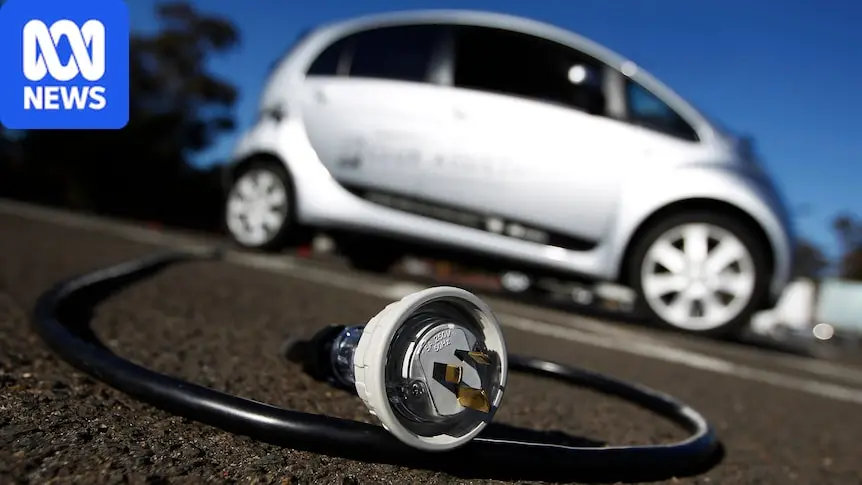
An electric car is sold every 100 seconds in Australia, according to the Electric Vehicle Council. In the tenth-anniversary edition of its annual State of Electric Vehicles report, the council finds that electric vehicles have become a mainstream choice within a decade, accounting for one in four new cars sold in the country. Sales more than doubled in a year, while last month electric cars outsold petrol and diesel cars for the first time.
“Households across Australia are adopting electric vehicles as a way to tackle the cost of living,” said Julie Delvecchio, chief executive of the Electric Vehicle Council. Owning an electric car is no longer a luxury for wealthy inner-city residents, as electric cars are approaching the price of petrol models, with some selling for under $20,000.
This year's surge is being driven by suburban commuters, with the highest uptake in Tarneit, about 30 kilometers west of Melbourne. “It's a very typical Australian suburb, with people who have mortgages of $600,000 to $700,000,” said Aman Gaur, the council's head of Legal, Policy and Advocacy. “They rely on their cars, they don't have three forms of public transport on their doorstep, and for them the sensible financial choice is an electric car.”
Australians now have access to nearly 200 electric models, while incentives such as the fringe benefits tax exemption have helped drive growth. The start of the conflict with Iran in February and the disruption to shipping through the Strait of Hormuz sent fuel prices soaring this year, helping to push the number of electric vehicles on the roads above 600,000.
“Australia is an island at the end of a long fuel supply chain, holds only a few weeks' reserves and imports almost all its fuel,” the report says. “Every car that charges instead of filling up is a permanent improvement to our energy security.”
Although 2026 may be a turning point for electric passenger cars, meeting Australia's climate targets requires a revolution in the national fleet. There are around 21 million cars on Australian roads, and electric cars account for just 3% compared with vehicles powered by internal combustion engines. “While the doubling of electric vehicle uptake over the past year is great news, Australia needs to maintain this momentum to stay on track to meet its climate targets,” said Helen Rowe, head of transport at Monash University's Climateworks Centre. The report notes that electric vehicle uptake in Australia is not on track for the targets of reducing emissions by 43% from 2005 levels by 2030, and by 62 to 70% by 2035. “That 2035 target requires 5 million battery electric cars on the roads by the middle of the next decade — a significant acceleration from the current trajectory,” the council says.
The other obstacle is charging infrastructure; it is growing, but not quite keeping pace with uptake, according to Aman Gaur. “We need a coordinated charging plan that will give Australians confidence that they can get out on the roads and charge their car, truck or van,” he said.
Per capita, Australia consumes more diesel than the US, China and Saudi Arabia. The biggest diesel user is the transport and freight sector, which has barely begun to electrify. This is not due to a lack of electric trucks; although they remain more expensive, there is a growing number of options. “China, the undisputed leader in truck electrification, saw electric trucks account for more than 50% of monthly sales in December 2025 and already appears well on the way to meeting its new 2030 target for 40% of heavy truck sales to be electric,” the report says.
Most freight operators in Australia are small businesses with very narrow profit margins, and according to Aman Gaur, the cost of switching to electric trucks remains prohibitive. “There aren't enough financial incentives for small family-run operators to make the switch to electric, which means Australia continues to import diesel and its economy remains dependent on those imports,” he said.
The report describes Australia as a “global laggard” in electric truck adoption, as rules such as road weight limits are “complex and notoriously difficult to reform”. With almost no policy support and virtually no dedicated charging infrastructure, electric trucks have not reached even 1% of total truck sales. This contrasts with European markets and New Zealand, where strong freight electrification policies are pushing heavy electric vehicles beyond the “early adopters” group. “Electrifying Australia's heavy freight vehicles is the biggest untapped opportunity in the country's energy transition,” the report concludes.




Comments