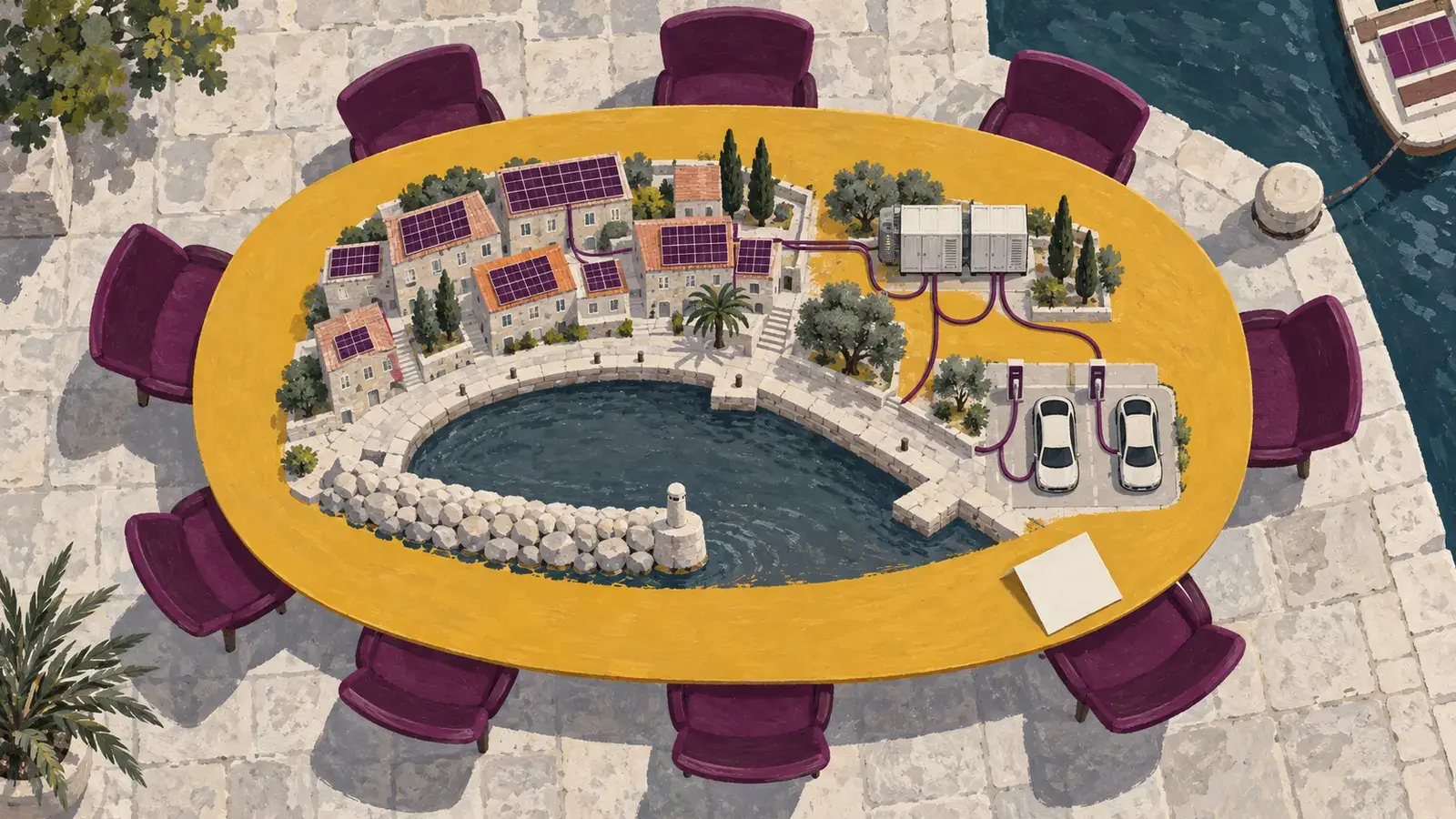
The nine Mediterranean European Union countries that make up the MED9 group agreed to accelerate the energy transition, without setting specific targets or timetables. In the declaration adopted in Split, Croatia, they link the shift to renewables and the reduction of carbon dioxide emissions with two needs: addressing climate change and ensuring an affordable and secure energy supply. Energy forms part of the meeting's broader development goals, which also included security and migration.
The leaders describe the Mediterranean as a region particularly exposed to climate change. In the declaration, they list extreme heat, drought, water scarcity, wildfires, floods and desertification, along with growing pressure on land, marine and coastal ecosystems. On this basis, they describe strengthening climate resilience as urgent and seek emissions cuts across all sectors.
The second main rationale concerns the vulnerability of fossil fuel supplies. According to the report, Russia's war against Ukraine and the conflict between the United States and Israel and Iran highlighted this vulnerability, causing shortages and price increases. MED9 representatives argue that the EU must reduce its critical dependence on imported fossil fuels so that it can better withstand disruptions to supply and prices.
To achieve this change, they propose expanding clean energy sources and electrification, diversifying energy sources and supply routes, and developing domestic energy resources. They also call for stronger energy infrastructure and greater storage capacity. The low-emission electricity generation they support includes both renewables and nuclear energy. According to the declaration, the energy transition offers a structural approach to reducing energy dependence and the impact of geopolitical crises on prices.
Participants also emphasize the T-MED initiative for clean technologies under the Pact for the Mediterranean. They call for its implementation to benefit businesses and the renewable energy sector in both the EU and its partner countries. This reference accompanies the declaration's broader directions on clean energy, infrastructure and supply resilience.
The declaration was signed by the heads of state or government of France, Greece, Italy, Croatia, Malta, Portugal, Slovenia and Cyprus, together with Spain's secretary of state responsible for the European Union. The text recognizes dependence on fossil fuel imports as a source of vulnerability and sets out a shared political direction for addressing it. However, the absence of numerical targets and deadlines leaves the scale and pace of the agreement's implementation unclear.
Comments