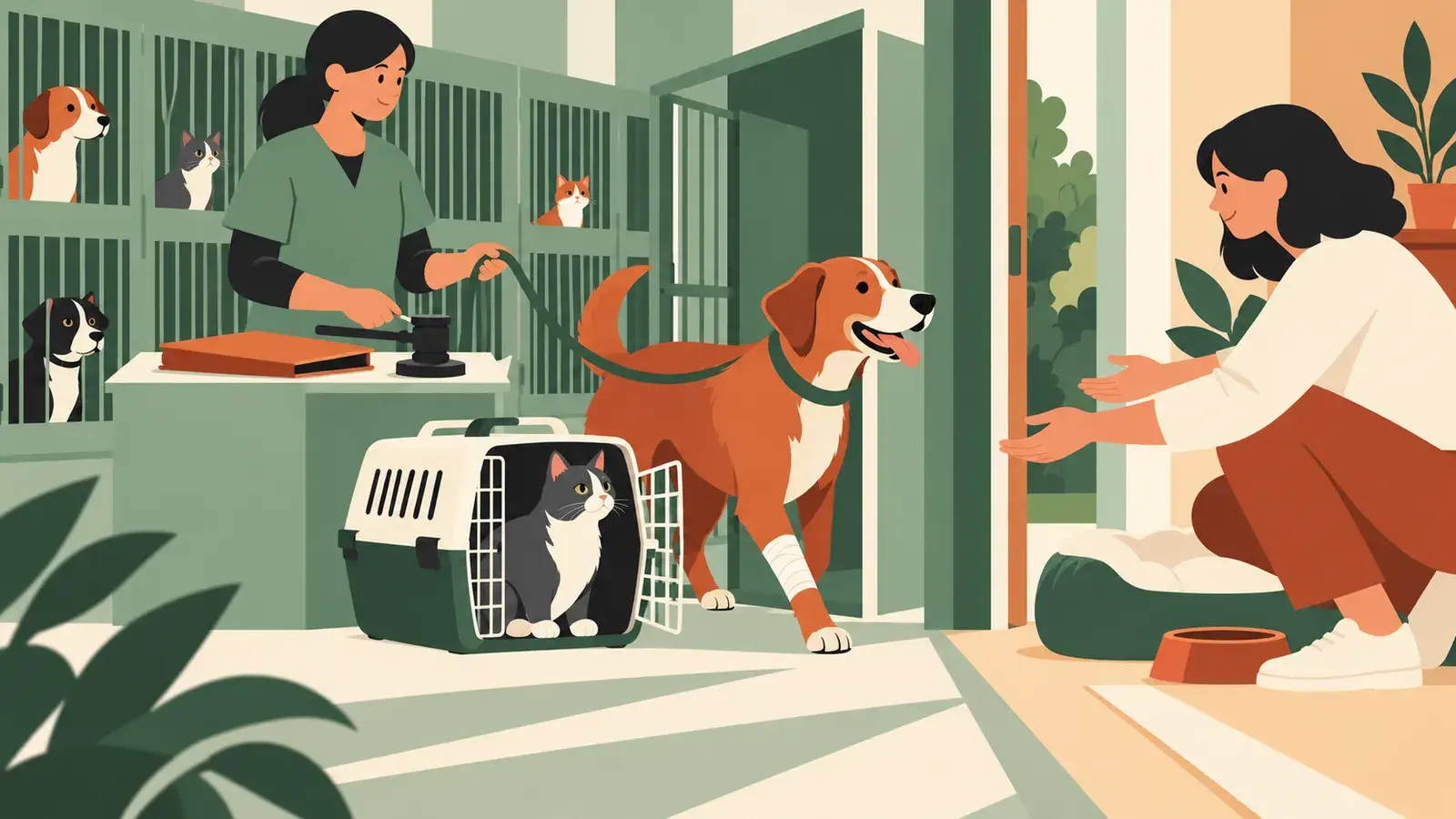
California Governor Gavin Newsom signed a law that seeks to shorten the time abused and neglected animals spend in municipal shelters while their owners' criminal cases proceed. The measure concerns animals removed from their owners and held as evidence. According to its supporters, it opens the way for fostering or adoption so that dogs and cats can move to suitable homes sooner instead of spending months in cages.
AB 2344, introduced by Assemblymember Matt Haney, addresses a gap in existing legislation covering animals seized without a warrant by police or animal control officers. It allows them to be considered abandoned after 14 days, enabling the shelter to proceed with fostering or adoption procedures. Such a case may arise when a police officer sees a dog being abused and removes it on the spot. The 14-day period therefore concerns the designation of the animal as abandoned, rather than guaranteeing that an adoption will be completed.
The waiting times described in the report show the scale of the problem. According to figures provided by the Los Angeles County district attorney's office, animals held as evidence can remain in shelters for three months to nearly a year. Judie Mancuso, founder and president of Social Compassion in Legislation, said she knows of cases in which dogs stayed there for 300 days or more. This length of time is linked to the progress of the owner's case, extending the animal's stay in the shelter.
A 2022 Los Angeles Times investigation documented that, for years, the city had kept dogs from abuse or neglect cases confined to their cages without allowing volunteers to exercise them. One of these animals was Bruce, whose owner had injured him by cutting his throat. The dog spent seven months in the shelter while investigators sought to bring charges. Visitors described him as trembling and frightened, while the pending criminal case prevented regular walks and time in the yard with volunteers.
Los Angeles Animal Services staff had explained that volunteers generally could not walk these dogs because, unlike other shelter animals, they were not owned by the city. Their ownership status therefore had direct consequences for their daily care. Haney argued that needlessly prolonging the animals' confinement makes it harder for them to recover from abuse. According to him, the new law makes it easier to move them, providing a tool for courts and shelters.
According to the report, prolonged confinement in a cage can cause repetitive pacing, destructive behavior and anxiety. These changes can make the animal harder to adopt, further reducing its prospects of finding a home. The article says this situation can ultimately even lead to euthanasia by the shelter. The intended faster move to a foster family or new owner therefore concerns both living conditions and the chances of future adoption.
Supporters of the measure also cite pressure on facilities and the cost to taxpayers. In a letter to Newsom, Special Assistant District Attorney Daniel Felizzatto said that housing a dog or cat in Los Angeles County costs about $35,550 a year. He argued that unnecessary shelter stays for animals from abuse or neglect cases contribute to overcrowding and harm their behavior. Mancuso described the months-long stays as inhumane and particularly costly for taxpayers.
Los Angeles County District Attorney Nathan Hochman and Social Compassion in Legislation supported the bill. According to Felizzatto, designating an animal as abandoned allows the shelter to begin the next steps toward placing it in a home. Supporters present the measure as a way to reduce a wait that harms animals while their owners' cases continue. Newsom's office did not respond to the Los Angeles Times' request for comment.



Comments