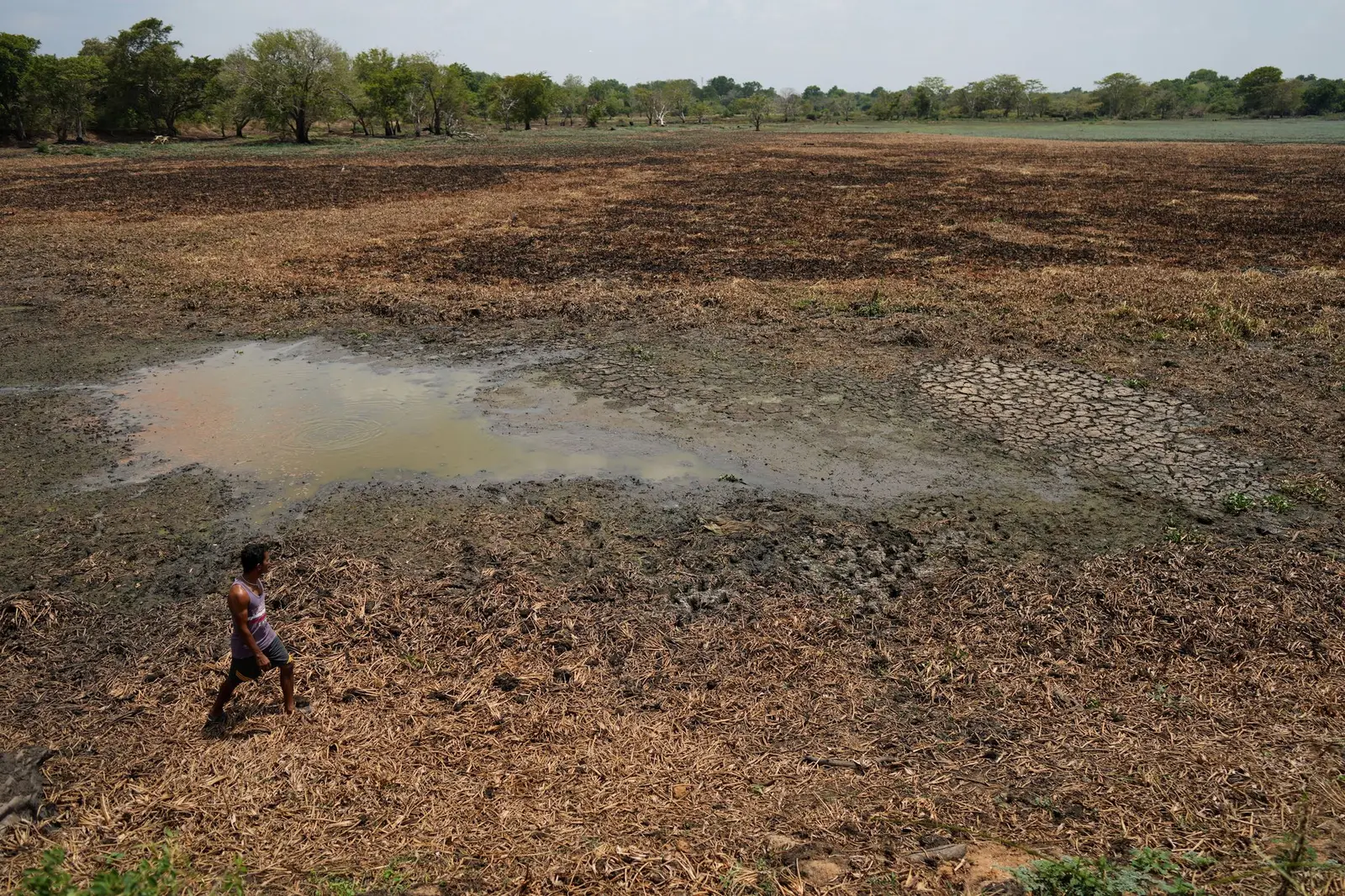
Sri Lanka has been facing a prolonged drought for months, causing severe water shortages, emptying reservoirs and affecting farming communities that depend on the seasonal monsoons, according to an Associated Press report from the Medirigiriya area.
The situation is worsened by higher-than-usual temperatures in many parts of the country, while high humidity intensifies heat stress. “We feel like we're being hit from all sides,” says farmer Samantha Pushpakumara. “If there is no water and we have to give up farming, we will have nothing left to live on.”
Climate experts say the lack of rain is likely due in part to a strong El Niño—the natural, temporary warming of ocean waters that shifts weather patterns around the world—combined with warmer temperatures caused partly by human-caused climate change.
Sri Lanka receives rain from two main monsoon systems. The southwest monsoon, which lasts roughly from May to September, usually supplies up to 30% of the country's annual rainfall, but this year there was very little rain through late September. “We cannot say for certain whether it is due to climate change, as we need more data. But events like these have been increasing in recent years,” said Gayana Krishanthi Hedavitharana, a climate scientist at Sri Lanka's meteorological department.
Recent showers brought some relief to parts of the island. However, experts say the scattered rainfall will not be enough to replenish reservoirs and groundwater after months of drought. The country's 74 reservoirs have been at around one-third of their capacity in recent weeks, resulting in water rationing in many parts of the island.
In Medirigiriya, one of the worst-affected areas, rice farming is central to life. In wetter years, rain fills the irrigation tanks, and the water stored there is released during the growing seasons. This year, much of that landscape has been transformed: the ground is dusty and brown, vegetable gardens that once provided food and income have withered, and cattle search for feed in the dried-up tank beds.
In villages where household wells have run dry, residents wait outside their homes with plastic barrels, bottles and cans for water deliveries provided free by Sri Lanka's government and charities. Indika Nuwankumara, a father of three, says the drought has left him heavily in debt: he is struggling to repay a $1,500 loan he took out for farming, as the rice, okra and eggplants he planted on his 32 stremmas of land have been destroyed.
The search for water is also unfolding inside Sri Lanka's wildlife sanctuaries, such as Yala National Park in the southeast. Elephants, deer, water buffalo, crocodiles and many bird species normally gather at watering holes to drink or cool off in the scorching heat. Most natural and artificial ponds have dried up, and wildlife officials say the animals are suffering from dehydration and heat stress.
Authorities are using water tankers and underground pipes to replenish watering holes inside some sanctuaries. Official figures show that temperatures in the affected areas have exceeded 35 degrees Celsius, drying out vegetation and depleting many natural water sources.
In Medirigiriya, Vidanaarachchige Wimalasuriya says he managed to harvest only six sacks of rice, after borrowing money expecting to harvest at least 50. “The lack of water and the excessive heat destroyed my crop,” he says. “I couldn't give the plants water when they needed it most.” He notes that last year his home and field were flooded: “Now we're facing drought. I no longer know what's happening with our weather.”
Comments