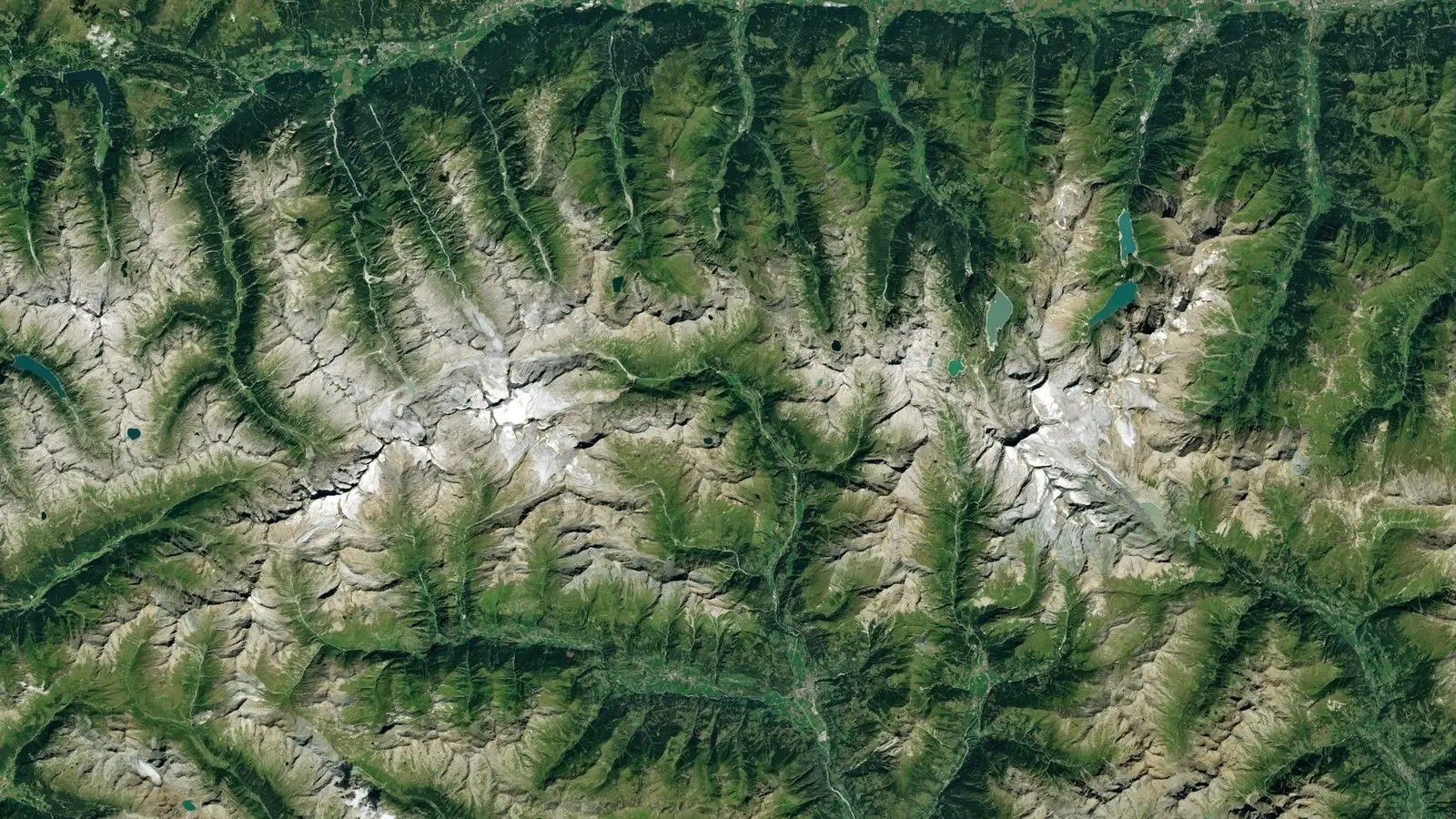
Satellite observations from the Landsat program, published by NASA’s Earth Observatory, show how radically Pasterze, Austria’s largest glacier, has changed beneath Grossglockner, the country’s highest mountain. What was once a broad river of ice flowing through the Alpine valley has now broken into pieces and retreated sharply uphill. Pasterze began retreating in the mid-19th century, but its losses have accelerated in recent decades.
In 1985, ice accumulated high in the mountains and descended toward the valley through several steep icefalls. By August 2026, most of these connections had disappeared. The glacier had retreated much farther up the valley, leaving exposed ground and water behind, while much of its surface appears dark because it is covered in rocks and other debris.
Researchers have recorded only seven years of slight glacier advance since 1879. Since around the 2010s, so little ice has arrived from higher elevations that the glacier’s lower section barely moves. One of the last major connections between the upper and lower sections had disappeared by 2020, and a waterfall now flows where ice once joined the two areas.
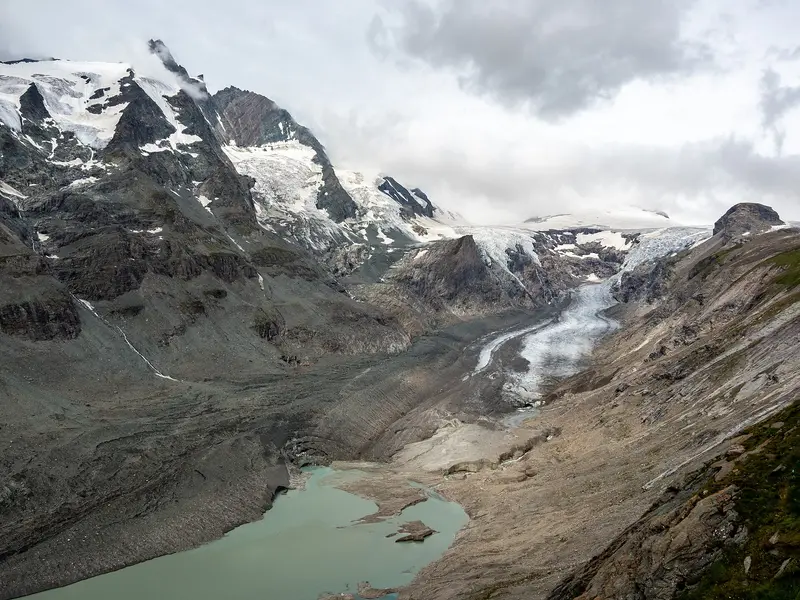
Only one icefall remains: Hufeisenbruch. Its shrinkage is striking. Researchers measured a width of nearly 900 meters in 1998. By August 2025, the remaining connection was just 120 meters wide.
The problem is not simply melting at the lowest point. Less ice is moving down from the upper accumulation zone to replace what is lost. In addition, as the surrounding rock becomes exposed, it can radiate extra heat toward the remaining ice.
Despite Europe’s warm summer, Hufeisenbruch remained intact when observers photographed it in mid-August 2026. Andreas Kellerer-Pirklbauer, a researcher at the University of Graz and co-head of the Austrian Alpine Club’s glacier monitoring service, estimated that the connection could survive at least until 2027, provided autumn and winter temperatures are relatively normal.
Ice loss has also changed the landscape farther down the valley. As Pasterze retreats, meltwater collected near its terminus and formed a proglacial lake. Satellite images show the lake growing. Researchers who monitored it from 1998 to 2019 found that its surface area increased exponentially. They also recorded large chunks of ice breaking off where the glacier meets the water, while some slabs of ice detached from the lake bed and rose to the surface.
These lakes are more than a visible sign of retreat. The water can contribute to further ice loss, while the sudden drainage of glacial lakes can cause catastrophic flooding downstream.
Pasterze’s transformation is part of a much broader retreat across the Alps. Almost all Austrian glaciers lost ground in 2024 and 2025, while conditions remained difficult in 2026, with a warm, dry spring in Austria. Western Europe then experienced its warmest combined June and July on record.
If Hufeisenbruch melts or collapses, the lower glacier will be cut off from the ice that once replenished it from above. This change would also cost Pasterze its long-held title: Austria’s largest glacier would become Gepatschferner, another rapidly changing mass of Alpine ice in the Ötztal Alps in Tyrol.
For now, the last narrow strip of ice remains, marking a connection that has survived while the Alpine landscape around it has been transformed.



Comments