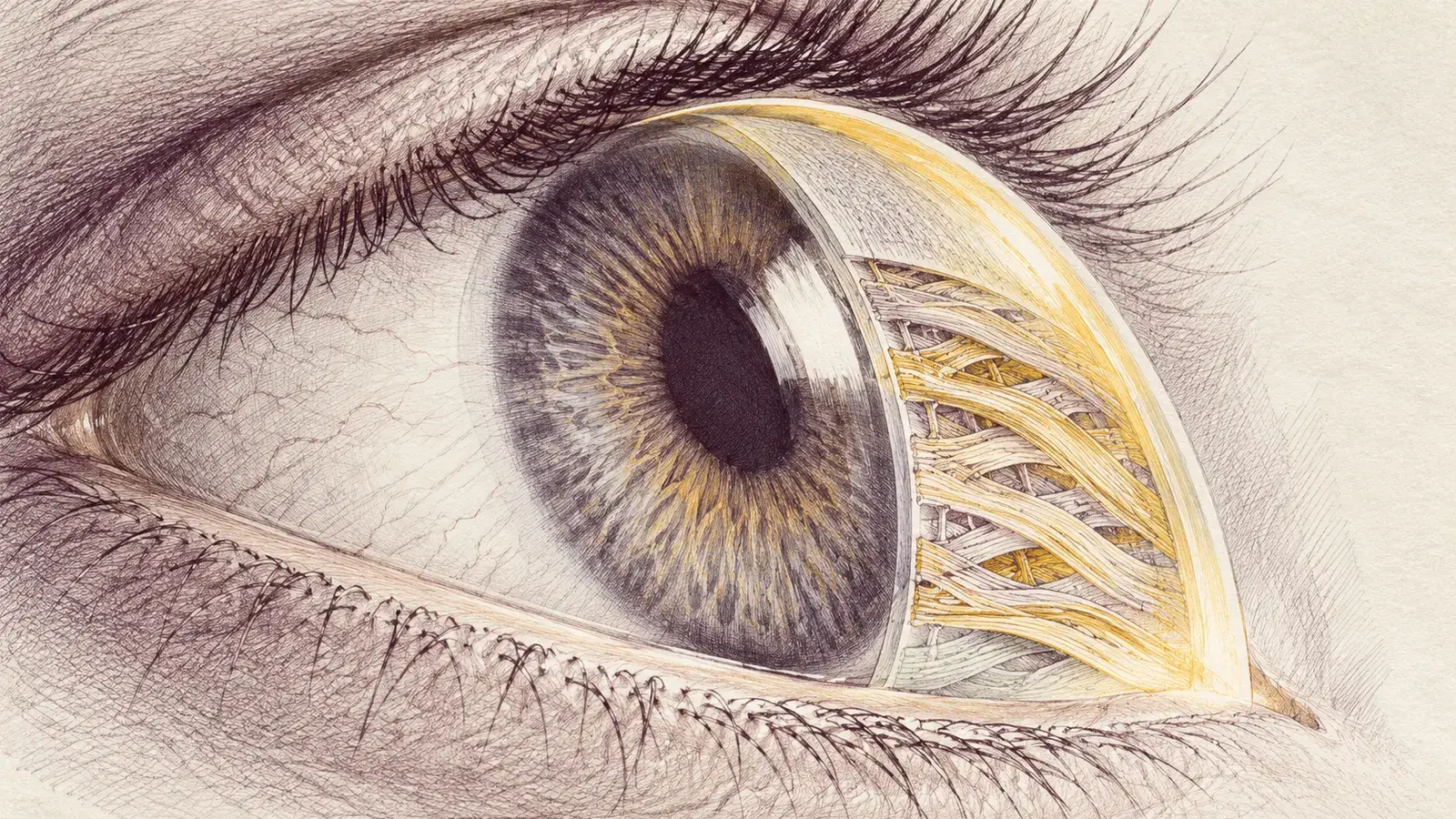
Glaukos announced positive results from its long-term Phase 3 extension study, GLK-202-03, of Epioxa, an epithelium-on corneal collagen cross-linking treatment for keratoconus. According to the company's press release, the three-year data show sustained improvements in corneal shape, gains in visual acuity and a favorable long-term safety profile after a single treatment.
The study followed a group of patients who had received treatment in the second pivotal Phase 3 trial, GLK-202-02. A total of 38 eyes from 35 people were included, and 92% of eyes completed the third-year visit. No additional intervention was needed during the extension period.
Eyes treated with Epioxa achieved a sustained improvement of 1.9 diopters in maximum corneal curvature, known as Kmax, compared with baseline. This is considered an indication of meaningful long-term flattening and stabilization of the cornea. In terms of visual acuity, 29% of eyes gained two or more lines of best-corrected visual acuity from baseline, while 20% gained three or more lines.
Regarding safety, no serious adverse events, treatment-related adverse events or discontinuations due to adverse events were recorded during the three years of follow-up. The product's safety information, presented separately without attributing the rates to the three-year study, states that the most common adverse reaction was conjunctival hyperemia, or eye redness, at 31%. Other adverse reactions occurring in 5% to 25% of eyes included corneal haze, photophobia, punctate keratitis, eye pain, irritation, increased tearing, corneal epithelial defect, eyelid swelling, corneal striae, reduced visual acuity, dry eye and inflammation in the anterior chamber.
Glaukos president and CEO Thomas Burns said the long-term results strengthen the view that Epioxa can provide lasting clinical benefits for patients with keratoconus. He added that the sustained improvements in corneal shape and visual acuity, combined with the excellent safety profile, support the position that this is a transformative treatment advance for patients with keratoconus.
Epioxa is described as an innovation in keratoconus care because it offers an incision-free alternative to traditional collagen cross-linking procedures, as it does not require removal of the corneal epithelium. It is a topical treatment with supplemental oxygen that is bioactivated by pulsed ultraviolet light. According to the company, it is designed to significantly reduce the pain associated with epithelial removal, simplify the procedure and minimize recovery time.
Epioxa HD and Epioxa are indicated for adults and pediatric patients aged 13 and older, in combination with the O2n system and Boost Goggles. The formulations are riboflavin 5'-phosphate ophthalmic solutions at concentrations of 0.239% and 0.177%, respectively, for topical ophthalmic use and not for injection or intraocular use. Keratoconus is a sight-threatening condition of the cornea that, according to the company, remains substantially underdiagnosed and undertreated.
Glaukos is an ophthalmic pharmaceutical and medical technology company focused on treatments for glaucoma, corneal disorders and retinal diseases. The results come from an announcement by the company itself rather than an independent publication, so confirmation by external researchers would be useful for a full assessment of the treatment.




Comments