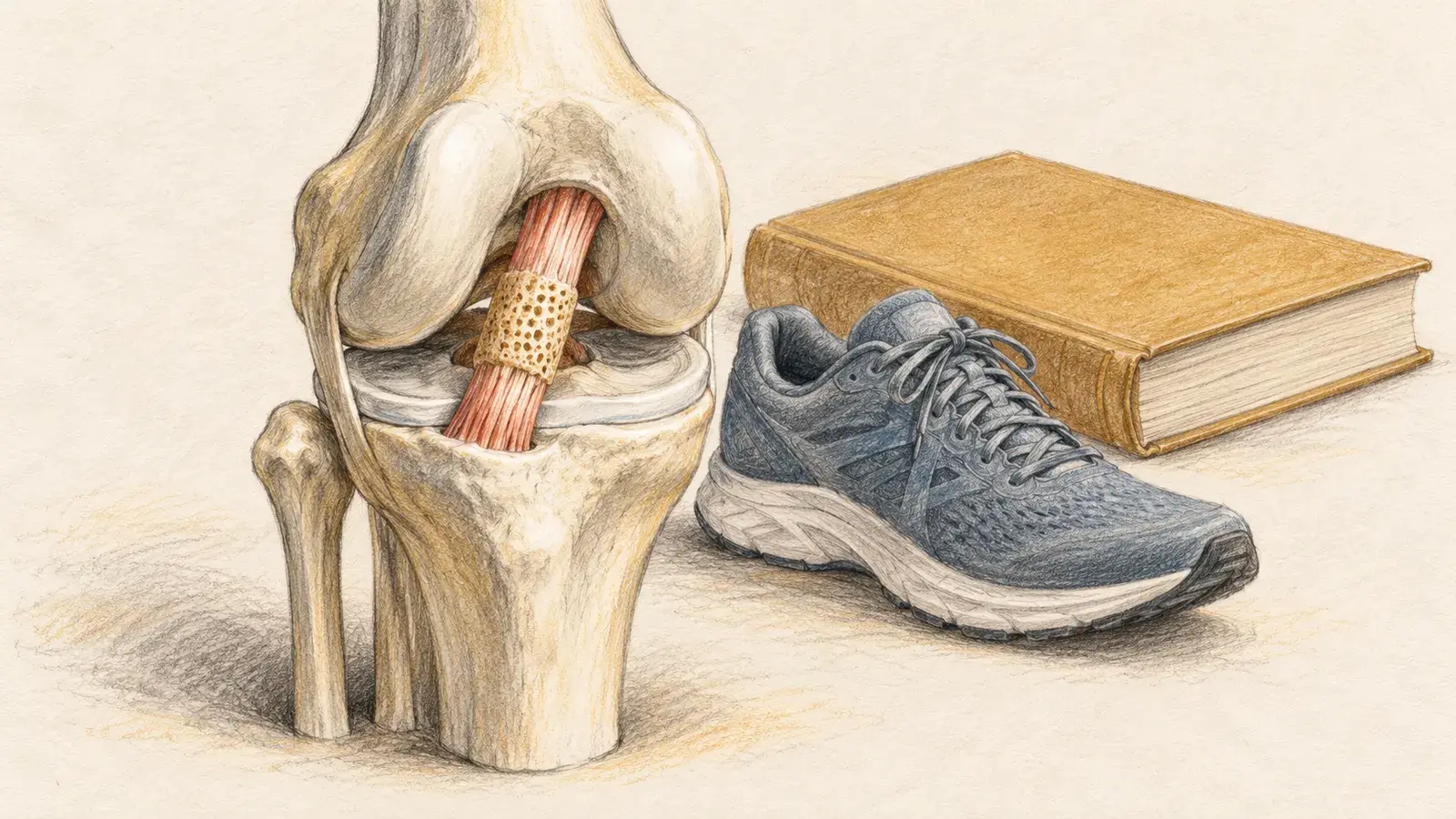
Miach Orthopaedics announced the publication of two-year results from the Bridge registry in the journal Knee Surgery, Sports Traumatology, Arthroscopy (KSSTA), showing low retear rates and clinically meaningful improvements in knee function in real-world clinical practice. The publication coincides with the number of patients treated with the BEAR Implant in the US since its launch surpassing 10,000.
Among the first 100 patients in the Bridge registry followed for two years, the overall anterior cruciate ligament retear rate was 5.6%, with no retears during the first postoperative year. Among patients treated with the modified surgical technique, the rate was 2.5%, compared with 8.0% with the original technique. Patient-reported scores showed substantial and sustained improvement: at two years, the mean IKDC score was 87.4, while KOOS scores were 94.7 for pain, 97.6 for activities of daily living and 88.2 for sport and recreation function.
The authors note that the improvements were clinically meaningful, with postoperative scores exceeding established patient acceptable symptom state thresholds. The analysis's lead author, Jocelyn Wittstein, said the results reflect real-world use of the implant since its launch and show low retear rates across a broader range of patients than the initial studies. The registry includes younger, high-risk patients and older, lower-risk patients, and the findings, she said, give surgeons greater confidence when selecting candidates.
Although the BEAR Implant itself has not changed since its launch, the study documents how the surgical procedure has evolved through experience with its commercial use. Surgeons are increasingly adopting modified approaches with different fixation methods, stronger sutures and alternative suture patterns. The rehabilitation protocol has also been refined based on the experience of surgeons and physical therapists, with the aim of supporting healing and safe patient progress. A key point is individualized progression toward a return to activity at a pace that supports the healing ligament; 87.2% of patients who played sports before their injury had returned to sports by two years.
Miach Orthopaedics president and CEO Jamal Rushdy described the results as excellent and said they provide real-world validation of the procedure since its launch. Combined with the experience of more than 10,000 patients, the data demonstrate, he said, the momentum of adoption by surgeons. He added that the company is on track to set the standard of care for joint preservation through anterior cruciate ligament restoration.
The Bridge registry (NCT05398341) began in May 2023 to evaluate real-world outcomes with the BEAR Implant. A total of 300 patients were enrolled at nine centers, including AdventHealth, Boston Children's Hospital, Duke University, Hospital for Special Surgery and Stanford University School of Medicine. The primary endpoints include knee function and how the knee feels, assessed using the subjective IKDC (International Knee Documentation Committee) scale at two years, and knee laxity assessed using a Lachman score at one year, while KOOS (Knee Injury and Osteoarthritis Outcome Score) domains were also measured at two years.
The BEAR Implant received initial De Novo authorization from the US Food and Drug Administration (FDA) in 2020. In 2025, the indication was expanded to children aged 2 and older, with no upper age limit, and to partial anterior cruciate ligament tears. In 2026, the labeling was updated to reflect a reduced risk of post-traumatic osteoarthritis compared with reconstruction using a hamstring tendon autograft.
The BEAR Implant is a proprietary collagen-based product that facilitates healing of a torn anterior cruciate ligament. It is the first medical technology demonstrated through Level 1 clinical evidence to allow the body to heal its own ACL. Unlike reconstruction, it does not require a second surgical incision to harvest a healthy tendon from elsewhere in the leg or a donor tendon. The surgeon injects a small amount of the patient's own blood into the implant and places it between the torn ends of the ACL in a minimally invasive procedure; as the ligament heals, the BEAR Implant is absorbed by the body.
In patients aged 14 and older with associated knee injuries, restoration with the BEAR Implant reduces the risk of post-traumatic osteoarthritis (Kellgren-Lawrence grade 2 or higher) at 6 years after surgery compared with reconstruction using a hamstring tendon autograft. The implant is indicated for adults, adolescents and children with a complete or partial anterior cruciate ligament tear confirmed by MRI, provided there is a ligament stump attached to the tibia.



Comments