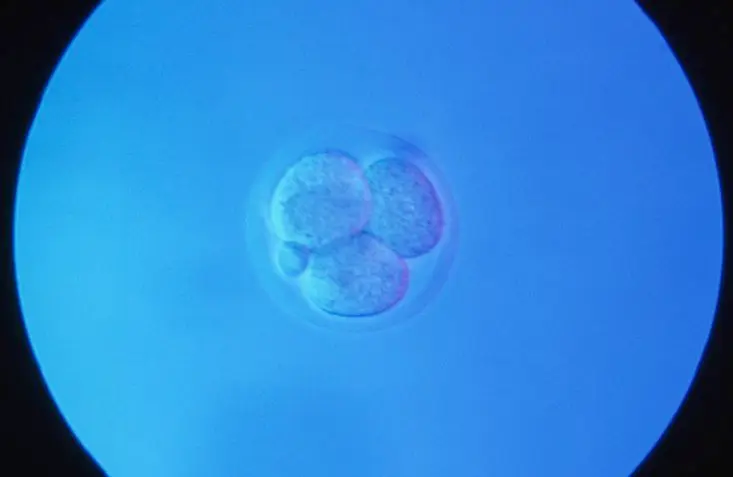
Two research teams used DNA recording systems to reconstruct the ancestry of cells during mouse embryonic development, through advanced stages of organ formation. The studies, published in Science and Cell, provide detailed maps of successive cell divisions and the pathways leading to different cell types. This process is difficult to track because embryos develop inside the uterus and cannot be observed continuously. The new methods use the genetic material itself as a record of this history.
The Science study was led by Jay Shendure, a professor of genome sciences at the University of Washington School of Medicine and a Howard Hughes Medical Institute investigator, and Chengxiang Qiu, a molecular and systems biologist at Dartmouth College. The team used DNA Typewriter, a cell lineage tracing technology developed by Shendure and Junhong Choi. The researchers redesigned the system's recording "tape" to make the history easier to retrieve from individual cells and incorporated it into the genome of a fertilised mouse egg.
During the fertilised egg's first division, a series of genetic modifications left distinct marks in the two daughter cells. In subsequent divisions, new cells inherited the marks already recorded and acquired additional marks of their own. Shared patterns thus revealed which cells had a common ancestor, while the order of the records showed the sequence of developmental branching. According to Shendure, such systems enable measurements over time where direct imaging is hindered by tissue opacity and genomic analyses capture only a single moment.
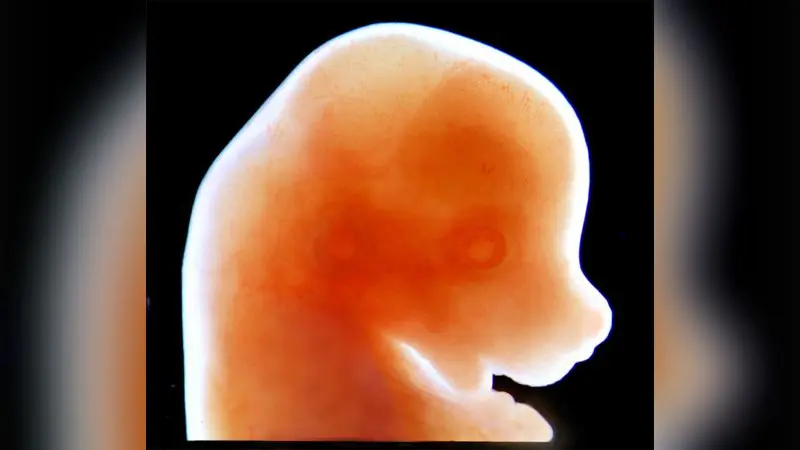
The experiment was attempted in 100 fertilised eggs and yielded 10 embryos for examination. One had the most complete record, allowing the team to link almost every cell it analysed to one of the embryo's first two cells. Although one of these two initial cells produced more descendants, the two branches generated a variety of cell types in almost equal proportions. The study's most detailed reconstruction was therefore based on the embryo with the most informative record.
The chronological order of the records also made it possible to estimate when different cell types began following separate developmental pathways. Blood and retinal cells committed to their specific identities relatively early, while those forming the skin's outer layer did so later. According to the researchers, the results show that cell identity is not determined in a single, synchronised step. Instead, the developmental possibilities of each cell lineage narrow on different timelines.
Earlier tracing techniques often used enzymes that cut DNA, risking damage to cells, erasure of previous records or exhaustion of the available storage capacity. Others left marks without a clear order, meaning the chronological sequence had to be inferred afterwards. Haedong Kim, a postdoctoral researcher at UW Medicine and one of the lead authors, argues that DNA Typewriter avoids these problems. As he explains, it writes without cutting completely through the DNA, maintains a relatively stable record and stores modifications in strict order, allowing greater resolution over a longer period.
In the Cell study, Jonathan Weissman and his colleagues used PEtracer, a precision genetic editing system, to map cell ancestry in more than 1.4 million cells from 16 mouse embryos. Together, the two papers show that reconstructing cell family trees in mammals is possible on an unprecedented scale. Weissman describes the achievement as proof of principle that mapping comparable to that carried out in a nematode worm in 1983 can now be attempted in mammals.
The researchers believe these records provide a framework for studying normal organ formation and the points where development goes awry. More complete records could help research into congenital malformations, neurodevelopmental and genetic disorders, and cancer, or guide the development of stem cells in the laboratory. Applying the methods to more embryos and different experimental conditions could, according to the team, support more quantitative and ultimately predictive models of mammalian development. These remain possibilities for future research, while the current result concerns mapping cellular history in mouse embryos.



Comments