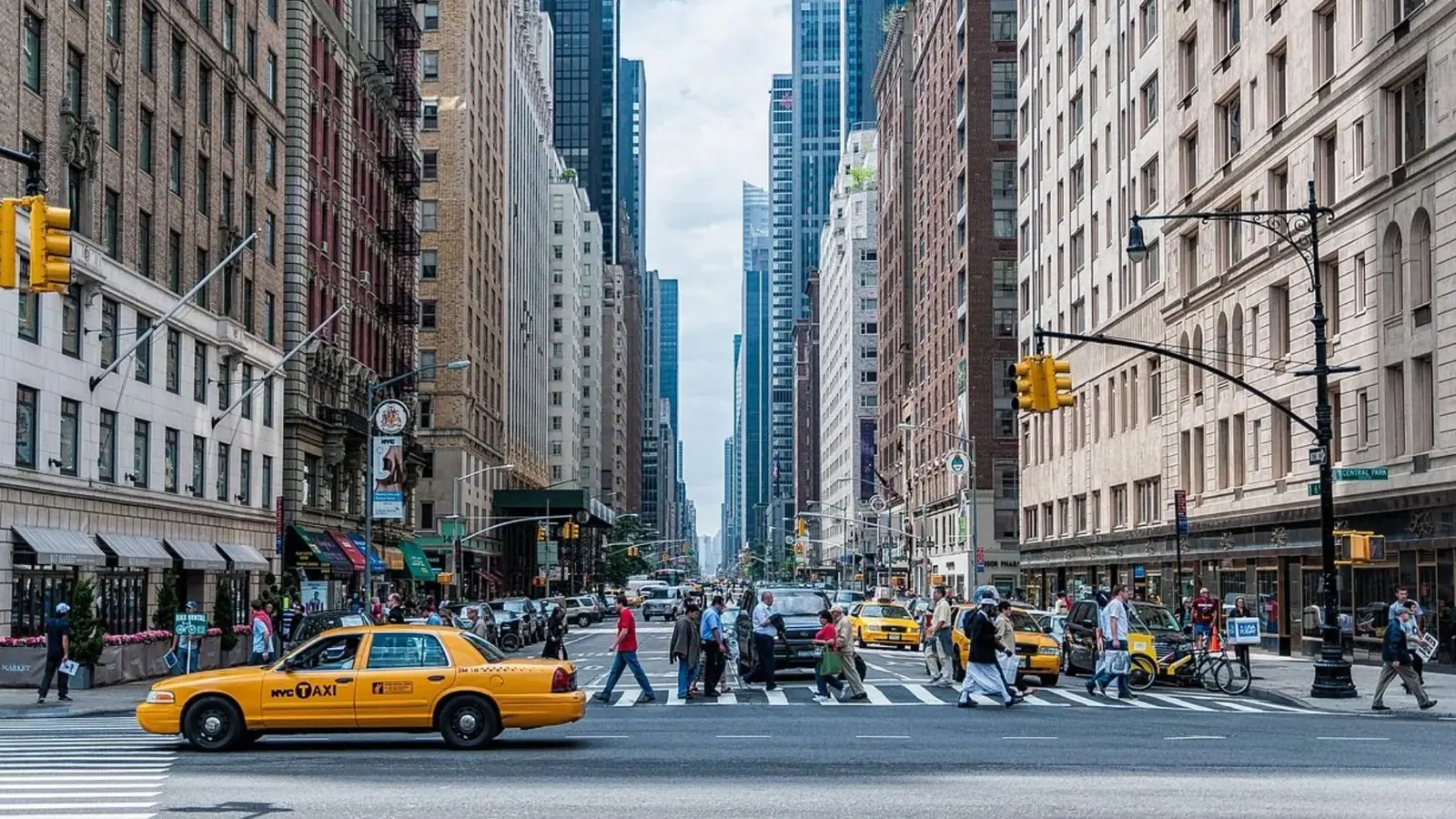
Concentrations of fine particulate matter in Manhattan's congestion pricing zone were about 13% lower than expected during the policy's first year, according to a new study. The estimate was based on a comparison with trends recorded at sites outside the zone. The researchers consider the result encouraging, but stress that it is still too early to draw firm conclusions about the cause of the reduction.
Since January 5, 2025, most vehicles entering Manhattan's central business district have been subject to a daily charge. The amount ranges from $1.05 for motorcycles at night to $21.60 for certain trucks and buses during peak hours. The program aims to reduce both traffic congestion and air pollution.
Researchers at the Lamont-Doherty Earth Observatory, part of the Columbia Climate School, conducted the analysis. They examined measurements of fine particulate matter, known as PM2.5, from six sites and compared levels in 2025 with those from 2022–2024. Lower concentrations were recorded at all six monitoring sites.
The largest reduction was observed at the intersection of Broadway and 35th Street, outside Macy's flagship store. The smallest change was recorded at Queens College, the monitoring site farthest from the congestion pricing zone. The 13% finding specifically concerns the concentration inside the zone compared with what was expected based on trends outside it.
Collecting a full year of data was necessary because PM2.5 levels vary with the seasons and weather conditions. The study's first author, Polina Goldberg, explained that measurements covering an entire year help show whether changes in air quality persist across different seasons and conditions. The results were published in Environmental Science & Technology Letters.
Daniel M. Westervelt, a co-author of the study and an associate research professor at Columbia, said the program appears to be largely working. He described the reduction in particulate pollution inside the zone as moderate. The authors' caution remains significant: the results support a possible positive effect of the policy, but do not yet conclusively establish a causal link.
The study did not examine whether the lower PM2.5 concentration led to specific health benefits. Earlier research, however, has documented significant public health benefits from other measures to tackle air pollution in New York over the past two decades. The new findings offer an early indication that congestion pricing may also contribute to cleaner air.



Comments