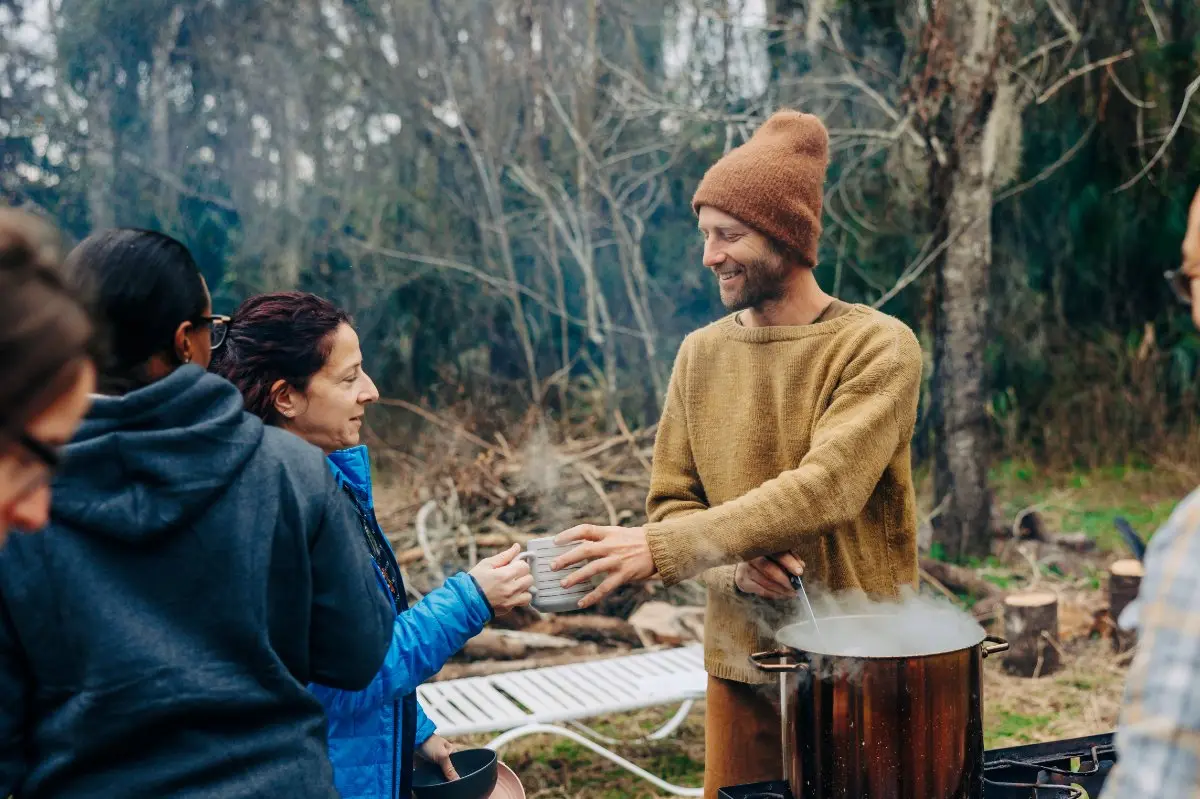
On 8 October, activist, author and speaker Robin Greenfield completes a full year of eating and using medicinal remedies made exclusively from what he gathers in the wild — without buying or growing anything. The project began in late 2025 and, as he says in an interview with Civil Eats, it is a “deep exploration of food”.
This is not the first time he has attempted something like this. In 2018, he decided to grow and forage everything he ate for a year, an experience that left him in “excellent health and good spirits” and that he documented in his 2024 book Food Freedom. Now he has gone a step further: he eats only wild food. Based in northern Wisconsin, he goes out almost daily to gather wild rice, acorns, greens, herbs, mushrooms and apples, while also eating species most people do not consider, such as chokeberries and basswood. For salt, he uses salt he collects from the ocean, and he makes medicinal teas from wild plants, elderberries, mushrooms and herbs.
Greenfield sees foraging as a way to peacefully protest against the industrial food system, which he considers extremely destructive to the Earth, people, plants and animals. As he explains, the experiment shows whether it is possible to live outside this “broken system” and care for ourselves in a way that is in harmony with the Earth and benefits ecosystems. He believes one of the biggest problems of our time is the “illusion of separateness” between people and the Earth. Foraging, he says, dissolves that illusion and creates a sense of belonging, meaning and purpose, of being truly “at home” on Earth.
His pantry is built around two staples, wild rice and acorns, and also includes plenty of fish and venison, apple, plum and pear sauces, mushrooms such as maitake and “hen of the woods”, and greens such as watercress, nettles and basswood. Among herbs, he singles out monarda and wild onion, while among fruits he often eats chokecherries, a species many people do not know. He supplements these with walnuts, black walnuts, hazelnuts, hickory nuts and pecans.
There is no typical foraging day, he explains. Some days he goes out for many hours, for example to gather wild rice, while on others he eats food he has already stored. He also shares his message through foraging walks, talks, media appearances and full-day immersion experiences. After harvesting, he spends time processing food, such as shelling acorns or making applesauce. He writes, makes videos and manages a nonprofit team of around five people, while on his travels he usually stays at friends' homes and spends time with them. His days can be very full, with several hours of driving.
Greenfield is cautious when asked whether foraging can address food insecurity. For the average person facing a shortage of food, he says, foraging will not provide all the calories they need, because it requires time and skills. But he points out that one of the main problems is access to nutritious food — and that is where foraging can help immediately. Abundant nutrient-rich greens, medicinal herbs, plants for teas and antioxidant-rich fruits such as Autumnberry and chokecherry grow right beside us, although many people consider them poisonous. Some of these fruits can provide months of supplies in a single afternoon. Many people, he says, become less food insecure through foraging.
The personal change is profound. Greenfield says he no longer thinks about supermarkets or restaurants; going outside to gather food and medicine feels completely normal to him. The main limit on continuing indefinitely is time, not desire. The experience, he says, dissolved part of the illusion of separateness: he feels more connected, more “at home”, more whole. Many cravings and desires have subsided, and he is more content with who he is — something he attributes to his relationship with plants. As he notes, he often hears the same theme from other foragers or growers: a relationship with plants brings a sense of fulfilment.
After the experiment ends, he intends to continue eating 100% foraged food for at least a month, but to open his pantry to food gathered by anyone else, making it a more communal experience. He will then move on to foraged and homegrown garden food, followed by food from small local farms. He is even considering a full year outside the global industrial food system, something he considers easier than gathering everything himself. His intention, he says, is to free himself from that system permanently, although he admits it is difficult when most people he knows eat from it. He wants to support food that truly benefits the Earth and local communities.
His advice to the public is simple: learn one plant at a time. You only need to know one plant to eat from it — a dandelion in the yard, Plantago, berries or elderberries in vacant lots. Food and medicine, he says, grow freely and abundantly around us. If someone learns just one plant a month, they will know twelve in a year — and that can change many people's lives.
Comments