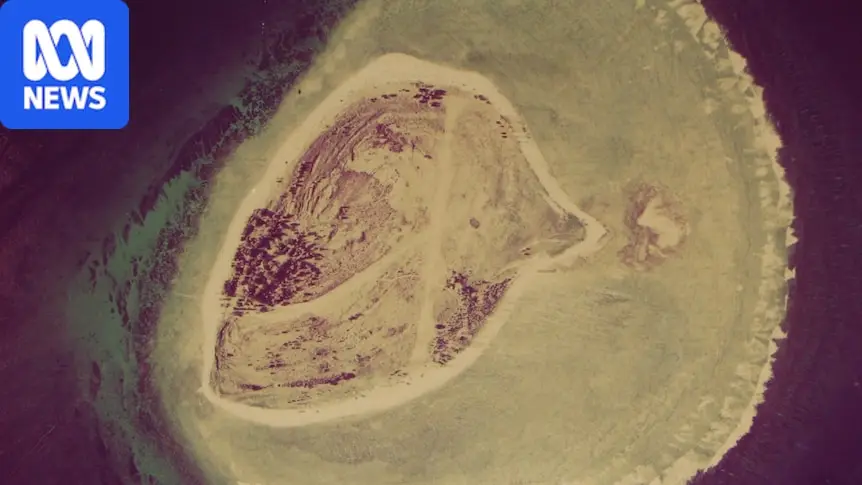
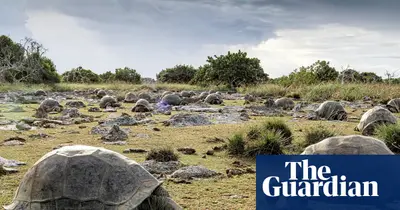
An island that had been stripped of its vegetation and lost its seabird colonies is now an example of ecological recovery on Australia's Great Barrier Reef. On Lady Elliot, replanting has been completed across about 70% of the area, while more than 20,000 trees have been planted over the past two decades. Christine Dudgeon, who leads the Leaf to Reef research and restoration program, describes the birds' return as remarkable: one key species now numbers about 100,000 birds nesting there each year, compared with a few thousand in the 1960s.
The 45-hectare coral island lies 80 kilometers off the coast of Bundaberg. For thousands of years, it was home to seabirds whose accumulated droppings formed guano deposits rich in nitrogen, phosphates and potassium. Demand for this fertilizer grew alongside the expansion of farming that relied heavily on inputs. The trade, which began on a commercial scale in Peru in 1840, spread to hundreds of islands in the Pacific and the Caribbean, often with devastating consequences for their ecosystems.
On Lady Elliot, the first official mining license was issued by the Queensland government in 1863. To reach the guano, workers removed trees, shrubs and grasses, destroying the places where birds lived and bred. About 20,000 tons were removed over the following decade, leaving an almost bare landscape. Goats later brought in as a potential food source for shipwreck survivors ate any plants that sprouted, while lighthouse keepers introduced ornamental plants that proved invasive and continue to cause problems.
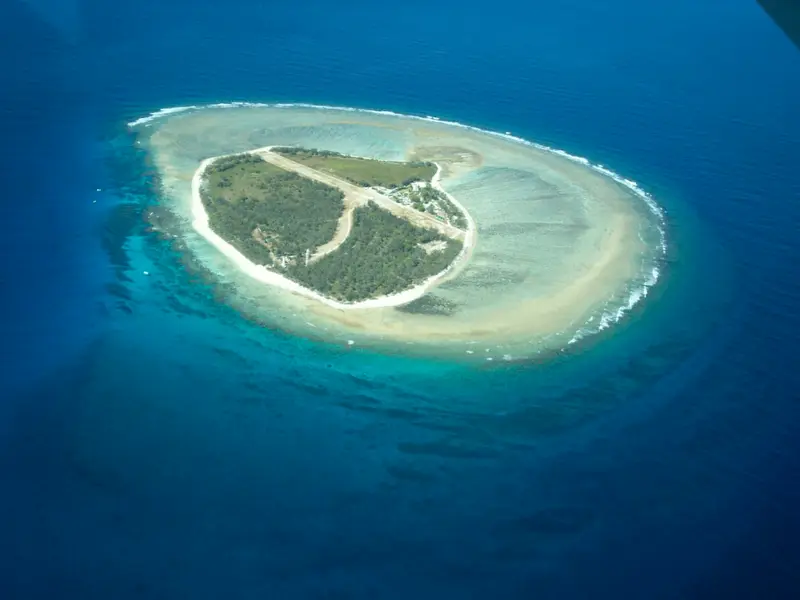
Change began when aviator Don Adams saw the island from the air in the 1960s and recognized the potential for tourism around its reef. Together with his wife, Moya Adams, he agreed to build an airstrip in exchange for a lease on part of the island for recreational activities. At the time, only eight Pisonia trees remained. They still stand today and are at least 160 years old. The family knew that developing tourism required substantial restoration of the vegetation.
The Adams family began by studying the native plants of similar islands on the Great Barrier Reef. In the yard of their home in Hervey Bay, Moya established a nursery, and the family flew hundreds of young plants to Lady Elliot. Planting required making holes in the coral ground with a crowbar and watering with buckets so the plants could survive. The effort was recognized in 1974 with a conservation award from the Wildlife Preservation Society of Queensland and was continued by subsequent leaseholders.
The Gash family took over management in 2005, continuing the restoration and seeking to reduce the resort's environmental footprint. In 2008, they installed a hybrid solar power station, and today the island has more than 1,000 solar panels and 250 batteries. General manager Amy Gash says operations can now run on solar power almost continuously. A partnership with the Great Barrier Reef Foundation, which began around 2017, also helped accelerate planting.
The island's nursery plays a central role, having propagated 22 species of native trees, shrubs and grasses over ten years. Ecosystem manager Liam Turner explains that removing non-native plants alone is not enough: planting and maintenance must follow until native vegetation becomes established. The island has 120 species of introduced weeds that compete with native plants. Once the native plants have grown enough, they can naturally limit that competition, but they need support to reach that stage.
The resort also supports restoration through its food scraps, which are used to produce a soil mixture at the nursery. They are mixed with cardboard and shredded wood, processed, then combined with plant waste and set aside for two years. The resulting material is used for planting, reducing the need to bring in soil and the associated risk of introducing pests or diseases. Turner says signs of an ecosystem that can gradually sustain itself are already visible, although this remains a goal.
The return of seabirds also restores a crucial ecological cycle: vegetation provides shelter and nesting materials, while birds carry nutrients from the sea to the land. Dudgeon says the nests of a species with a red tail, which began breeding there in the 1980s, appear to be increasing alongside the available vegetation. For University of the Sunshine Coast researcher Zerra Egerton, the presence of chicks shows that the island is once again supporting their populations. The recovery has taken decades of human care and continues, offering a concrete example of restoring a deeply degraded place.
Comments