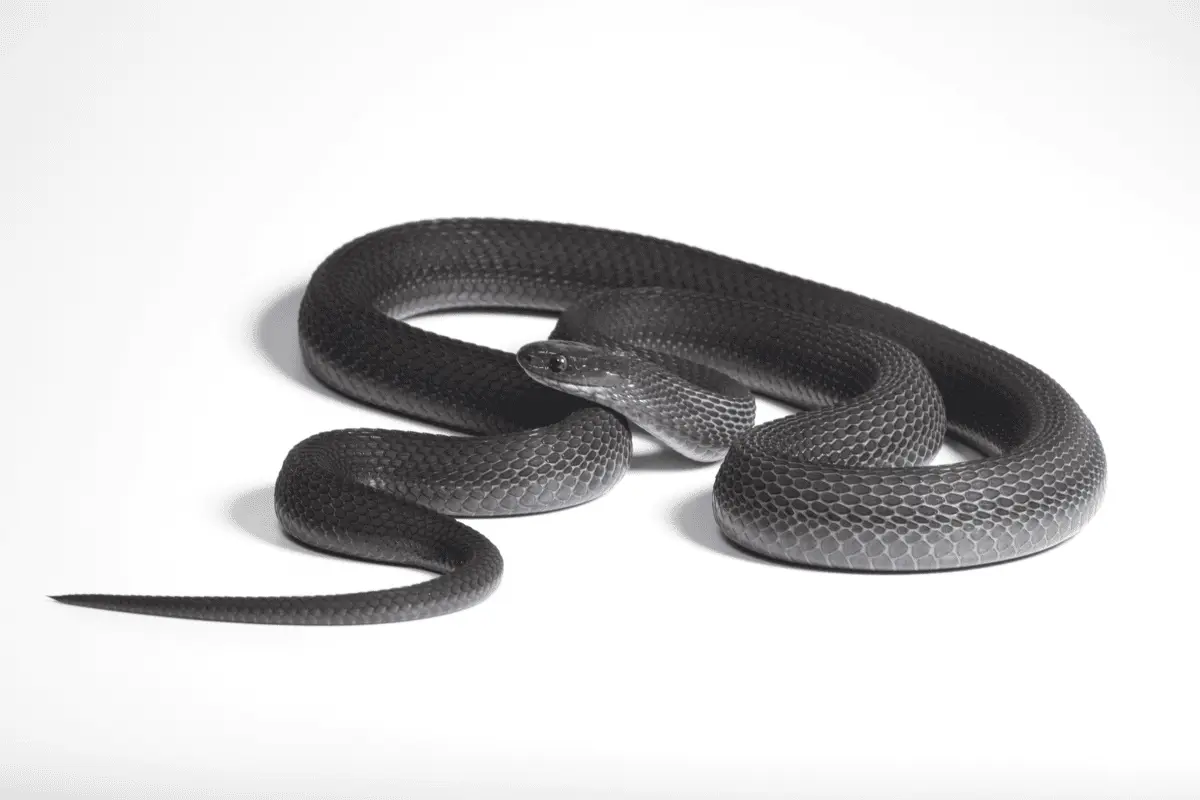
A snake species new to science, which feeds exclusively on bird eggs, has been recorded in the forested mountains of southern Ethiopia, according to a recent study. Dasypeltis albigularis is distinguished by its jet-black body, bluish skin between its scales and strikingly white throat and belly. It is nonvenomous, but according to the researchers, its main threat comes from people who kill snakes out of fear or aversion.
Arthur Tiutenko, from Germany's University of Erlangen-Nuremberg, and his colleagues first encountered a population of the species in 2019. The discovery was made in Harenna Forest, in the Bale Mountains. The team collected a young female for identification and initially thought it belonged to Dasypeltis atra, another black, nonvenomous African snake that feeds on eggs.
Some features of the young snake's scales and coloration, however, differed from those of the known species. These observations led to captive breeding trials, during which the female mated with a male Dasypeltis atra. The offspring showed a combination of traits from both parents, while genetic analysis and examination of more individuals during later expeditions confirmed that the Harenna population belongs to a new species.
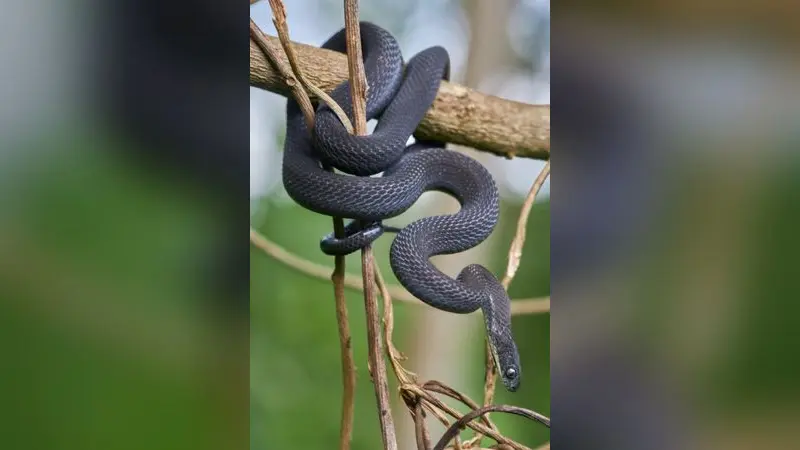
The diet of Dasypeltis albigularis consists entirely of bird eggs. As the study's authors explain, it uses specially adapted vertebrae in its neck to break eggs before swallowing them. Tiutenko described finding it to Mongabay as a classic discovery: researchers encounter an animal in a place they have not previously explored and recognize that it is something new.
Formally describing the species presented the team with an ethical dilemma. As a rule, researchers must deposit a dead, preserved specimen in a museum collection, known as the holotype, which serves as the reference specimen for the description. Tiutenko did not want to kill a snake for this purpose and chose to wait several years until an already dead individual was found.
According to him, describing species using only photographs and videos has been done in some recent studies, but has also drawn criticism from the scientific community. He also considers the use of a living reference specimen problematic because it may escape and its characteristics change as it ages. The wait ended when he found a snake that local residents had killed; it was used as the holotype and allowed publication to proceed.
The team's analysis indicates that the species is probably endemic to the southern slope of the Somali Plateau. It occurs in natural forests, clearings used for cultivation and villages. Whether it also occurs within Bale Mountains National Park has not yet been confirmed, Tiutenko clarified.
According to the researcher, persecution by people remains the main danger to the snake. As he noted, although no dangerous snakes live in the area, people fear them or feel an aversion to them and kill them. The scientific recognition of the new species is thus accompanied by the documentation of an immediate threat in the places where it lives.


Comments