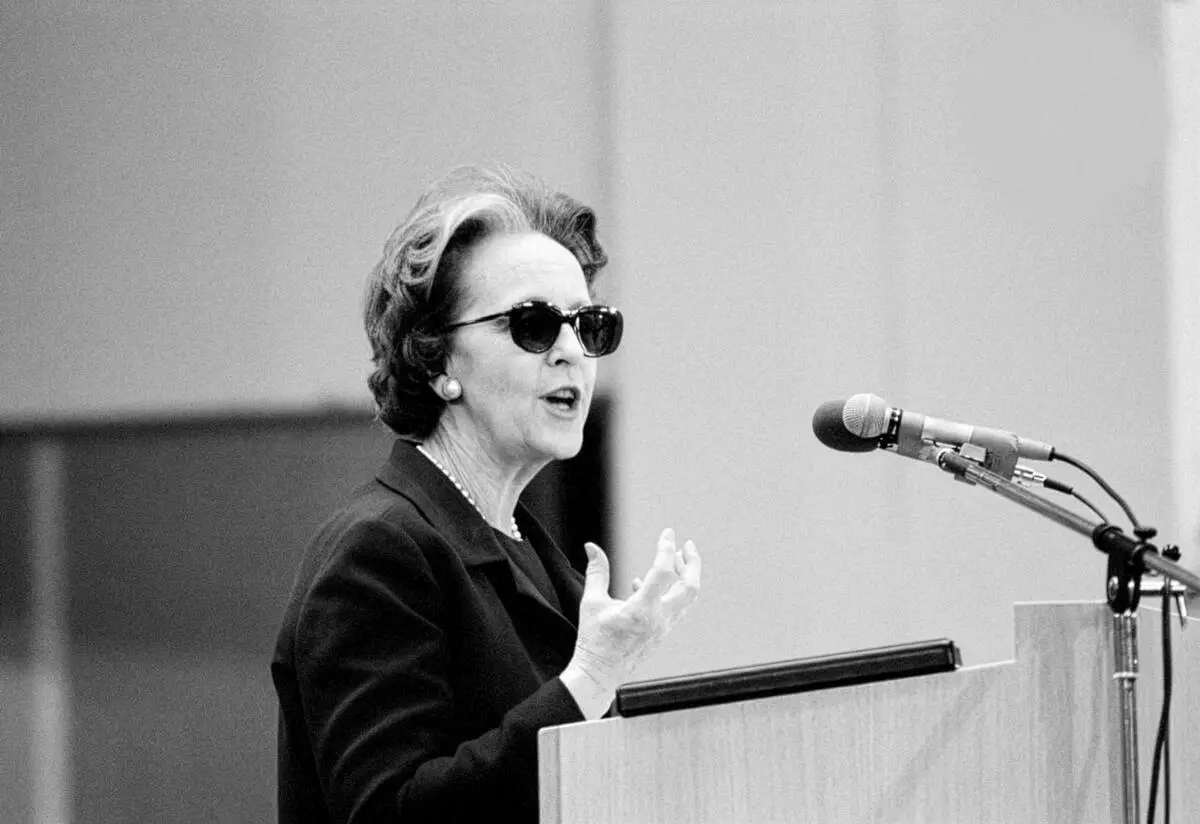
For economist and journalist Barbara Ward, prosperity, global justice and protecting nature were interconnected goals that required cooperation across national borders. The Aeon essay traces the development of this thinking, from postwar economic reconstruction to the shaping of international environmental policy. It also examines a fundamental contradiction: for years, her pursuit of equality coexisted with the belief that the West should guide the rest of the world.
Born in 1914 into a British family with Quaker and Catholic roots, Ward studied in Paris and at Oxford, where she graduated in 1935 from the politics, philosophy and economics programme. In 1939, she began writing about international affairs for The Economist, and later taught at Harvard and Columbia. Her books, lectures and contacts with leaders and the UN gave her influence at a time when women had a limited presence in public debate.
Her experience in what was then the Gold Coast, where she lived for four years, brought her into direct contact with decolonisation. In 1957, at the invitation of Kwame Nkrumah, she spoke to independent Ghana's first students about development, international cooperation and peace. She also supported the Volta dam project, sharing the hope that it would strengthen the country's economic independence. However, while she acknowledged the economic damage caused by colonialism, she took an uncritical view of some of its technical and cultural legacies.
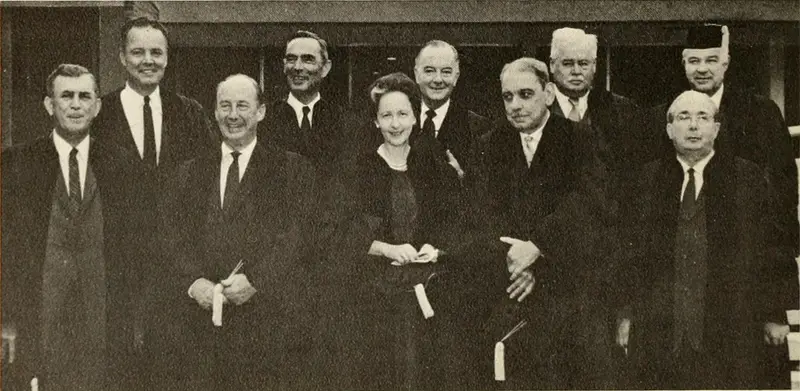
For Ward, poverty undermined societies and fuelled political instability, while the inequalities created by colonialism made it harder for new states to develop independently. She proposed international economic planning, drawing inspiration from the Marshall Plan for postwar Europe. The measures she supported included training local specialists, transferring food surpluses, more favourable terms of trade and a 1% tax on national income to fund financial aid. She saw redistribution as both a material interest and a moral obligation for wealthy countries.
These proposals, however, were accompanied by a paternalistic view of development. Ward assumed that postcolonial societies wanted to follow the path of Western industrialisation and needed Western guidance to do so. Her Catholic faith reinforced her emphasis on human equality and solidarity, but also led her to assign particular moral authority to the Christian West. As the essay points out, this hierarchy limited the active role of other societies and devalued their own traditions.
The space age gave her thinking a new framework: Earth as a shared, fragile home. In her 1965 lectures, titled Spaceship Earth, she used the metaphor of the planet as a spacecraft with limited resources, which Buckminster Fuller had already put forward. She argued that technological interconnectedness had brought humanity closer together, without corresponding progress in moral and political cooperation. In her view, national self-interest and state independence were not enough to address shared planetary problems.
In the 1970s, Ward used the term "sustainable development" to link economic prosperity with avoiding environmental degradation. She recognised poorer countries' need to fund health, education and social services, as well as the effects of consumption in wealthy societies. Although she rejected the pessimism of those who questioned prevailing development models, she shared their concern about ecological limits. She believed that economic and environmental goals could be reconciled through collective, responsible action.
Her approach was reflected in the report Only One Earth: The Care and Maintenance of a Small Planet, which she coauthored with scientist René Dubos for the UN conference in Stockholm in 1972. In preparing it, she gathered the views of 152 scientists, diplomats, industry representatives and other stakeholders from 58 countries. The report examined ways to limit pollution, consumption and extraction while retaining the prospect of economic growth. Scientists, she argued, should provide the data for informed decisions without replacing politicians.
International cooperation proved more difficult in practice. Her proposals for redistribution, pollution control, urban planning, agriculture and the peaceful resolution of disputes remained largely on paper, as states were unwilling to limit their sovereignty. Towards the end of the 1970s, Ward criticised the UN's inability to turn environmental commitments into action. She therefore focused more on informing and mobilising the public, believing that institutions needed a community of citizens who supported planetary cooperation.
In her later writings, she reduced her emphasis on Christianity as the foundation of global unity and gave greater recognition to the local preferences of postcolonial societies. Ecological interdependence became a stronger basis for her political thinking, without erasing her earlier Western-centric assumptions. Ward died in 1981, leaving a blueprint for international justice that remained largely unfulfilled. According to the essay, its relevance today lies in linking inequality, environmental degradation and global governance as problems that need to be addressed together.




Comments