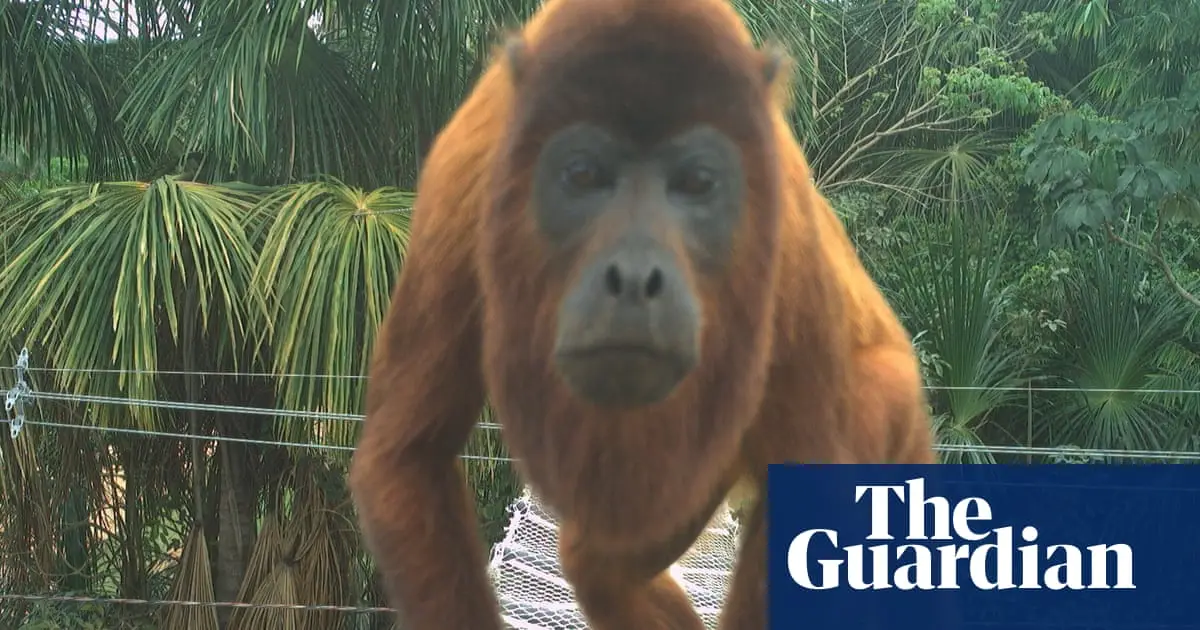
Eight canopy bridges above a road leading to Alta Floresta, in the northern part of the Brazilian state of Mato Grosso, enabled 15,000 safe crossings by tree-dwelling animals in 15 months. The structures were installed in 2024 to reconnect sections of forest that had been cut off from one another, and no animal deaths from vehicles were recorded at that location during the monitoring period. The data comes from camera traps and counts crossings, rather than the number of individual animals that used the bridges. The programme is coordinated by Projeto Reconecta and the municipality, with the involvement of local organisations and businesspeople seeking to protect biodiversity and develop ecotourism.
The need for such interventions is evident in the loss of even highly threatened species. In the state of Espírito Santo, biologist Gabriel Falquetto recently found a dead Callithrix flaviceps marmoset on the ES-164 highway while travelling to a protected area of the Atlantic Forest to monitor wildlife. The species is classified as critically endangered on the International Union for Conservation of Nature's red list, and an estimated 2,500 individuals remain in the wild. Similarly, a few hours before the first bridges were installed in Alta Floresta, two marmosets of the endangered species Mico schneideri, which is endemic to the Brazilian Amazon, had been found dead.
Reconecta founder Fernanda Abra, an affiliated researcher at the Smithsonian National Zoo and Conservation Biology Institute in the US, explains that the bridges serve two connected goals: they restore movement between isolated sections of forest and reduce collisions with vehicles. Each bridge has two cameras, one facing the crossing and one facing the forest, so that animals that approach but ultimately do not use it are also recorded. Spider monkeys, howler monkeys, capuchins and marmosets were recorded in the first few months. Alta Floresta's Plecturocebus grovesi monkey became a symbol of the initiative. It was scientifically described only in 2019 and was soon classified as critically endangered.
The team's experience had begun earlier, in 2021, with the installation of 32 bridges on the BR-174 highway, in cooperation with the Indigenous Waimiri-Atroari. The road passes through their territory and connects the states of Amazonas and Roraima, and they helped select the most suitable locations for the crossings. Over five years, the cameras recorded about 1,250 primate crossings, including those of the Saguinus midas tamarin, which often comes down to the ground to look for food and is therefore more exposed to vehicles. The programme also allowed different designs to be tested to determine which structures the animals prefer.
The current design combines different levels and intersecting ropes, serving species that move in different ways. Some use their tails to hold on, others swing by their arms, like spider monkeys, while others walk across the mesh. Crossings by sloths and opossums have also been recorded. Abra stresses, however, that adaptation takes time: in Alta Floresta, capuchins took seven months to use one of the bridges for the first time. Reconecta's monitoring shows that use increases gradually, making long-term evaluation of the interventions important.
Brazil combines the world's greatest diversity of primates with its fourth-largest road network, creating widespread pressures on animals in fragmented forests. A 2022 study estimated that nearly nine million mammals are killed each year on the country's roads. A compilation of data published in Nature in 2025 also ranked it among the countries with the highest rates of road mortality among terrestrial vertebrates. Primatologist Fabiano Rodrigues de Melo, of the Federal University of Viçosa, argues that although habitat loss is a major cause of population decline, the effects of deaths from vehicles continue to be underestimated.
Roads also harm wildlife without causing direct deaths, as they isolate populations and restrict their movements. Environmental analyst Amely Branquinho Martins, of the federal protected areas agency ICMBio, explains that isolation makes populations smaller and more vulnerable. When individuals are prevented from moving between populations, gene flow is restricted, the risk of breeding between related individuals increases and genetic diversity decreases. According to Melo, the loss of fruit-eating primates also affects seed dispersal and pollination, with consequences for forest composition and entire networks of ecological interactions.
A bill approved by Brazil's lower house and awaiting a vote in the senate provides for a national road safety plan for wildlife. It includes warning signs, measures to reduce speed and the construction of overpasses, canopy bridges and underpasses. In 2026, the national transport infrastructure agency responsible already designated Reconecta's design as a recommended standard for highways. Meanwhile, eight additional bridges are planned in Alta Floresta's urban area, where electrical cables will first be lowered and insulated to reduce the risk of electrocution.
Reconecta's expansion includes new initiatives in Suriname and the Brazilian municipality of Lucas do Rio Verde, where ten bridges are planned. Abra is also seeking interventions in the Pantanal and the Atlantic Forest, with particular hopes for the BR-262, where about 2,000 animals are killed each year. International recognition of her work includes the 2026 Wayfinder award, which comes with National Geographic Society funding for recipients' projects. For her, continued cooperation between public agencies, businesses and local communities is a prerequisite for expansion, as it was in Alta Floresta and the Waimiri-Atroari territory.
Comments