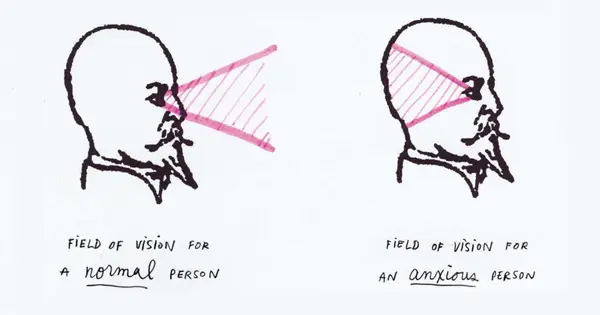
A 2017 essay from The Marginalian returns to the first-century Roman philosopher Seneca for a lesson on anxiety that feels relevant in an age of constant information. It begins with two related observations: Kurt Vonnegut said that we know so little about life that we cannot really know what is good news and what is bad news, and Alan Watts wrote that it is impossible to say whether what happens is good or bad. Yet most people spend much of the day worrying about events they judge to be negative and losses they fear are coming.
The essay notes that the 24-hour news cycle exploits this human tendency, but the underlying tendency is ancient and exists independently of external events. It cites a pastor from the 1930s who classified worries into five categories: four were imaginary, and only worries with a basis in reality accounted for perhaps 8% of the total. The 24-hour news cycle has made the problem worse, inflating that 8% until it looks like 98%.
Seneca examined this habit in his letters to Lucilius the Younger, later collected as Letters from a Stoic. In the thirteenth letter, titled “On groundless fears,” he writes that there are more things that can frighten us than crush us, and that we suffer more often in imagination than in reality. His advice is not to be unhappy before the crisis arrives, because the dangers that make us turn pale may never come.
Seneca adds that some things torment us more than they should, some torment us sooner than they should, and some torment us when they should not torment us at all. Our habit, he says, is to exaggerate, imagine or anticipate sorrow. He acknowledges that some misfortunes are likely to befall us, but they are not a present reality. The unexpected often happens, and the expected often never arrives.
Even if a misfortune is destined to happen, Seneca asks, what do we gain by rushing to meet the pain? We will suffer soon enough when it comes, he writes, so let us look toward better things in the meantime. What we gain is time: many intervening events can postpone, end or shift the ordeal. Fire has opened an escape route, a disaster has had mild consequences for some people, and some have outlived their executioners. Even bad luck is fickle. Perhaps it will come, perhaps it will not; in the meantime, it does not exist.
Seneca also observes that the mind conjures up false forms of evil when no sign points to evil, twists ambiguous words into their worst interpretation and imagines grudges to be more serious than they are. But life is not worth living, and sorrow has no limit, if we let our fears run their course. He advises sound judgment and a resolute spirit; if that is too difficult, let us set one weakness against another and temper fear with hope. Nothing we fear is as certain as the fact that terrible things fade into nothing and the things we hope for deceive us. So weigh hopes and fears equally, and when everything is uncertain, believe what you prefer.
The greatest danger of misplaced worry, Seneca warns, is that it keeps us constantly braced for an imaginary disaster and prevents us from living fully. He closes the letter with a phrase from Epicurus: the fool, along with all his other faults, has this one too—that he is always preparing to live. The Marginalian accompanies the letter with further reading on reducing worry and making the most of life's brevity.




Comments