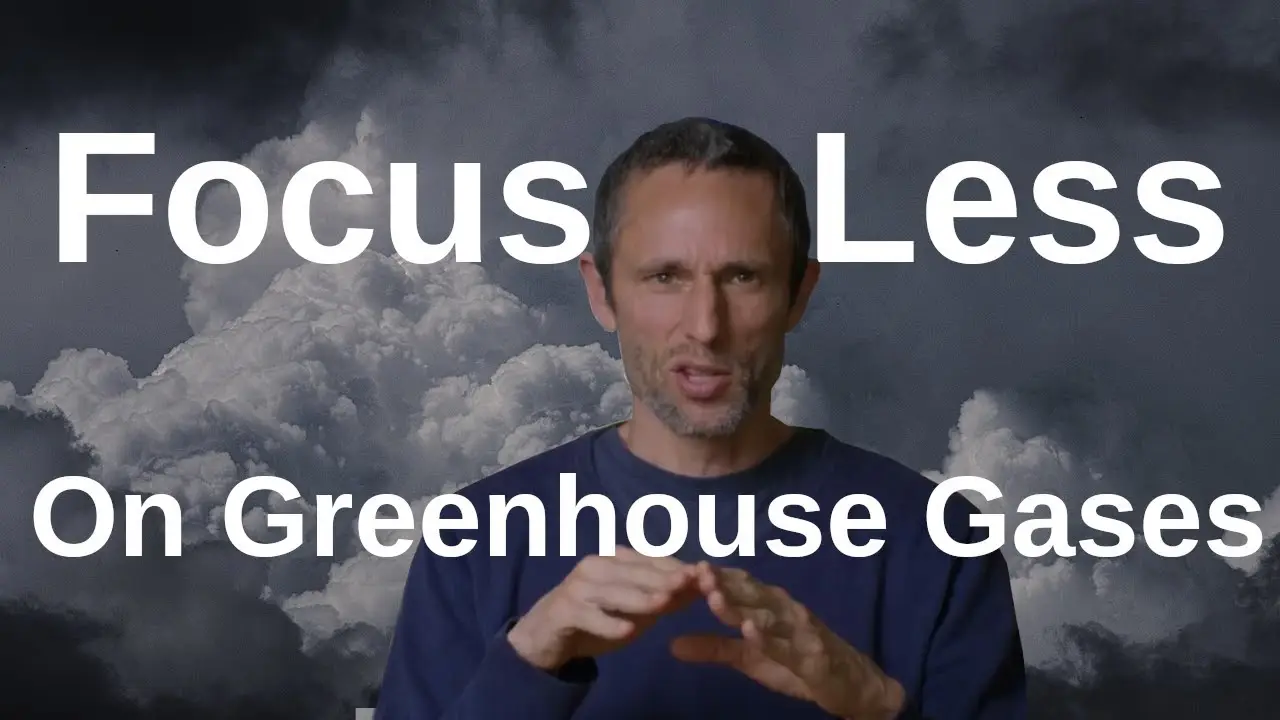
In the excerpt from his interview with Death in the Garden, author Charles Eisenstein examines what is overlooked when environmental protection is equated with low carbon emissions. His central argument is that the crisis concerns the overall state of the biosphere and people's relationship with the living world. He begins with corporate sustainability promises, moves on to the differences between tree planting and forest ecosystems, and ends with the need for a broader change in perception. He presents this approach as his personal interpretation of the crisis, using the metaphor of Earth as a living body.
His starting point is the observation that “green” often simply means “low-carbon.” To show how this equation works, he uses the hypothetical example of an airline announcing that it will become sustainable by some future date. He asks what exactly such an announcement promises and answers that it may mean net-zero emissions through offsetting. In his example, the company continues to use fuel for its flights and seeks to offset the resulting emissions by planting trees elsewhere. His question concerns what is left out of this calculation.
He first turns to the processes that precede the creation of a forest for emissions offsetting. He describes a possible scenario in which a forest has been cut down and is then replanted, with the earlier destruction taking place before the company purchases the land. He does not name a specific airline or project, nor does he provide evidence about any particular case. The example serves his criticism that an offsetting promise can leave the history of the place where it takes place out of sight. In his view, an assessment also needs to examine how the land to be planted became available.
He then raises the question of what kind of forest is being created. A commercial tree plantation and an ecologically complex forest rich in biodiversity are different in character, he points out. This distinction is central to his argument because a reference to planting trees does not, by itself, describe the quality of the ecosystem. He adds that a virgin forest cannot simply be planted. With this observation, he underlines the limits of the idea that creating a new tree plantation makes up for what was lost when an existing forest was destroyed. His attention thus shifts from offsetting to the life of the place itself.
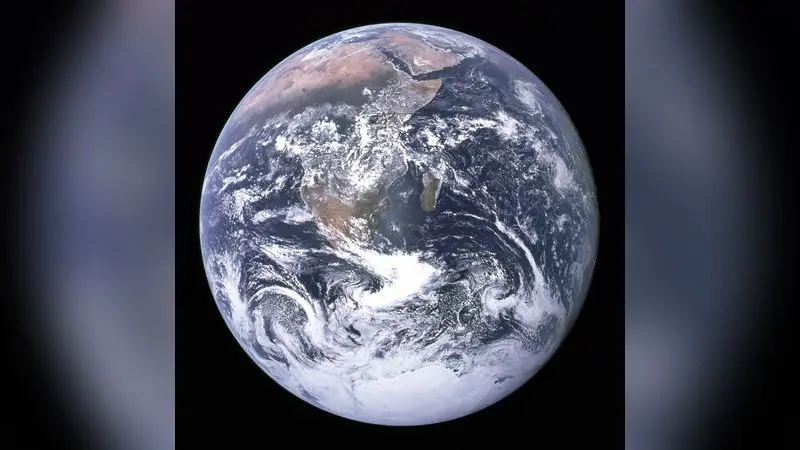
From offsets, he moves to our broader picture of the planet. He describes a mechanistic view in which Earth resembles a large machine: some ratio has been upset, the machine is overheating, and we need to adjust a number to make it run more smoothly. He uses this image to explain why he considers an exclusive focus on greenhouse gases limiting. In his view, such an approach makes the crisis seem like a problem of technical adjustment. The destruction of the biosphere, he argues, is more complex and requires us to look at what is happening to ecosystems.
The alternative image he proposes is Earth as a living being, with organs, tissues, cells and physiology. This is the conceptual framework he uses to organize his thinking in the excerpt, rather than a scientific finding substantiated there. Within this metaphor, the destruction of ecosystems corresponds to damage to a body's vital functions. Eisenstein wants to shift attention from a single parameter to the condition of the whole. Caring for the planet, as he describes it, requires concern for the individual elements of life and their place within that whole.
To make the image concrete, he refers to declines in whales and fish biomass, the loss of seagrass meadows in New England and the decline of mangrove ecosystems. He adds declining insect numbers and amphibian deaths as other signs of the degradation that concerns him. These references are presented as the speaker's claims: the excerpt provides no sources, time frames or measurement methods for the numerical estimates he mentions. The role of these examples in his reasoning is to show that the ecological crisis manifests itself in many different organisms and places.
In the same sequence, he includes the cutting of forests and their replacement with plantations for biofuels. He then sets out his central hypothetical argument: even if carbon emissions fell to zero overnight, the continuing destruction of ecosystems would, in his view, remain a critical problem. He uses the metaphor of organ failure to express the seriousness he attributes to this degradation. He gives no timetable or substantiated forecast of collapse. The point of his reasoning is that achieving an emissions target is not, on its own, enough to protect the biosphere.
Eisenstein acknowledges that addressing the crisis in this way seems harder than installing carbon removal machines or switching to biofuels. Technological interventions, he explains, belong to a familiar way of solving problems: we identify a number and try to reduce it. He even expresses doubt about whether these solutions can ultimately succeed, without developing a technical assessment of them. The emphasis remains on the way of thinking. Viewing Earth as a living being requires, in his view, a deeper change than choosing a different technology.
He connects this change with the collective narratives through which people understand the world. He speaks of a change in humanity and its “mythology,” meaning here the broader framework of perception that shapes its relationship with Earth. His description of the planet as a sacred living being expresses his own philosophical and spiritual stance. This proposal gives ecological protection a dimension of values and meaning. In his reasoning, our attitude toward the planet is connected with what we consider worthy of care and how we understand our place in the world.
The implications he attributes to this change are broad. He argues that a comprehensive transformation of the economy, culture and human psychology is needed. In this particular excerpt, he does not specify economic institutions, policies or an implementation plan. His position remains a general direction: if Earth is treated as a living being, that recognition needs to influence how human activity is organized. He thus connects his initial criticism of low-emissions promises with a much larger question: how an entire society understands and cares for the natural world.
The excerpt closes with a shift from this large scale to immediate action. Once someone begins to see Earth as a living being, Eisenstein says, many opportunities open up to act in line with that view. His examples are simple: caring for a place, a garden or a tree. He does not present these actions as a complete program for addressing the crisis, but as available ways to express the relationship he proposes. His final emphasis is on connecting a broader ecological perspective with attention and care for specific parts of the living world.



Comments