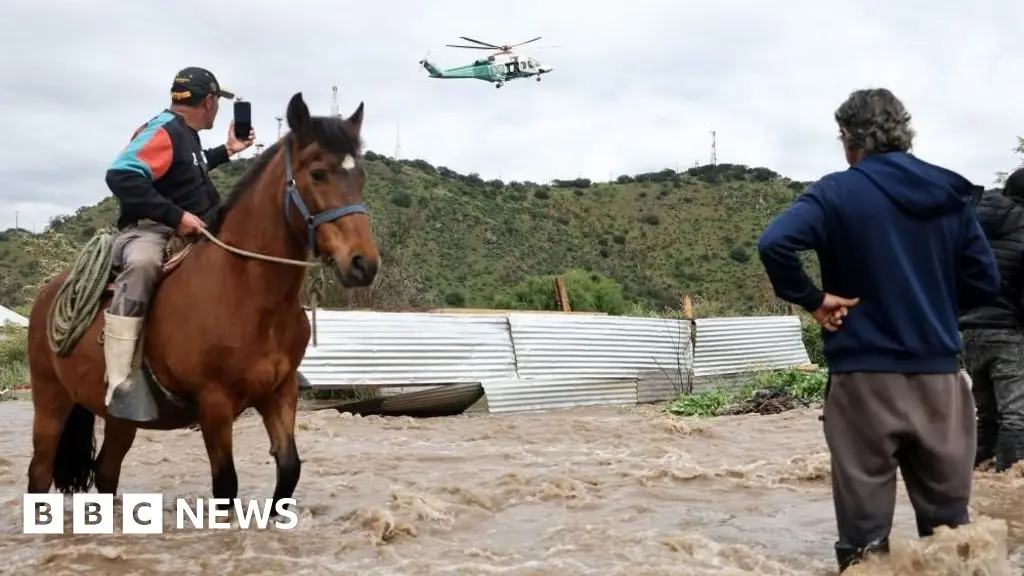
Police in central Chile airlifted several residents to safety after rising floodwaters trapped them in their homes. Recent torrential rains caused the Mapocho River to overflow, flooding large parts of the town of Talagante, about 35 kilometers southwest of the capital, Santiago.
According to meteorologists, Santiago received 74 millimeters of rain in the first seven days of the month, making this October the wettest in the area in 76 years. They also warn that this year's unusually strong El Niño climate phenomenon is likely to continue bringing unusually wet weather, strong winds and storms to the region during the Southern Hemisphere spring.
Authorities said one person was found dead in a flooded underpass in the town of San Bernardo, south of Santiago, although the cause of death has not yet been confirmed. In Talagante, police used helicopters to rescue people and pets living along the banks of the Mapocho who were caught off guard by the rapid rise in water levels overnight.
Dirt roads in the riverside community turned into rivers. Unlike during the July storms, no evacuation had taken place before the heavy rainfall this time, leaving residents exposed to the sudden flooding.
Climate scientists warn that the 2026-2027 El Niño is likely to cause major shifts in weather patterns around the world, intensifying droughts in some areas and floods in others. In central Chile, the phenomenon is expected to bring above-average rainfall.
The events show how extreme weather linked to large-scale climate fluctuations can quickly change daily life in local communities, putting human lives, property and animals at risk when timely preparations are lacking.

Comments