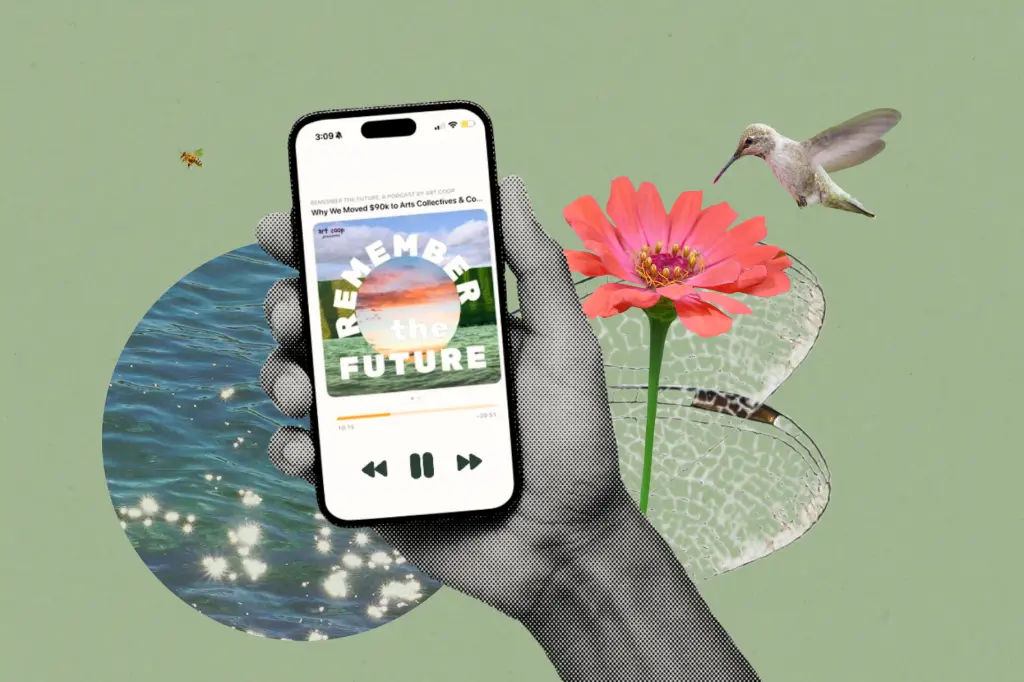
Art.coop presents the second season of the “Remember the Future” podcast, which focuses on the Remember the Future fellowship and explains why the team plans to move $90,000 to arts groups in the solidarity economy. According to Art.coop, the move is about more than the funding transaction: it involves peer learning, trust and participatory redistribution.
The starting point is that artists shape culture. As Art.coop notes, artists invite us to question, redefine and shape today's and tomorrow's economy. The influence and wealth they contribute to society are undeniable, yet often undervalued. Society values the product more than the process or the artist as a person. Rather than creating in isolation and compromising their values, economic value or creative control, artists are coming together to open another path.
Art.coop is described as an emerging hub where artists tired of the current exploitative economic system connect to access money, ideas and tools that strengthen their communities. The aim is to remember future art worlds with community control at their core.
The Remember the Future fellowship honors arts groups grounded in their own power that choose to actively transform the system by building solidarity economy models. This year, Art.coop says, we saw “Mutual Aid in Motion”: from expanding exchange hubs to “Mutual Aid 101” training, the aim is to help communities build the tools they need. Every dollar fuels lasting resilience, proving that when we move together, we all move forward.
The episodes feature interviews with some of the fellows: Groupmuse, a cooperative owned by workers and musicians; MeansTV, the first worker-owned anti-capitalist streaming service; and Artisans Cooperative, a member-owned marketplace for handmade goods that emerged from the Etsy strike. The season also explores the work of Acres of Ancestry, Ohketeau Cultural Center and Question Culture, which expand the boundaries of what is possible through cultural preservation, textile arts and media. It also shares lessons from the pilot phase, following a process of listening, incorporating feedback and redesigning the fellowship's second year to meet the fellows' needs.
The season explores solidarity among artists and the ability to create abundance through cooperation rather than competition. It is an invitation for artists to reflect on their role in the solidarity economy—whether by sharing spaces and resources as a collective or co-creating a cooperative business. At the same time, it invites all of us to consider how the art we consume shapes the values, practices and culture we sustain.
Art.coop invites the public to “remember the future” by listening to stories from artists and cultural organizations that know solidarity economy practices are not some new technology, but ways of relating to people and the planet that are as old as time.
Comments