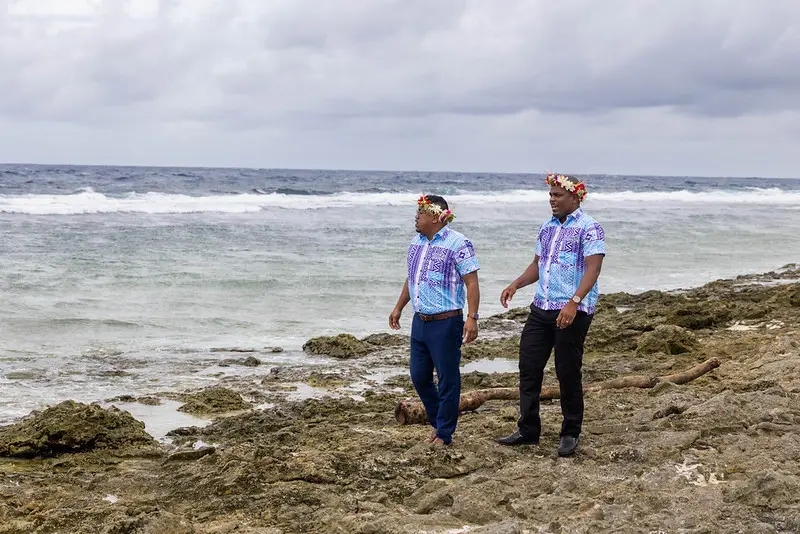
More than 30 leaders, ministers, climate negotiators and development bank officials traveled on Tuesday to Tuvalu, a sinking island nation made up of atolls, ahead of the COP31 preparatory summit in Fiji. There, students described how droughts, heatwaves and storms linked to global warming affect their education. Fiji's climate minister, Lynda Tabuya, told a press conference that the aim was to bring decision-makers to the “front lines” of the climate crisis. Many said they were moved by what they saw and heard, and stressed the importance of the Paris Agreement's 1.5°C target in their speeches.
That target looks increasingly difficult to meet. In September, a UN report acknowledged that the 1.5°C limit would be exceeded, but said temperatures could return to that level by the end of the century with stronger action. A month before the date of this report, COP31 president Murat Kurum had said that limiting warming to 1.5°C “does not really seem achievable” and that “around 1.5°C will be a success.”
But after seeing the “anguish” of children and mothers in Tuvalu caused by rising sea levels and high tides, Kurum said in Fiji that 1.5°C is a matter of survival for cultures, history, memory and homelands. “The 1.5°C target is at risk, and we do not have a single minute or a single day to lose,” he added.
Kurum also backed the call from Australia and the Pacific islands for contributions to the newly established Pacific Resilience Facility (PRF). The fund intends to use its investment returns to finance community adaptation projects, such as water storage, seawalls and protecting homes from storms.
“$1.5 billion for 1.5 degrees will save the Pacific,” he said. “It is that simple. Life will go on in Tuvalu. Children will smile again.”
So far, the PRF has received pledges of just under $200 million—including about $15 million from European and Pacific governments at the summit—and is aiming for $500 million by COP31, with a long-term goal of mobilizing $1.5 billion. Tabuya said she was “encouraged” and added that they would hold COP31 to that commitment.
The president of COP31 negotiations and Australia's climate and energy minister, Chris Bowen, noted that “the countries that need funding the most get the least.” Australia presented a plan for access to funding for small island states and the poorest countries, which says the available amounts are insufficient and stresses the need for grants and financing on very favorable terms, particularly for adaptation and loss and damage. The plan proposes an annual high-level forum to monitor implementation.
Jacobo Ocharan, head of political strategy at Climate Action Network International, warned that “words of concern will not protect anyone” and that COP31 in Antalya must deliver decisions that change people's lives for the better.
The summit closed with an emotional appeal from Tabuya, who tearfully asked delegates to “carry something of the Pacific with them” and remember the people they met and the stories they heard. “This pre-COP ends tonight. Our responsibility does not,” she said.
Comments