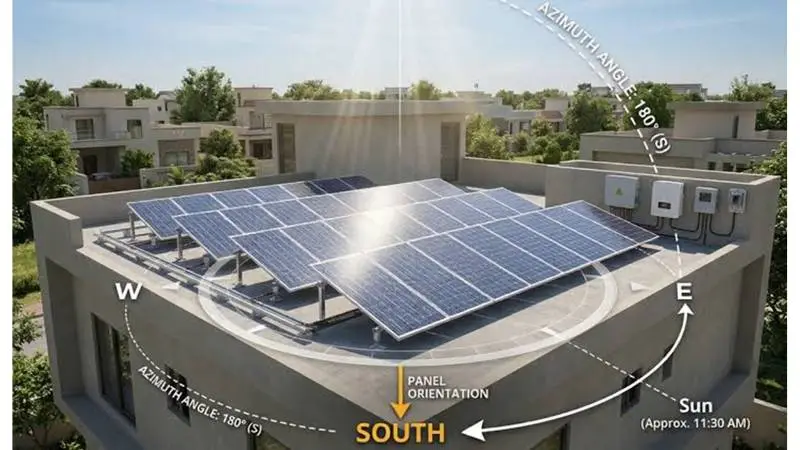
In the first seven months of 2026 alone, Pakistan imported around 7.2 gigawatts of Chinese solar panels, according to the analysis. This made it the world's second-largest recipient of Chinese solar exports, behind only the Netherlands. The Netherlands is a major European hub for solar imports, re-exporting panels to many European countries, which makes Pakistan's position all the more significant.
This performance is not an isolated case. Pakistan imported around 7.6 gigawatts in 2023, around 16.4 in 2024 and around 16.9 in 2025. The three-year total approaches 41 gigawatts. For 2026, the estimates cited in the text put solar panels at around 55 gigawatts by 2026.
What stands out is that this growth is not driven mainly by government solar farms. It is driven by households, factories, farms, shops and private landowners who bought systems and began generating their own electricity. Naveed Arshad, director of the Energy Institute at the Lahore University of Management Sciences, describes the process as a “grassroots revolution”.
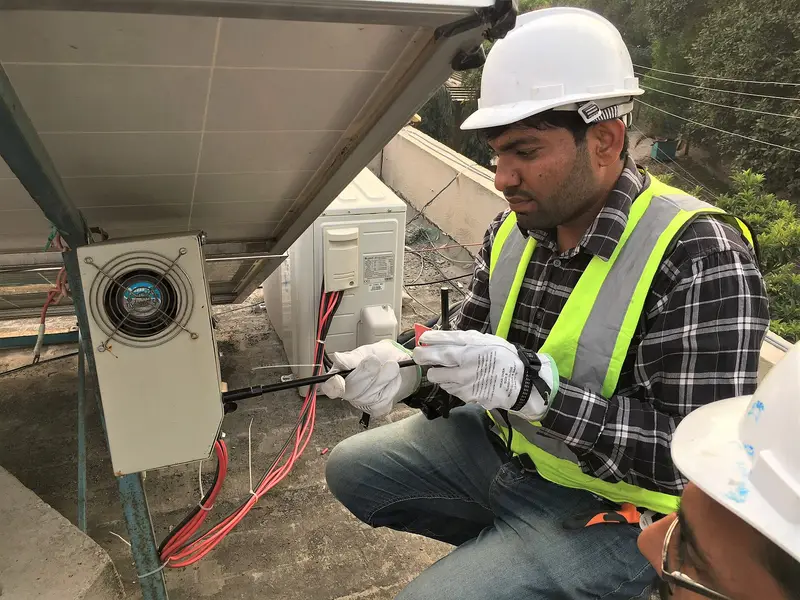
The roots of the boom lie in the country's energy and economic problems. After Russia's invasion of Ukraine, international energy prices rose and the Pakistani rupee depreciated. Imported fuel became more expensive and electricity prices rose significantly. According to the statistics in the analysis, the real tariff was around 12.5 rupees per unit in 2015 and was expected to exceed 34 rupees in 2025. Meanwhile, the cost of Chinese solar equipment was falling.
Pakistan also had practical advantages. Many roofs are flat, making installation easier, while a broad network of installers quickly developed, even in small towns and rural areas. Solar technology is highly adaptable: households can install small systems and industries can install thousands of panels. The authorities did not plan the boom, but they helped it through tax and customs exemptions, subsidised loans and solar installations on some public buildings.
The same trend is also evident in Sindh province. Karachi has a huge electricity market, while many rural areas of the province face problems with cost and reliability. The factors favouring solar panels in Pakistan—high electricity costs, cheap panels and a desire for energy independence—are also present in Sindh.
The economic consequences may be more serious than the technical issues. Over the past decade, Pakistan has invested heavily in new power plants and transmission networks. Many contracts include capacity payments: generators are paid to keep their plants operational even when they are not producing large amounts of electricity. As more consumers install solar panels, the total energy drawn from the grid falls, but the fixed costs of generation, transmission and distribution do not fall at the same rate.
These costs have to be recovered. With fewer consumers drawing electricity from the grid, fixed costs are spread across a smaller base and tariffs rise. Higher tariffs in turn push more consumers towards solar, further reducing grid consumption. In 2026, regulators changed the system: they moved from the previous net metering arrangement, which offered favourable credits for electricity fed back into the grid, to net billing, where electricity supplied to the grid is paid for at a different rate from the one charged when electricity is bought later.
The change is unpopular because it reduces the financial value of surplus solar electricity. Some say it protects an inefficient centralised system; others point out that the government faces a real problem, as it cannot simply pass the cost of maintaining the grid on to consumers who cannot afford to install panels. Both points are valid.
Greater use of batteries could change the equation again. A solar user without a battery depends on the grid during hours without sunshine. Combining solar panels with a battery can significantly reduce that dependence. The issue of stranded investments also remains unresolved: Pakistan has invested heavily in plants and networks, and the goal is not simply more solar panels, but how they interact with existing infrastructure. As the text concludes, the question is no longer whether the solar revolution will continue, but how the electricity system will keep pace.


Comments