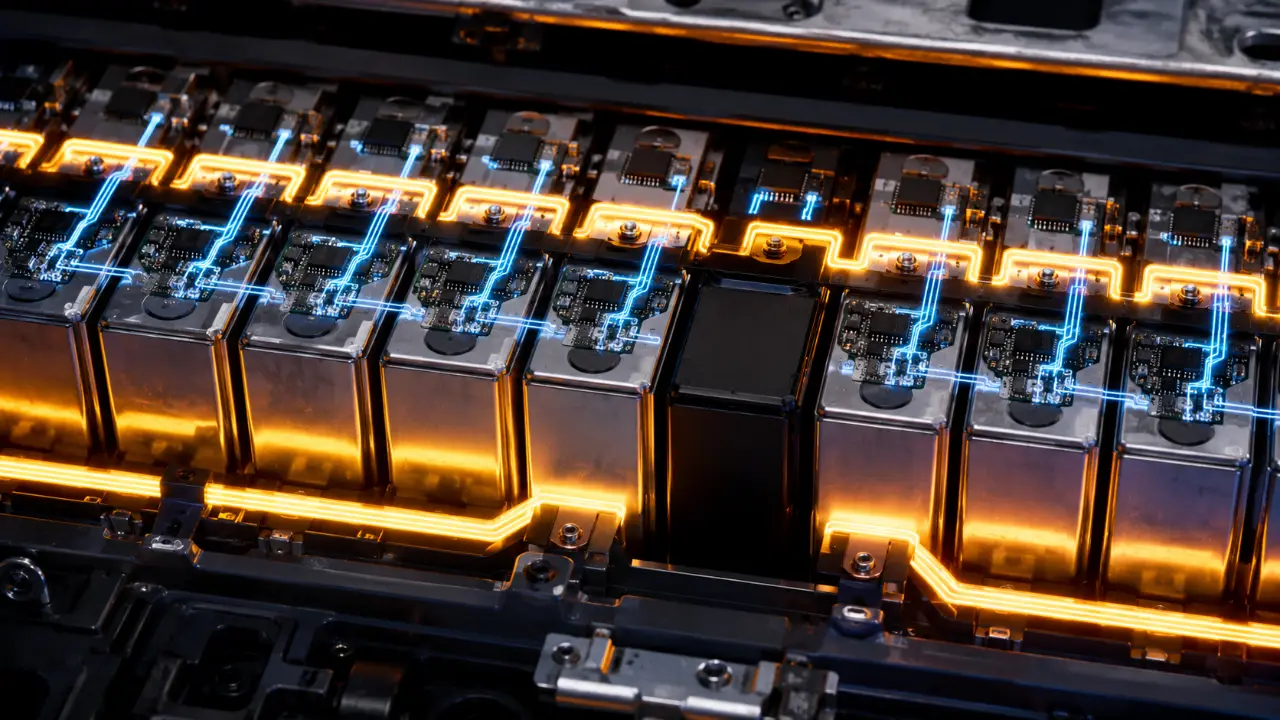
A battery architecture that allows connections between cells to be changed could delay the replacement of an electric vehicle's battery and reduce its total cost of ownership. This is the finding of a study by Chalmers researchers, published in Nature Communications, which examines both the lifespan and financial viability of such systems. The results are based on models and are not confirmed performance figures for mass-produced cars.
The research starts from the fact that the cells in a battery are not identical: differences emerge during manufacturing and can grow with use and ageing. In conventional packs, where connections remain fixed, the weakest cell can limit the entire battery. Doctoral candidate Albert Škegro compares the problem to hikers tied together by a rope, forced to follow the slowest person. A separate study in Nature Energy, using data from electric cars and buses, quantified the effect of these differences on performance and lifespan.
The new study examines reconfigurable battery packs, which use switches and control systems to isolate a cell that begins to limit the pack as a whole. This allows them to continue using the capacity of the remaining cells. In the most detailed and idealised version of the model, the potential life extension exceeds 20% for certain high-voltage vehicles. The researchers stress that this is a theoretical upper limit, with independent control of every cell and optimal use of that capability.
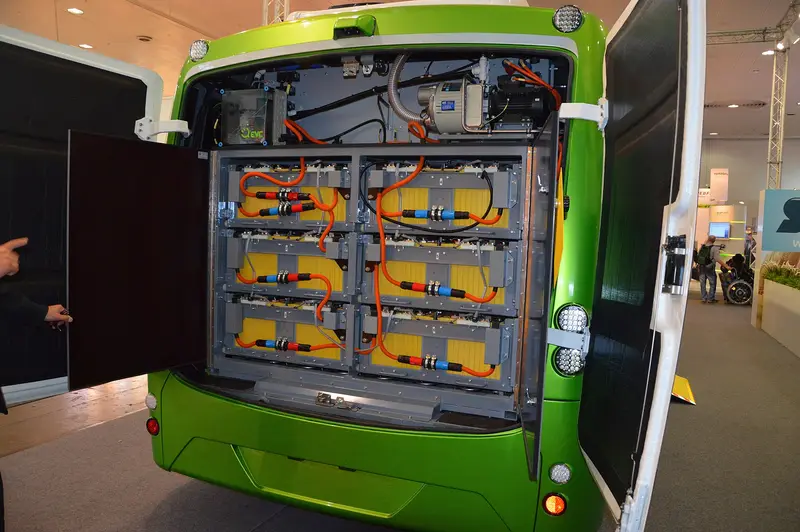
In practical applications, groups of cells are more likely to be controlled together, as this requires fewer electronic components and is easier to implement. However, this simplification limits the benefit that can be achieved. As Professor Changfu Zou explains, manufacturers can choose different degrees of reconfiguration, with different results. For this reason, the team does not give a single life-extension percentage for commercial batteries, while long-term monitoring studies covering a vehicle's entire lifetime are still lacking.
To illustrate the potential benefit more specifically, the researchers examined an electric vehicle with an 80-kilowatt-hour battery, an annual driving distance of 12,000 kilometres and an expected lifespan of 18.8 years. Under these assumptions, the model delays battery replacement by around 14 months. The pack also retains a higher residual value when removed because it has suffered less degradation. Škegro points out that delaying such an expense could be particularly significant for fleets of hundreds of vehicles, but the result depends on battery size, mileage and how the vehicle is used.
The greatest potential benefit is found in high-voltage vehicles, such as long-range electric cars and electric trucks. The more cells connected in series, the greater the likelihood that one will age faster or develop a problem that limits the system. The ability to bypass it therefore becomes more valuable. According to the models, benefits increase substantially when moving from low-voltage systems to a 400-volt architecture and continue to grow at higher voltages, though at a slower rate.
The technology requires more switches, connections and advanced control systems, increasing the pack's initial price. The team's techno-economic analysis estimates that, using automotive-grade components, the additional hardware increases the total cost by around 9%. The researchers say that the longer lifespan and higher residual value can offset this extra expense under many usage conditions. The analysis places the break-even point at around 12% in additional costs, above which a financial benefit becomes less likely.
The financial benefit appears particularly strong when the initial additional cost stays below around 7% and the annual driving distance is less than 12,150 kilometres. Within these limits, the architecture was financially advantageous in at least 99.7% of the scenarios examined, despite variations in the other parameters. For comparison, the text states that a private passenger car in Sweden travels an average of around 11,400 kilometres a year. The current cost estimate is based on component prices for production of 1,000 units, while the researchers expect lower prices at the larger volumes used in the automotive industry.
Reconfigurable connections have been researched for around a decade by car and battery companies and have already been used in stationary energy storage systems. Experimental automotive applications exist, such as Volvo Cars' SmartCell, while a major manufacturer has begun testing a prototype passenger car in real-world road conditions. However, no mass-produced passenger car or truck with the type of architecture examined in the study is yet on the market.
Beyond the financial benefits, the team identifies potential savings in materials and energy. A battery that can manage greater differences between cells could reduce the need for strict screening and matching during manufacturing. The same capability could make it easier to give the pack a second use, for example in stationary energy storage, by allowing more of it to be reused as a single unit. The researchers argue that avoiding premature retirement offers a sustainability benefit, as it keeps the materials and energy already invested in the battery in use for longer.




Comments