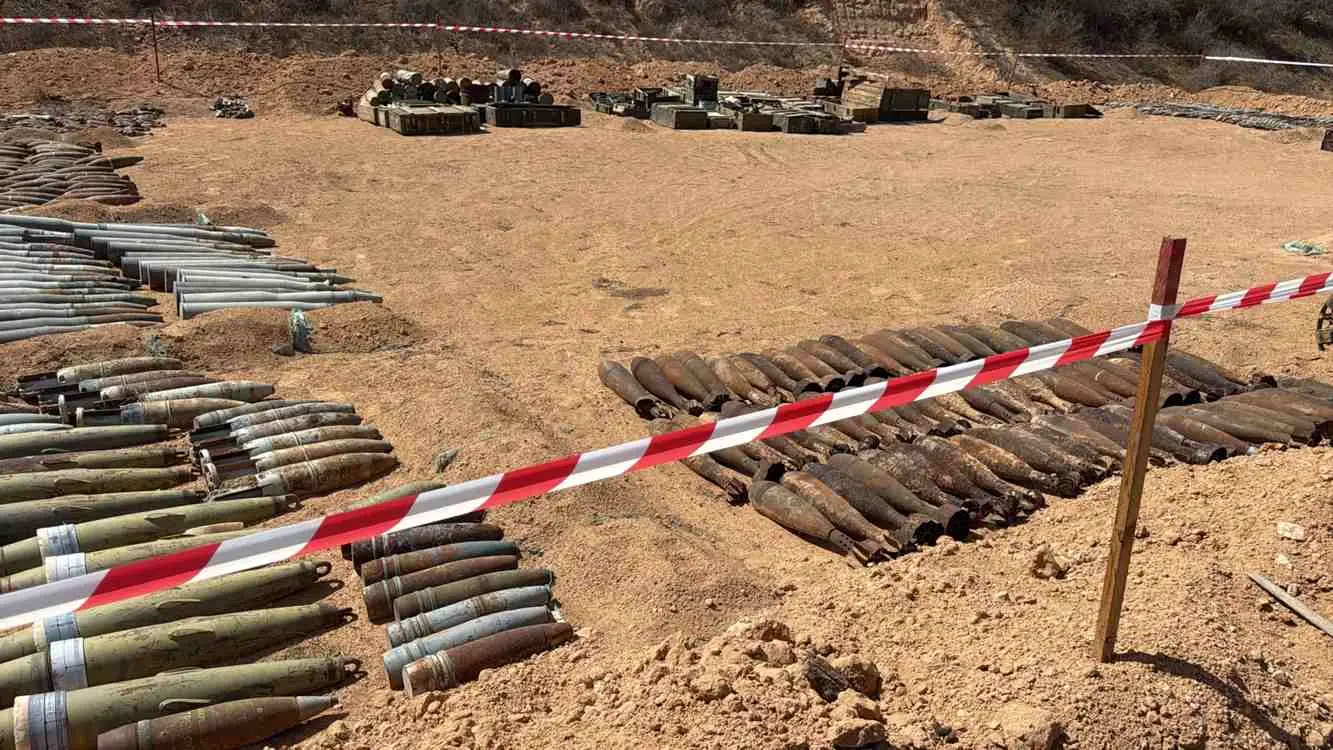
More than 14,000 abandoned explosives have been removed this year from the Libyan city of Misrata and the surrounding farmland, in an effort supported by the United Nations, Italian foreign aid, Libyan partners and the HALO Trust.
According to a field report presented by the Italian-funded Libyan Peace Organization during a visit to Misrata by a team from the United Nations Support Mission in Libya (UNSMIL), 14,066 explosives were removed from Al-Sweihli farm between January and September. This clearance gives displaced residents the opportunity to return to their land.
Misrata saw fierce fighting during the civil war that broke out after Colonel Muammar Gaddafi was overthrown by local rebels with NATO's help. Islamic State in North Africa controlled Misrata and Sirte, cities between Tripoli to the west and Benghazi to the east.
Driving out Islamic State proved to be one of the war's most violent chapters and left behind thousands of mines, shells and bombs that can lie dormant for generations before exploding at the slightest disturbance. The HALO Trust has worked in similar environments for decades and began training explosive clearance specialists in Tripoli in 2018, before moving to Sirte in 2025 and Misrata in 2026.
“Libyan civilians should not be exposed to such risks,” said Fatma Zourrig, head of UNSMIL's Mine Action Programme. Protecting communities and reducing the risks of unplanned explosions at ammunition sites were central themes of a field visit to Al-Sweihli following an explosion in Misrata's Al-Sikt area. Technical assessments found that abandoned ammunition depots are a major risk factor, with one already identified near Misrata airport and being cleared this year.
HALO's experience extends beyond Libya: in northern Sri Lanka, the organization safely removed the 300,000th mine left by the country's civil war, across an area 33% larger than the island of Manhattan, allowing a quarter of a million people to return to their land and homes.
In September, UNSMIL made diplomatic progress when, after more than a year of efforts, the last remaining combatants in the civil war agreed on a roadmap for elections within a year, with outstanding issues such as the electoral law, candidate eligibility and the national electoral authority expected to be resolved. Removing the explosives is another step on Libya's long road to recovery.



Comments