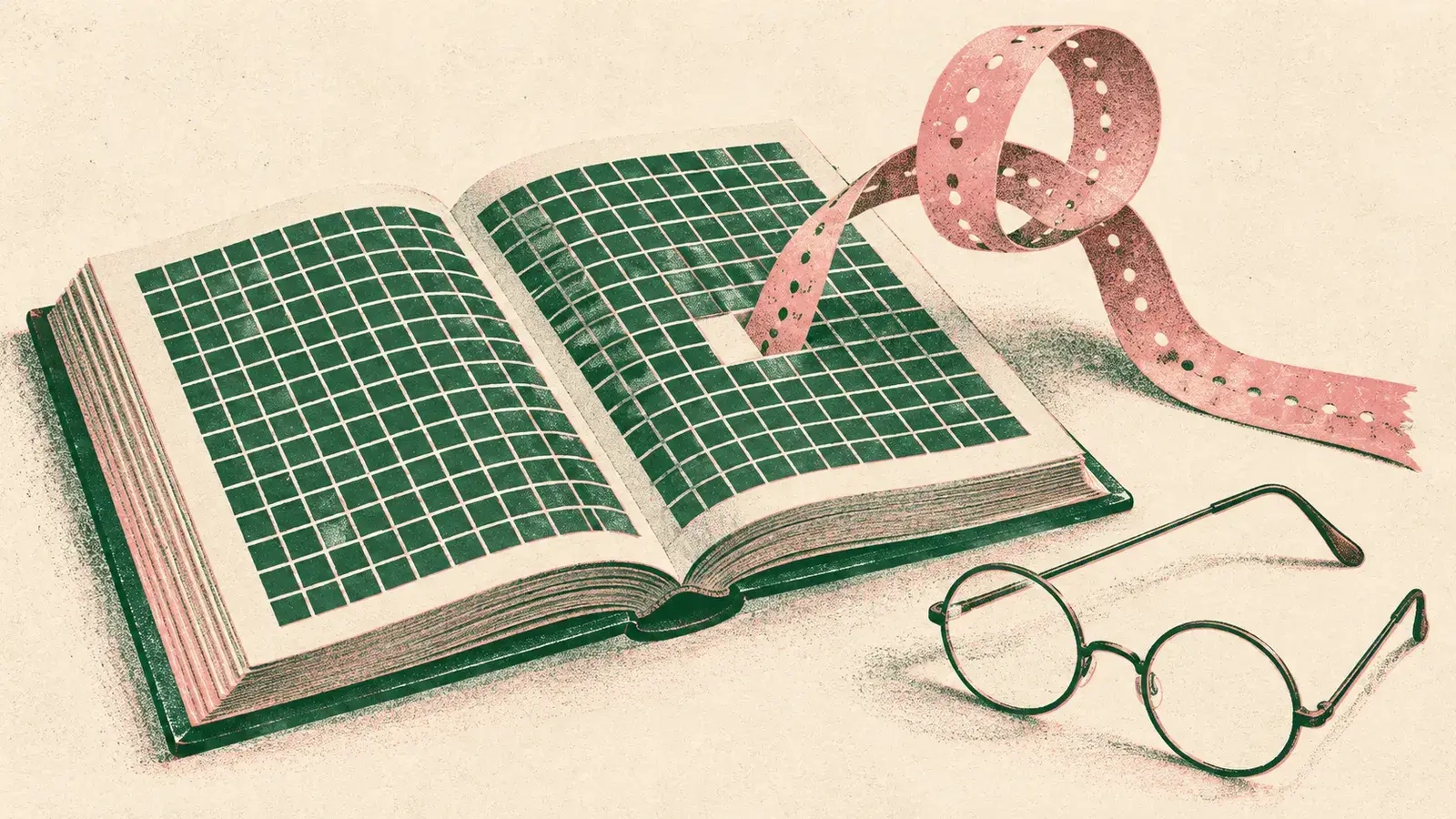
Kurt Gödel, a mathematician, logician and philosopher, transformed the study of the foundations of mathematics with the incompleteness theorems he published in 1931. He showed that a consistent formal axiomatic system, provided it meets certain technical conditions and can express the arithmetic of natural numbers, contains statements that it can neither prove nor disprove. Furthermore, such a system cannot prove its own consistency. These results established the limits of a programme that sought to base arithmetic, and through it other fields of mathematics, on a complete and provably consistent set of axioms.
He was born on 28 April 1906 in Brno, then part of Austria-Hungary, into a prosperous German-speaking family. His father was the manager and co-owner of a large textile business, while the children were raised as Protestants. His persistent curiosity earned him the family nickname “Mr Why”. At school, he excelled in mathematics, languages and religious studies, while in his teenage years he studied history and philosophy. He recovered from rheumatic fever in childhood but remained convinced that his heart had suffered permanent damage.
In 1924, at the age of 18, he went to the University of Vienna, where he initially intended to study theoretical physics. He also attended courses in mathematics and philosophy, participated in the Vienna Circle and adopted ideas of mathematical realism. A seminar on the work of Bertrand Russell turned him towards mathematical logic. In 1929, under the supervision of Hans Hahn, he completed his dissertation with the completeness theorem for first-order logic: every statement that is true in all models of a system can be proved from its axioms. He received his doctorate in 1930.
The completeness of first-order logic and the incompleteness of arithmetic concern different questions. In his 1931 paper, Gödel constructed an arithmetical statement expressing that it cannot itself be proved within the particular system. To achieve this, he developed Gödel numbering, a method that assigns natural numbers to formal expressions and proofs. This allowed him to express even the concept of provability in arithmetical terms. Under the required conditions, there are true arithmetical statements that remain unprovable within the system.
His contribution extended to set theory, proof theory and computability. He showed that the axiom of choice and the generalised continuum hypothesis are consistent with the Zermelo–Fraenkel axioms, provided those axioms are consistent. For the proof, he introduced the constructible universe, a model in which sets arise from simpler sets. Later, Paul Cohen’s results, combined with his own, established the independence of these statements from those axioms. Gödel also advanced the study of recursive functions and explored the relationships between classical, intuitionistic and modal logic.
In 1929, he met Adele Nimbursky, whom he married in September 1938 despite his parents’ opposition. Adele was an important source of support as his mental health difficulties affected their daily lives. In 1936, the murder of Moritz Schlick, whose seminar had strengthened his interest in logic, triggered a serious crisis. Gödel developed paranoid symptoms, including a fear of poisoning, and was hospitalised for several months.
After Austria’s annexation by Nazi Germany in 1938, his university position was abolished and his application for a new post was rejected. His previous connections with JEWISH colleagues counted against him, while the German army deemed him fit for conscription. In late 1939, he left Vienna with Adele, travelling through Siberia and Japan to the United States, where they arrived in March 1940. He settled in Princeton and worked at the Institute for Advanced Study, becoming a permanent member in 1946 and a professor in 1953. He became an American citizen in 1948.
In Princeton, he developed a close friendship with Albert Einstein, with whom he would take long walks. His interests shifted more towards physics and philosophy. In 1949, he found solutions to the equations of general relativity that include closed timelike curves, mathematically allowing a return to the past within those particular models. These “rotating universes” became known through the Gödel metric. He received the Albert Einstein Award in 1951 and the National Medal of Science in 1974 for his work.
Gödel studied Gottfried Leibniz in particular, as well as other philosophers. He believed in a personal God and an afterlife, beliefs he connected with his own understanding of the rational structure of the world. In the early 1970s, a formulation of the ontological argument for God’s existence circulated among friends, known as Gödel’s ontological proof. This is a philosophical argument based on assumptions, rather than empirical confirmation of his religious beliefs.
In the final years of his life, his fear of poisoning led him to eat only food prepared by Adele. When she was hospitalised after a stroke in late 1977, he refused to eat and died of malnutrition on 14 January 1978. After Adele’s death in 1981, his archives were donated to the Institute for Advanced Study. His legacy continues through the study of logic, editions of his papers and philosophical notebooks, and the Gödel Prize in theoretical computer science. His work remains a reference point for the distinction between mathematical truth and what can be proved within a particular system.



Comments