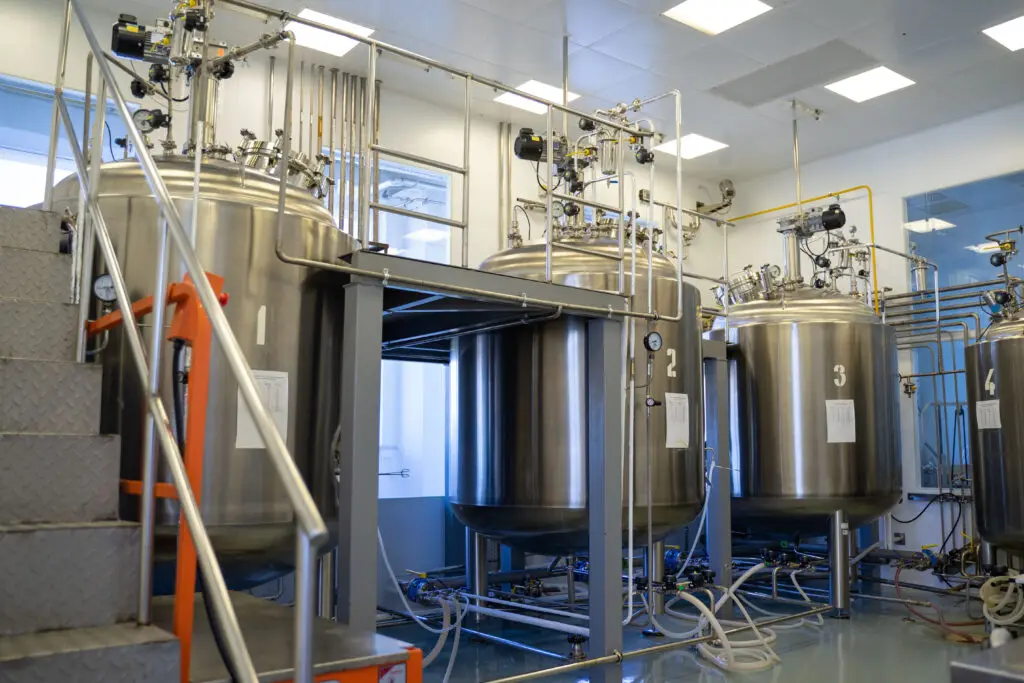
Germany’s federal government has officially included alternative protein sources in its “High-Tech Agenda”, a development welcomed by the Good Food Institute Europe (GFI Europe). The “Biotechnology Roadmap”, presented by the Federal Ministry of Research, Technology and Space, highlights the importance of alternative proteins for Germany’s leadership in innovation and technological autonomy, and sets out specific measures.
Among these, GFI Europe singles out the plan to establish a national innovation hub for cell cultivation and precision fermentation by 2027. These techniques, such as producing cultivated meat or ingredients that improve the taste and nutritional value of plant-based meat and dairy products, hold great potential for innovative, sustainable food. The hub aims to bring together fragmented research activities, reduce duplication and accelerate the commercialisation of research findings.
Examples from the United Kingdom and Sweden show, according to GFI Europe, that such a hub can give the sector a significant boost. There, research institutions, industry and policymakers work together on openly accessible research findings, aiming to accelerate progress towards tasty, affordable, sustainable food.
GFI Europe’s published analysis of the research and innovation ecosystem shows that Germany is well placed to develop a competitive alternative protein sector. In recent years, it has ranked first in Europe for scientific publications and fourth for patents.
However, there is room to improve public investment: between 2020 and 2025, Germany invested €79 million, less than €1 per person, placing it in the middle of the rankings, behind countries such as the United Kingdom, the Netherlands and several Scandinavian countries. In addition, most of the investment went into plant-based proteins, with only about one-fifth directed towards food produced through biotechnology.
Increasing public investment could bring significant economic growth. According to a study by consultancy Systemiq, the sector could contribute €20 billion to €65 billion annually in added value by 2045 and create between 115,000 and 250,000 additional jobs, depending on economic and political support. With the roadmap, the German government is on course to realise this potential, as the Systemiq report also recommends establishing an innovation hub.
According to GFI Europe, securing adequate funding for the hub is crucial. In recent years, for example, the United Kingdom has funded several centres with grants of €10 million to €15 million each, seeking to become a global leader in food biotechnology and alternative proteins. The hub should also be designed to encourage interdisciplinary work and involve businesses, allowing knowledge to move effectively from research into industry.
The regulation of novel foods is equally important. While the highest food safety standards must be maintained, the framework should allow these innovations to enter the European market. GFI Europe welcomes the roadmap’s recognition of the need for effective and transparent implementation of the Novel Foods Regulation, as well as the design of the European Biotech Act so that the option of creating regulatory sandboxes also covers these foods.
Ivo Rzegotta, head of Germany, Austria and Switzerland at the Good Food Institute Europe, said that including cultivated meat and precision fermentation in the High-Tech Agenda is a crucial first step towards advancing sustainable alternative proteins. To support the plan’s impact on Germany’s capacity for innovation and technological autonomy, he added, the hub must receive adequate funding and be designed across disciplines with industry participation. It is encouraging that the roadmap emphasises the role of effective and transparent approval procedures and calls for the European Biotech Act to include the option of regulatory sandboxes for novel foods.


Comments