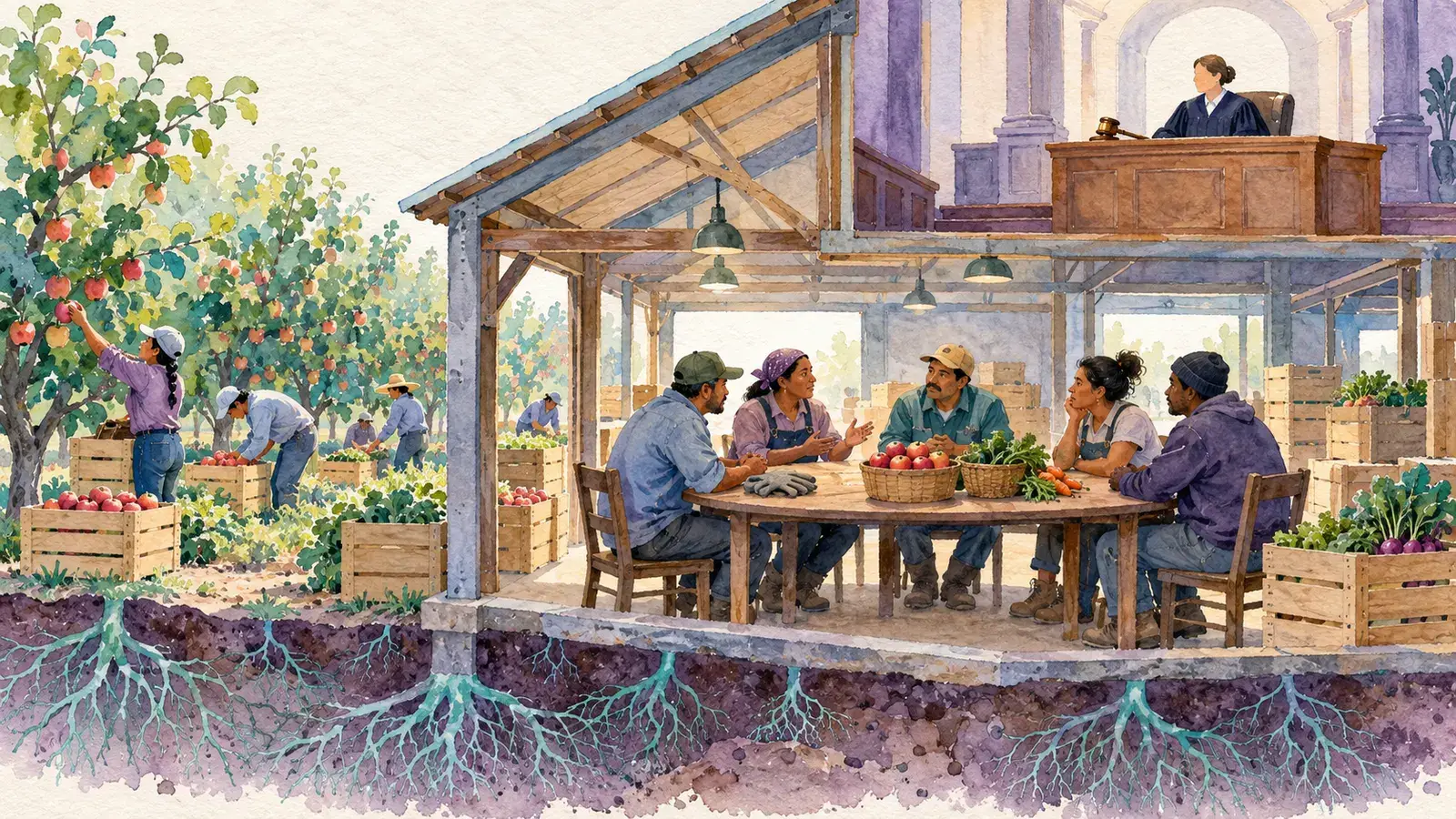
A federal judge rejected growers’ request challenging New York State’s law on farmworkers’ right to unionize, reaffirming their right to organize under the landmark 2019 law.
The legal challenge was brought by the New York State Vegetable Growers Association, along with A&J Kirby Farms, Lynn-Ette & Sons Farms and Porpiglia Farms. The case continues, challenging the constitutionality of the union rights first granted to New York farmworkers in 2019.
According to the United Farm Workers union, workers at all three farms are represented by the organization, but their first collective bargaining agreements have yet to be implemented.
Meanwhile, a new report by the International Panel of Experts on Sustainable Food Systems says that workers who grow, process, transport and serve food face some of the highest rates of workplace abuse, wage theft, forced labor, injuries and deaths in the global food system.
Errol Schweizer, an IPES-Food expert and co-author and editor of the report, explained in an interview with The Chief that food workers are essential to the economy but face significant obstacles when they try to exercise collective power. “The first and most important thing is workers organizing themselves,” Schweizer said, arguing that workers must be able to organize and unionize without employer retaliation or aggressive anti-union tactics.
According to the article, the court ruling provides a concrete example of this dynamic: food workers are fundamental to the system, yet often face powerful obstacles when they seek collective power.

Comments