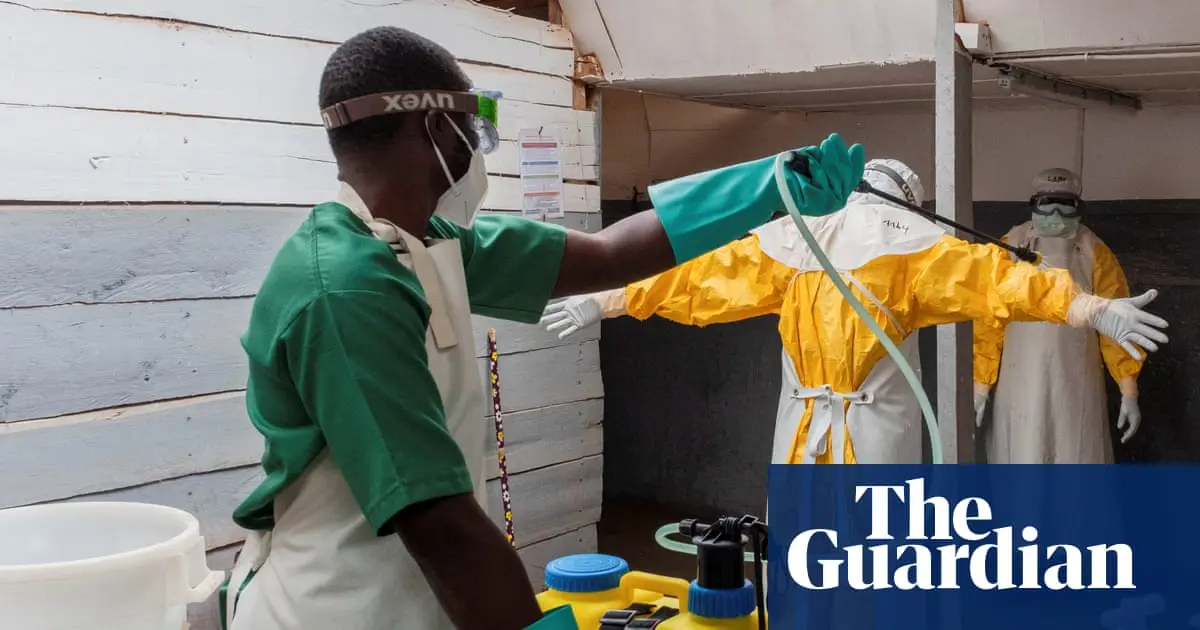
An official in the Democratic Republic of the Congo's ruling party was beaten to death on Sunday in Butembo after appearing on a radio program to raise awareness of the Ebola epidemic. Marie-Célestin Karondwa, interim president of the federal executive committee of the Union for Democracy and Social Progress (UDPS) party in the city, was promoting measures to prevent the disease.
According to a statement from the party's federation, the attackers beat Karondwa, stole his belongings and set fire to his home; he later died of his injuries. It was not immediately clear who carried out the attack, how many people were involved or what the motive was. The party described Karondwa as an “innocent victim for defending the party's position on the existence of Ebola disease and the threat it poses to the population.”
The killing follows a series of attacks on health workers and treatment centers, which experts attribute to rumors, misinformation about the disease and distrust of health responders. The incidents include violence, unrest, property destruction and disruption of essential services. On Saturday, armed men attacked a handwashing checkpoint in the nearby Beni area, killing at least one person and injuring several others, according to a local civil society organization.
The Ebola virus was first identified in 1976 in what is now the DRC. It is a highly contagious and often fatal viral disease that affects humans and nonhuman primates. It spreads through bodily fluids or contaminated materials and causes organ damage, damage to blood vessels and, in some cases, severe internal or external bleeding.
The current epidemic is caused by the rare Bundibugyo virus, for which there is no approved treatment or vaccine. It was first announced on May 15 and, according to figures from the DRC's Health Ministry, has infected 8,067 people and killed 3,901. Cases have been confirmed in seven of the country's provinces.
It is the largest and deadliest epidemic in the DRC's history and the second largest worldwide after the 2014–16 West African epidemic, which infected more than 28,600 people and killed over 11,000. Data from the Africa Centres for Disease Control and Prevention show that the current epidemic has outpaced the one in West Africa.
Last month, the World Health Organization warned that the epidemic was on track to surpass the one in West Africa. Experts say the spread of the disease has intensified because of several factors, including conflicts, aid cuts and attacks on health workers and treatment centers.
Karondwa's death shows how violence and misinformation can undermine the response to a health crisis as the Ebola epidemic expands across the country and threatens to surpass historical precedents. The loss of a man who publicly promoted prevention measures reflects the cost of distrust and insecurity in affected communities.


Comments