Daniel Kahneman (Daniel Kahneman), the Israeli-American psychologist who was awarded the Nobel Prize in Economics in 2002, died on March 27, 2024, three weeks after turning 90. He is considered the “grandfather of behavioral economics”: together with Amos Tversky and others, he showed that people do not always make decisions as rational calculators, but make systematic errors arising from heuristics and biases.
He was born in Tel Aviv in March 1934, while his mother was visiting her family, and grew up in Paris, where the family lived through the occupation. He would describe a scene from late 1941 or early 1942: a German soldier, one of those he had been taught to fear, picked him up, hugged him, showed him a photograph of a boy and gave him money. That evening, he said, he became convinced that “people are endlessly complicated and interesting.”
He studied psychology and mathematics at the Hebrew University of Jerusalem and earned a doctorate from the University of California, Berkeley, in 1961. Before his academic career, he served in the Israeli army, initially as a second lieutenant in the infantry and then in the psychology department, where he developed a structured interview for recruits that remained in use for decades.
His long collaboration with Amos Tversky began in 1969. Their first joint paper, “Belief in the Law of Small Numbers,” was published in 1971, and by 1979 they had published seven papers. The celebrated “Judgment Under Uncertainty: Heuristics and Biases” introduced the concept of anchoring, while the final version of prospect theory was published in Econometrica in 1979 and became one of the most cited works in economics.
In 2002, he was awarded the Nobel Prize in Economics “for having integrated insights from psychological research into economic science, especially concerning human judgment and decision-making under uncertainty.” Kahneman would point out that he would have shared the prize with Tversky had the latter not died in 1996. He himself had never taken an economics course.
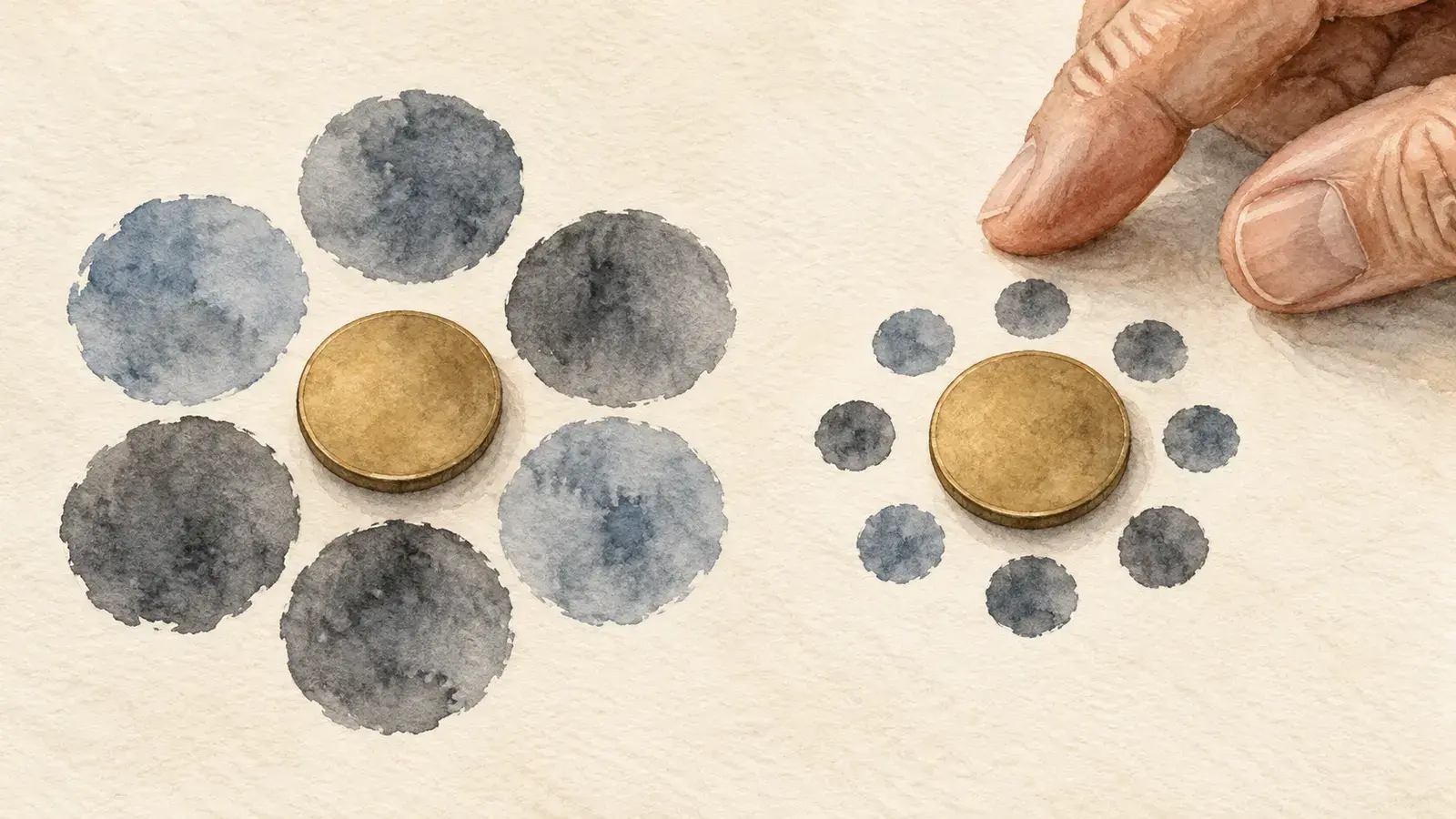
In 2011, he published “Thinking, Fast and Slow,” which summarizes much of his research and became a bestseller. In it, he also expressed one of his best-known observations, about the “focusing illusion”: “Nothing in life is as important as you think it is when you are thinking about it.” In a study with David Schkade, students from the American Midwest believed that their peers in California were happier because they focused solely on the good weather.
In his study of happiness, Kahneman distinguished between two “selves”: the experiencing self, which feels pleasure and pain as they occur, and the remembering self, which summarizes the experience retrospectively. The peak–end rule he described shows that the memory of a painful experience is determined mainly by how someone felt at its peak and at its end: a colonoscopy that lasts a little longer but ends less unpleasantly is remembered as less negative.
His personal life was marked by two marriages. He had two children from his first marriage, to Irah Kan; his son Michael had schizophrenia. From 1978 until her death in 2018, he was married to cognitive psychologist Anne Treisman. From 2020, he lived in New York with Barbara Tversky, his collaborator’s widow.
He described himself as “anxious” and not “a cheerful person,” while Richard Thaler called him “a rabid pessimist.”
Having experienced dementia firsthand through his mother and his wife Anne, who both suffered from it, he chose to die by assisted suicide in Switzerland, with the help of the organization Pegasos, in Nunningen. The manner and location of his death only became known in March 2025.
His colleagues paid tribute to him as a “giant of the field”; according to Richard Thaler, his work was “one of the most important achievements of 20th-century science.”



Comments