Jean Baudrillard (27 July 1929 – 6 March 2007) was a French sociologist and philosopher best known for his analyses of the media, contemporary culture and technological communication, as well as concepts such as “hyperreality”. He wrote about consumerism, the critique of economics, aesthetics, Western foreign policy and popular culture. His work is often associated with postmodernism and poststructuralism, although he kept his distance from both.
He was born in Reims in northeastern France. His grandparents were agricultural workers and his father was a gendarme. In secondary school, his teacher Emmanuel Peillet introduced him to “pataphysics”, a parody of the philosophy of science — an influence considered crucial to his later thinking. He became the first in his family to attend university, studying German language and literature at the Sorbonne. He taught German at various secondary schools from 1960 to 1966, while also publishing literary criticism and translating writers such as Bertolt Brecht, Karl Marx and Friedrich Engels.
In 1966, he completed his doctoral thesis, “The System of Objects” (Le Système des Objets), under the supervision of Henri Lefebvre, Roland Barthes and Pierre Bourdieu. He began teaching sociology at Paris X Nanterre, a university campus deeply involved in the May 1968 uprising. In 1986, he completed his habilitation and became a full professor, later moving to IRIS at Paris Dauphine University. He gradually moved away from classical sociology, saying that he did not identify “either as a philosopher or as a sociologist”.
His thinking starts with semiotics and the structuralist linguist Ferdinand de Saussure: meaning is created through difference, rather than through reference to something real. From there, Baudrillard developed the theory that societies continually seek a “total” meaning that remains impossible to find. The subject tries to understand the object, but can understand it only through a web of signs, becoming “seduced” and led towards a simulated version of reality — what he called “hyperreality”. As he wrote, the faster societies assemble reality into a supposedly coherent picture, the more unstable it seems and the more frightened those societies become.
In his early books, such as The System of Objects and The Consumer Society, he argued — contrary to Marx — that consumption, rather than production, is the main driving force of capitalism. Needs, he said, are not innate but constructed. He distinguished four ways in which an object acquires value: functional value, exchange value, symbolic value (a gift, for example) and sign value (a pen that signals status, for example). Sign value, he argued, disrupts the first two forms of value and dominates modern consumption.
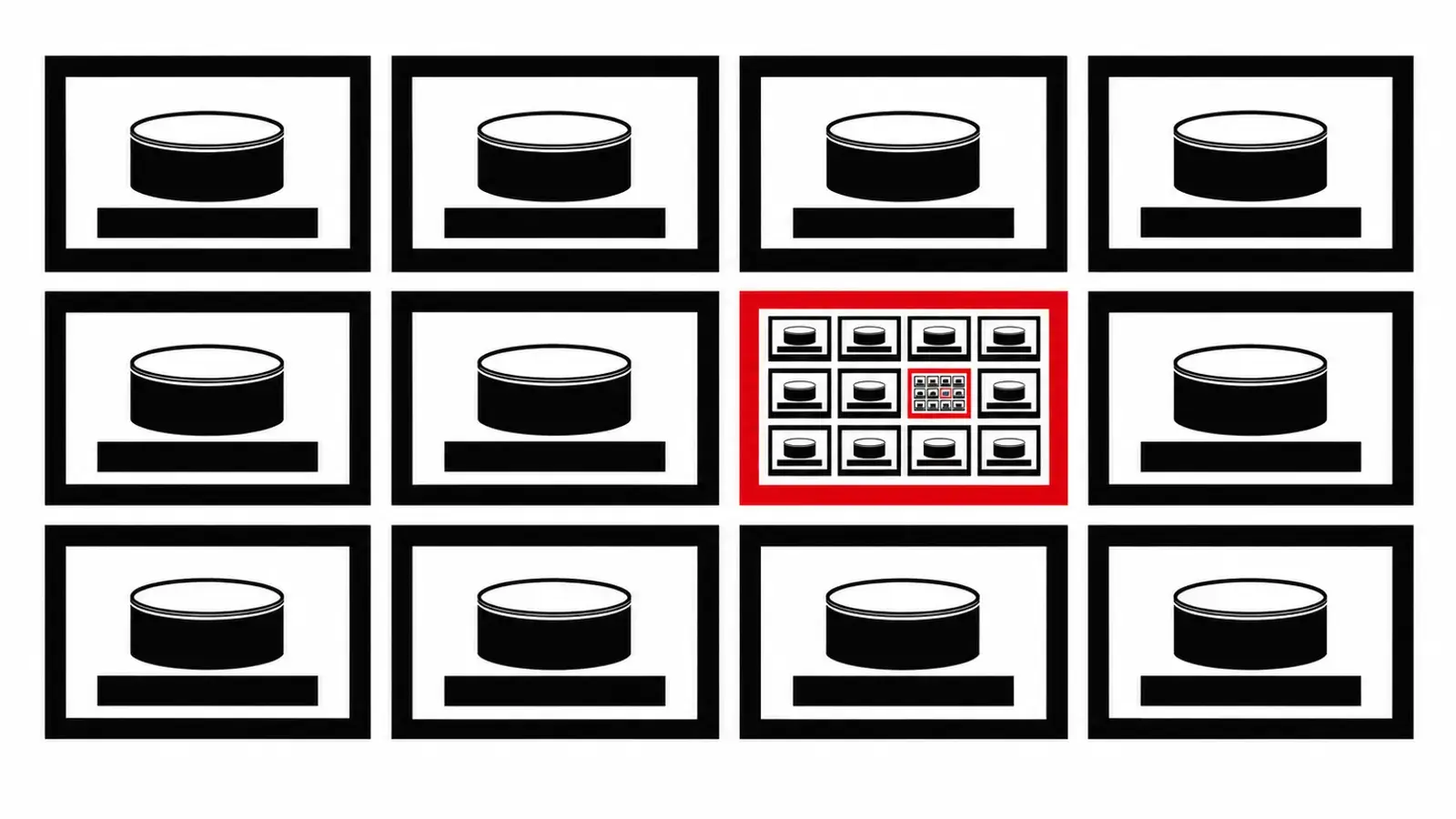
In one of his best-known works, Simulacra and Simulation (1981), he described a historical progression of simulacra: imitation dominated the Renaissance, the mass-produced product dominated the Industrial Revolution, and the model, which by its nature is reproduced endlessly, dominates our own era. Simulation, he said, is the current stage: everything consists of references without real referents. According to Baudrillard, the distinctions between the real and the imaginary, the copy and the original, collapse.
In the 1980s and 1990s, he explored the end of history. Unlike Francis Fukuyama, Baudrillard saw the end of history as the collapse of the very idea of progress, rather than the triumph of democracy. The end of the Cold War was not an ideological victory, but the disappearance of the utopian visions of both right and left. In The Illusion of the End, he wrote that if there were no longer any “dustbins of history”, it was because History itself had become a dustbin — “just as the planet itself is becoming its own dustbin”.
He became more widely known through his provocative book The Gulf War Did Not Take Place (1991), initially published as a series of articles in Libération and The Guardian. He argued that the war was the reverse of the Clausewitzian formula: a continuation of the absence of politics by other means, rather than a continuation of politics by other means. Saddam Hussein was not fighting the Coalition but sacrificing his soldiers’ lives to retain power, while Western media presented the war in real time by recycling images. Critics such as Christopher Norris accused him of denying the physical dimension of war, while sympathetic commentators such as William Merrin responded that he was not denying that something had happened, but questioning whether it was actually a war or “an atrocity disguised as a war”.
He wrote columns in Libération about the war in Bosnia, condemning Western indifference to “aggression and genocide in Bosnia” and openly naming the Serbs as the perpetrators. He harshly criticised Susan Sontag for staging Waiting for Godot in besieged Sarajevo; Sontag called him “ignorant and cynical” and a “political idiot”. He wrote the essay The Spirit of Terrorism about the attacks of 11 September 2001, describing them as an “absolute event” and a symbolic response to globalisation, rather than a clash of civilisations. Richard Wolin accused him of almost celebrating the attacks, something Slavoj Žižek rejected as a misreading.
The reception of his work was mixed. According to Sylvère Lotringer, Gilles Deleuze called him “a disgrace to the profession”. Physicist Alan Sokal criticised his quasi-scientific language. Mark Poster, who edited his work, noted that he did not define key terms, that his style was exaggerated and that he generalised from a limited basis, but also defended his relevance: Baudrillard was not questioning whether reason works in everyday actions, but whether this kind of thinking is sufficient for a historically informed understanding of the present.
In his personal life, he married twice and had two children. He always wrote on a typewriter, never on a computer, saying that a computer is not simply “a more convenient and more complex typewriter” and that with a typewriter he had a “physical relationship with writing”. He was diagnosed with cancer in 2005 and died at the age of 77 in his apartment on Rue Sainte-Beuve in Paris. His wife Marine now oversees the association “Cool Memories”, dedicated to his memory. The collection The Agony of Power was published after his death, and its opening text called for the abolition of power itself — not just the refusal to be dominated, but, “equally violently”, the refusal to dominate.




Comments