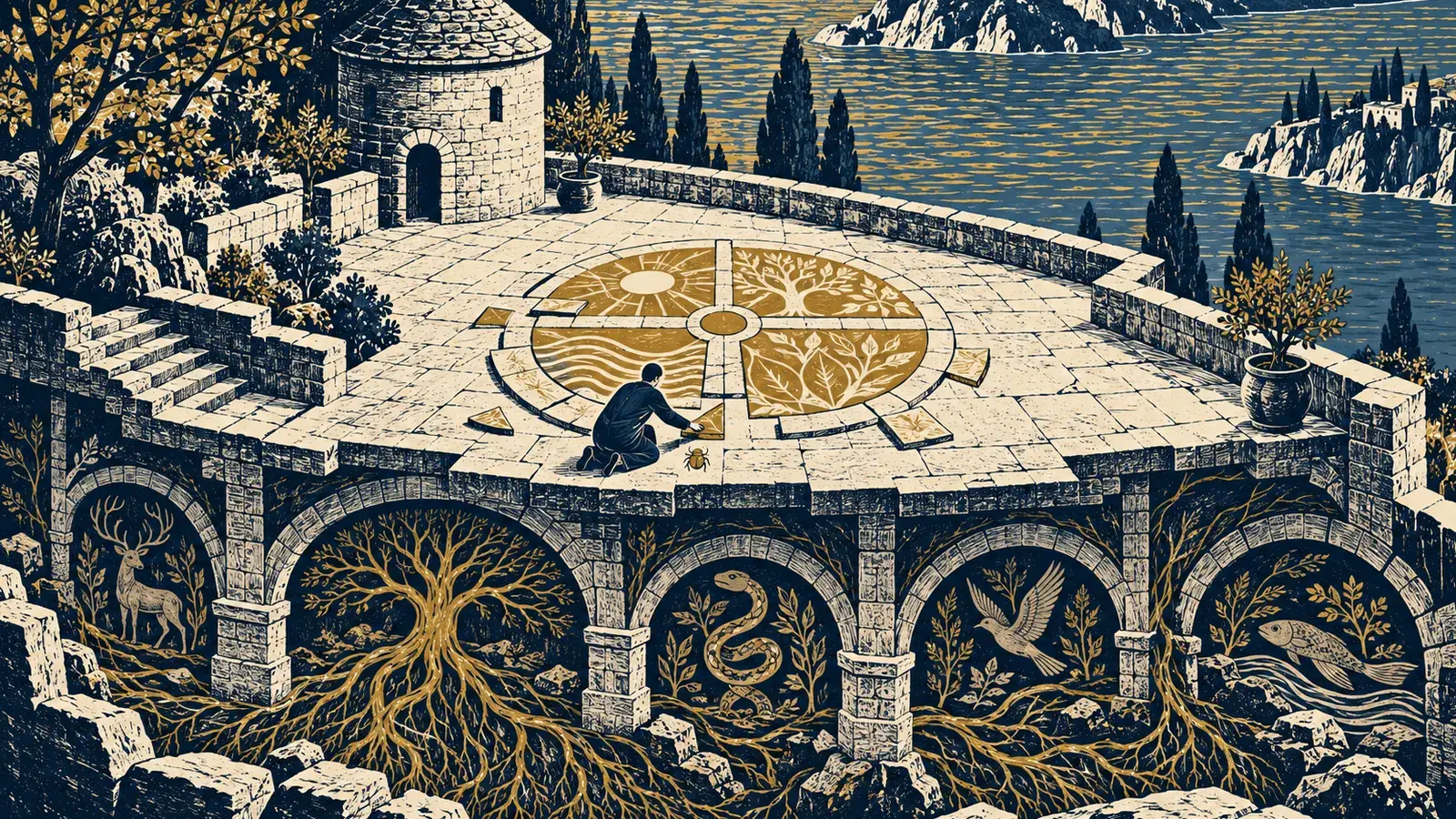
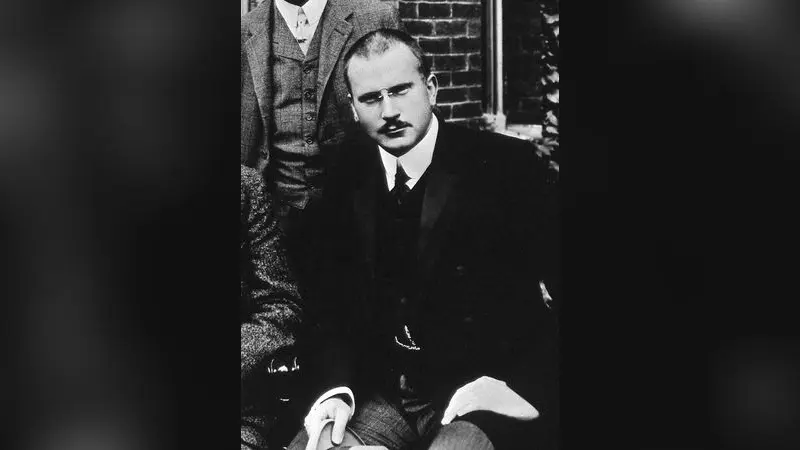
Carl Gustav Jung (1875–1961) was a Swiss psychiatrist, psychotherapist and psychologist who founded the school of analytical psychology. He is considered one of the most influential psychologists of all time, with work that has influenced psychiatry, anthropology, literature, philosophy and religious studies. He wrote more than twenty books and became best known for the concept of archetypes.
He was born in Kesswil, Switzerland, the son of a Reformed Church pastor and a mother with an eccentric and depressive personality. From childhood, he felt he had two personalities: the ordinary schoolboy and an inner, unconscious “18th-century man.” A childhood fainting episode kept him out of school for six months; hearing his father worry about his future led him to understand what neurosis was. He studied medicine at the University of Basel and initially wanted to become a priest or an archaeologist, but ultimately chose psychiatry.
In 1900, he began working at the Burghölzli psychiatric hospital in Zurich under Eugen Bleuler, where he worked on schizophrenia, then known as “dementia praecox,” and developed his word association studies. In 1909, he left the hospital and opened a private practice in Küsnacht.
In 1903, he married Emma Rauschenbach, the daughter of a wealthy watchmaking industrialist, which ensured financial comfort for the family. They had five children. During his marriage, Jung had at least one extramarital affair, with his patient and later psychoanalyst Sabina Spielrein, and reportedly had a long-term relationship with Toni Wolff. He confessed to Freud that he had “polygamous elements.”
His relationship with Sigmund Freud began through correspondence before their first meeting in Vienna in 1907, where they talked for 13 hours, and quickly developed into a close collaboration. Freud regarded him as his successor and proposed him as president of the International Psychoanalytical Association. However, their disagreements over the nature of libido and the unconscious came to a head with the publication of Jung's “Psychology of the Unconscious” in 1912, leading to their final split in 1913.
After the split, Jung went through a period of deep psychological crisis, which he described as a “confrontation with the unconscious.” He experienced visions and heard voices, fearing that he was at risk of psychosis. These experiences were recorded in his personal journals, known as the “Black Book,” and later transcribed and illustrated in the famous “Red Book,” which was not published until 2009. During this period, he developed his main theories of archetypes, the collective unconscious and individuation.
In the following years, Jung published important works such as “Psychological Types” (1921), in which he developed the concepts of introversion and extraversion, which he had already introduced in 1913. He travelled to East Africa (1925) and India (1937–38), developing an interest in Hinduism, Buddhism and Advaita Vedanta. His belief that alcoholics could recover through a “vital spiritual experience” played a decisive role in the creation of Alcoholics Anonymous in 1935.
Jung died on 6 June 1961. His work lives on through concepts such as synchronicity, psychological complexes, individuation as the main task of human development, and the idea that religion is a powerful expression of the human psyche and the search for meaning.


Comments