Wolfgang Pauli, the physicist who first proposed the existence of the neutrino and won the Nobel Prize for the exclusion principle, was just 21 when he published a review of Einstein's general theory of relativity. Einstein was deeply impressed by the young author's psychological acumen and scientific rigor, writing that no one would believe the work came from a 21-year-old.
This rare combination of psychological insight and scientific discipline grew stronger over the years. After three decades of studying the work of psychologist William James, Pauli met psychiatrist Carl Jung, who in turn had been influenced by Einstein's ideas about space and time. This meeting gave rise to an unusual friendship that lasted a quarter of a century, until Pauli's death in 1958.
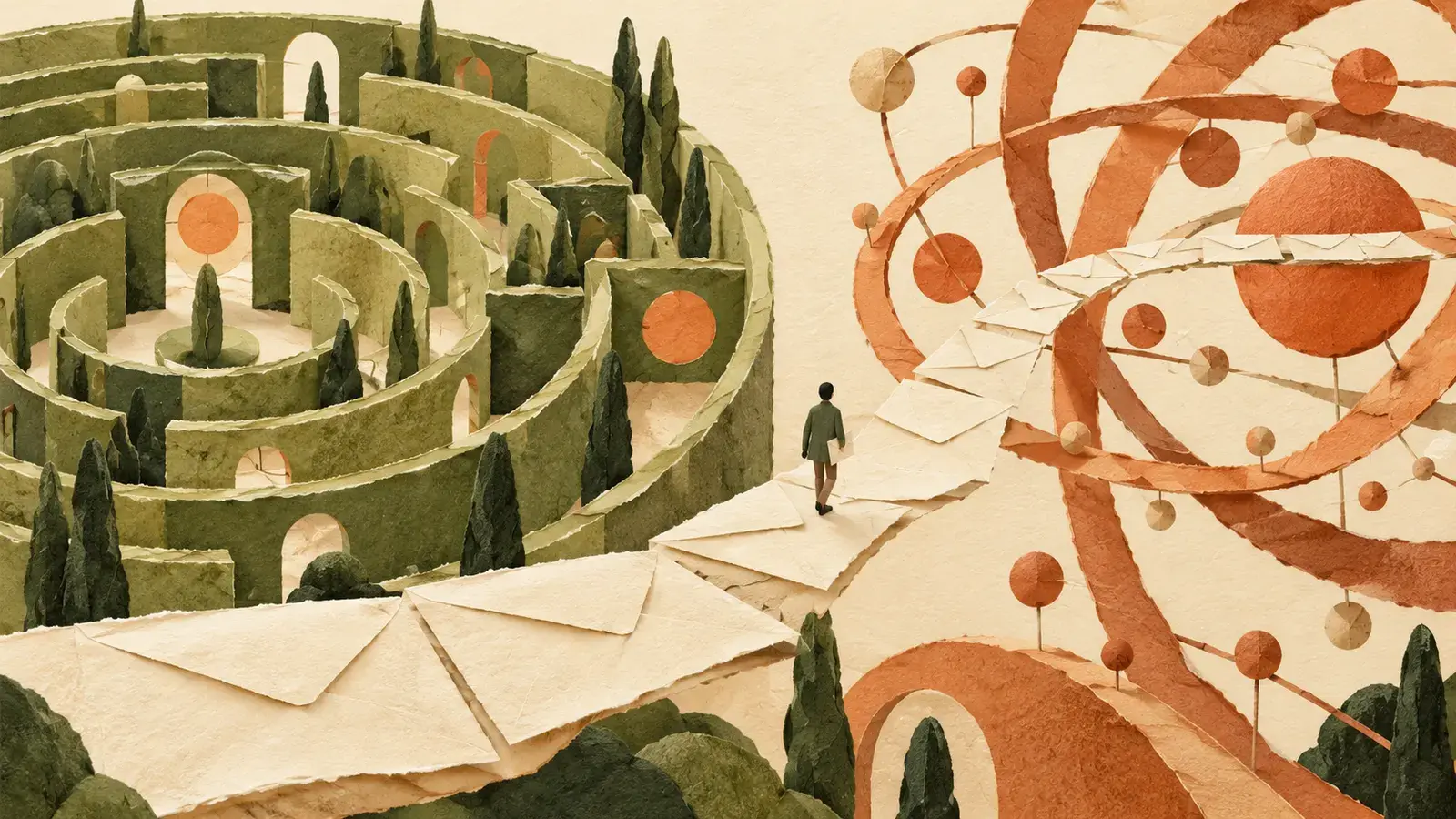
Their correspondence, collected in the volume “Atom and Archetype: The Pauli/Jung Letters, 1932–1958”, began with Pauli's interest in dream analysis but quickly expanded into fundamental questions about the nature of reality. The two men explored the analogy between the atom—with its nucleus and orbiting electrons—and the self—with the conscious ego at the center and the unconscious at the periphery. Jung argued that the central structure of the collective unconscious cannot be located in one place but is an omnipresent entity, and saw the radioactive nucleus as a symbol of the collective unconscious's energy source. Pauli, for his part, derided the narrow materialism of the physics of his time and called for openness to deeper spiritual layers not defined by the conventional notion of time.
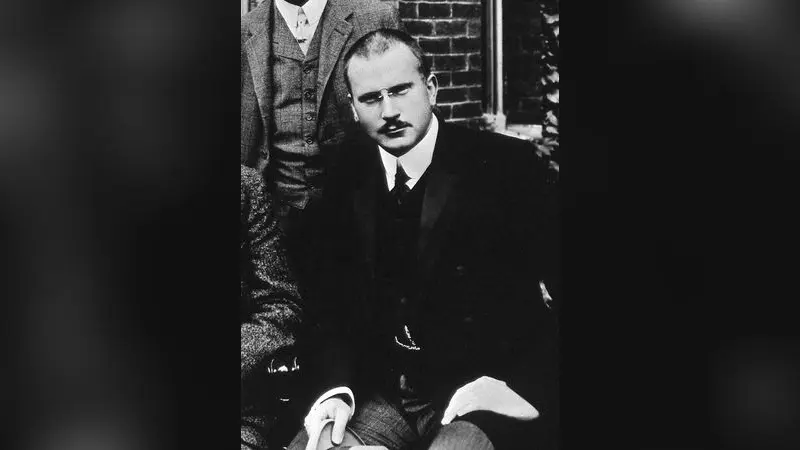
The pivotal moment in their collaboration came in a letter from Pauli in December 1947, in which he posed a radical question: if the phenomena of microphysics depend on the observer, might they also depend on who is observing—that is, on the nature of their psyche? This question sparked the series of discussions in which the two men devised the concept of synchronicity: meaningfully connected events without a causal relationship, which the observer experiences as a meeting point of inner and outer reality. By the autumn of 1948, the term was being used regularly in their correspondence.
Pauli preferred the term “correspondence of meaning” to “synchronicity”, emphasizing the meaning of events rather than their simultaneous occurrence. In 1950, he wrote that nature is so constituted that, as with Bohr's complementarity in physics, a contradiction between causality and synchronicity can never be established.
Incorporating Pauli's ideas, Jung formulated a definition: “Synchronicity could be understood as a system of order through which ‘similar’ things coincide, without any apparent cause.” He even proposed replacing the concept of causality with “relatively stable connection through effect” and synchronicity with “relatively stable connection through contingency, equivalence or meaning”.
Pauli also introduced the crucial concept of scale: synchronicity, he argued, should be defined more narrowly to include phenomena that occur in a small number of individual cases but disappear in larger numbers. At the same time, he acknowledged that microphysics, although it allows a non-causal form of observation, has no actual use for the concept of meaning.
The significance of this collaboration goes beyond its historical value. At a time when physics and psychology were considered radically separate fields, Jung and Pauli showed how their productive intersection could shift the boundary between the known and the unknown. As Jung wrote in his final work, “we do not know whether what we regard as physical at the empirical level may, in the Unknown beyond our experience, be identical with what, on this side of the boundary, we distinguish from the physical as psychic”.
Their correspondence reveals two thinkers who, feeling isolated from their contemporaries, found in each other a conversation partner capable of bridging the gap. The problem that concerned them, as Jung wrote, had remained the same for two millennia: “How does one get from Three to Four?”—a reminder that fundamental questions about the nature of reality, the mind and meaning remain open.




Comments