The Innovation Laboratory at Latvia's State Chancellery reached a critical stage in its development in 2026, as its team of six designers and experts prepares to move from an operational approach to a more strategic, systemic model. Its story began in 2018, but it really got under way in 2023, when the new team asked how the need for design and innovation in governance could be put into practice within the state's bureaucratic constraints.
Cooperation with the OECD's Observatory of Public Sector Innovation (OPSI) and a European Commission technical support project from 2022 to 2024 helped assess the Latvian public sector's capacity for innovation. The assessment led to three pillars of support: workforce and skills, the operating environment, and innovation with impact. The first concerns creating and sharing innovation tools, the second facilitating innovation at the centre of government, and the third sustainably expanding its impact. These pillars formed the basis of the Information Report on Strengthening Innovation Capacity in Latvia, which the Cabinet approved. The OECD project's final report highlighted the lack of coherence in innovation policies, the importance of a learning culture and the organisational environment, and the role of resource management in civil servants' ability to innovate.
On skills, the OECD's 2023 assessment had shown that only 21% of civil servants felt that workforce planning and the availability of skills supported innovation. Over three years, the laboratory organised 11 training programmes, ranging from the basics of design theory to advanced speculative design methods, reaching nearly 500 unique participants. In 2025, it ran or facilitated 20 innovation sprints, mainly through two EU-funded projects. Examples include the Commercial Register's development of a prototype for applying to set up a company on a mobile phone, the Centre for Disease Prevention and Control's creation of a digital service prototype for medical death certificates, and the Ministry of the Interior's development of an algorithm for civil society participation in a crisis.
The impact of the sprints extends beyond the solutions they produce. Participating civil servants report that the sprints change the innovation culture within organisations, enable faster progress on longstanding problems, build internal capacity and make collaboration a natural part of everyday work.
Alongside this, the Innovation Experts network operates as a community of practice with 358 members from different public organisations and levels of seniority. The laboratory organises workshops and meetings for the network, provides advisory support and, when specific conditions are met, offers innovation sprints. Four other public organisations have already taken the initiative to establish their own design team or innovation laboratory.
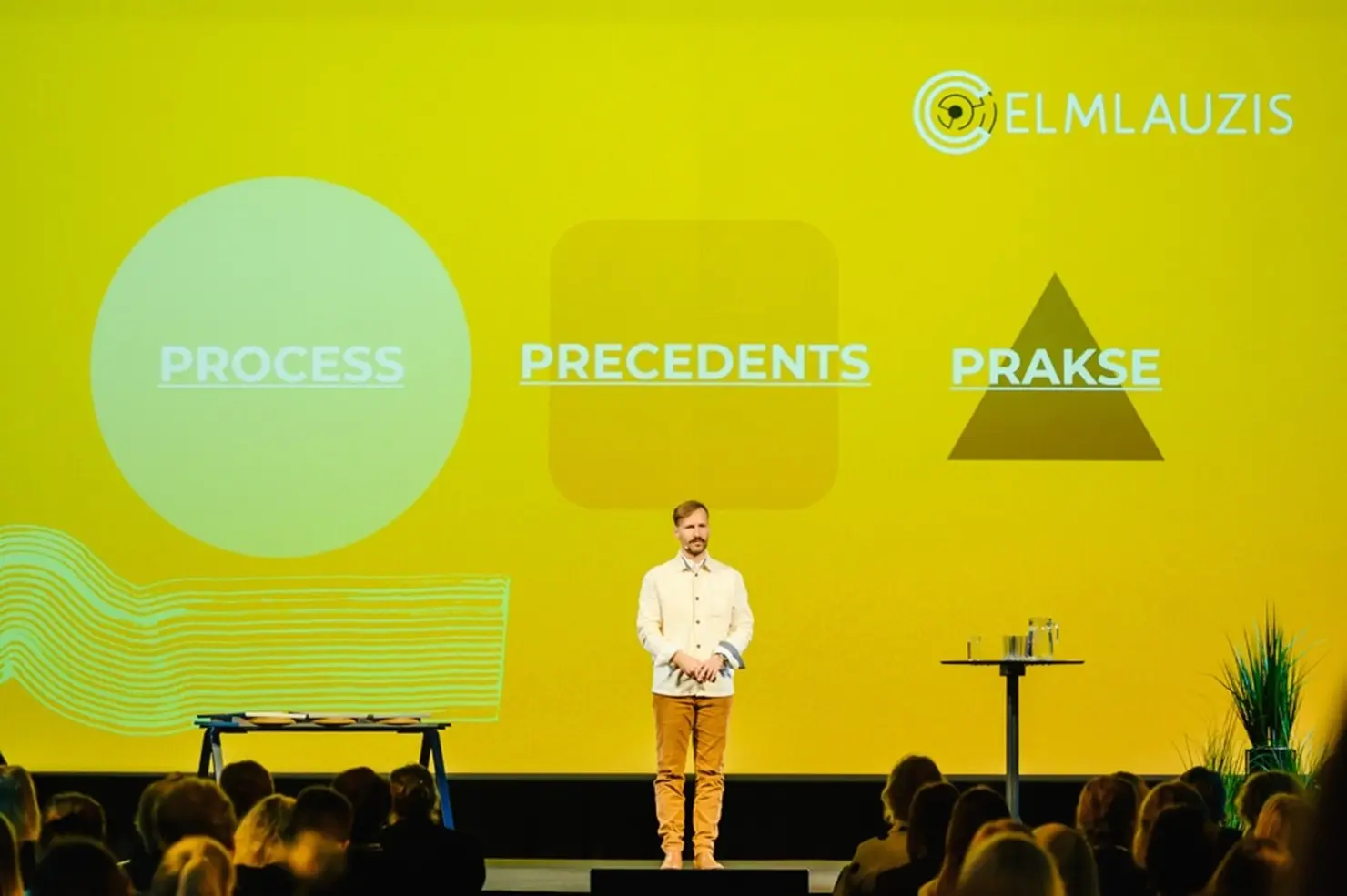
In the operating environment, the laboratory sought to influence changes affecting many or all government institutions. It organised the innovation stories conference “Celmlauzis 2025”, a name inspired by the historical practice of preparing densely forested land for agriculture, serving as a metaphor for the often thankless work of those who first initiate cultural change. The conference was paired with Latvia's first Government Innovation Award and became the laboratory's best-attended conference to date, receiving positive feedback on the inspiration and recognition it provided. The Cabinet also approved the Guidelines for Innovation Laboratories in Latvian State Governance, which set out basic principles, the necessary environment, methods and capabilities, as well as the values of empathy, experimentation and co-creation.
On impact, the laboratory took the first steps towards an Innovation Monitoring Framework, a tool for identifying and evaluating innovations across the public sector. The framework is based on OPSI's pillars and is expected to use publicly available data from public administration surveys and reduce reliance on self-reporting.
Internationally, intensive training for senior civil servants was organised with the Falay Transition collective in Finland, cooperation continued with Goldsmiths University's PI studio in the United Kingdom, and two exchange visits took place to Sweden, Finland and Denmark. These partnerships improved participants' understanding of contemporary public sector innovation and inspired them to use innovation practices in their everyday work.
At the final workshop of 2025, the “Winter Symposium: What's next? What are we building?”, international experts and network members created 15 speculative design project descriptions exploring the future role of an innovation laboratory. These provided guidance from the bottom up for the 2026 strategy.
The laboratory plans to take a more strategic approach to its sprints, focusing on reducing administrative burdens, a policy priority for Latvia's government in 2026, while internal roles were adjusted to meet these needs.
The team considers 2025 the year when the idea of public sector innovation took root in Latvia and began to send out its first shoots, with the emergence of new design teams in government being the most rewarding development.
As needs change, the laboratory recognises that the three-pillar framework must move from an operational model to one more focused on goals, to meet demand for strategic design support. Close cooperation with civil servants suggests that the greatest need may lie in three areas: Design for Democracy, Design for Digitalisation and Design for Social Resilience.
The team says it is moving forward with close ties to those who receive its services and with the same values that guide all its work: empathy for government organisations and Latvian citizens, understanding through co-creation, and knowledge through rapid experimentation and iteration.



Comments