
In 1945, physician Hunter H. Comly published a report in the Journal of the American Medical Association that would become a landmark: a healthy girl began vomiting, crying and failing to gain weight; two days after her second hospital visit, her parents brought her back because she was drowsy and her skin was turning blue. Comly linked what became known as “blue baby syndrome” to nitrate pollution in well water near farms.
The condition, methemoglobinemia, affects a protein that helps red blood cells carry oxygen; the lack of oxygen turns the skin, lips and nails blue. There is an antidote, methylene blue, but it took doctors weeks to realize that the only thing that changed between home and hospital was the water used to dilute her milk. The father insisted on bringing in a sample from the well, and this “crazy theory,” as Comly writes, provided the answer.
Many cases were recorded in the following years. In Minnesota, between 1947 and 1949, there were 139 cases of methemoglobinemia and 14 deaths. A 1951 survey by sanitary engineer Graham Walton counted hundreds of diagnoses across several states and 39 deaths, while local newspapers urged parents to test their water before mixing it with infant formula.
As early as 1945, Comly had proposed that water for infants should contain no more than 10 to 20 parts per million of nitrate nitrogen. In 1962, the US Public Health Service finally adopted the limit of 10 milligrams of nitrate nitrogen per liter, acknowledging the uncertainty in the data. In 1974, under the Safe Drinking Water Act, the new Environmental Protection Agency (EPA) took on responsibility for setting national health standards. In its 1975 explanation of the standard, it again cited Comly and Walton.
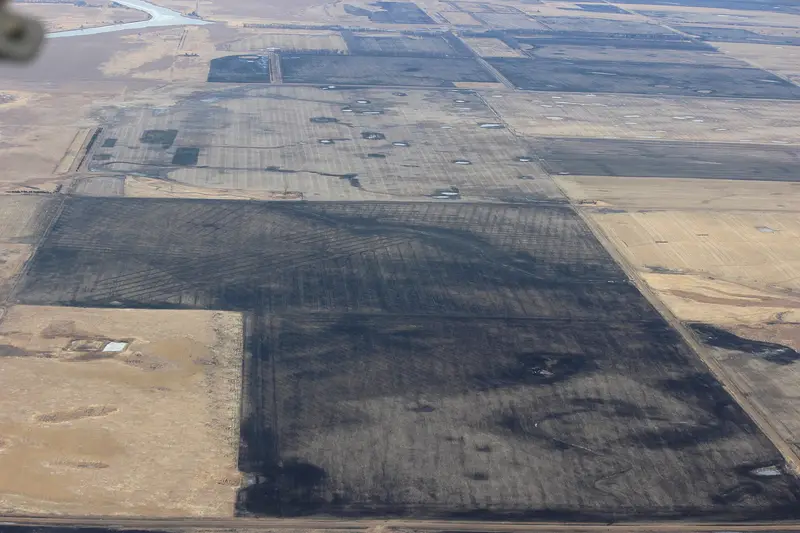
Agriculture was central from the outset. Comly noted that all the wells associated with cyanosis were near stables and latrines, and Walton reported that 83 of the 129 wells linked to cases were less than about 15 meters from sources of animal or human contamination. Farmers, however, were increasingly dependent on nitrogen fertilizers and intensive livestock farming, and the industry pushed back against the criticism.
Today, Iowa has nearly 11,000 industrial livestock facilities producing more than 170 billion pounds of manure. Nitrates remain widespread, and many residents see rising cancer rates as a crisis. Studies show that even levels within the federal limit are linked to an increased likelihood of preterm birth and low birth weight, while the International Agency for Research on Cancer has classified nitrates and nitrites under certain conditions as “probably carcinogenic.”
The review of the limit has stalled. The EPA announced a review in 2017, but it was blocked by the first Trump administration; it resumed under Biden in 2023, but in 2025 the new Trump administration abolished the office responsible. An EPA spokesperson says the limit was not a candidate for revision based on the information available.
“We’ve been stuck since 2010, the year my daughter was born. It’s crazy that she’s driving now and we still haven’t managed to act,” says David Cwiertny of the University of Iowa.
Exposure is unequal: low-income communities, people of color and the very young or elderly are more likely to be exposed to higher nitrate levels, even below the limit. Private wells are not covered by the federal standard at all, and doctors are asking patients to test their water.
History shows that change is possible: Iowa has recorded no cases of nitrate-induced blue baby syndrome in the past 30 years. “That looks like a success to me,” Cwiertny says.
Regulators continue to weigh the cost of technologies for removing nitrates against the potential public health benefits. Experts say the standard deserves more attention, not only because of cancer but also because of effects on birth outcomes and inequalities in exposure, as water is not equally safe for everyone.




Comments