The rapid construction of huge data centers housing the computing power for artificial intelligence has sparked resistance in many local communities across the United States. In a roundtable discussion originally published by Truthout, organizers from Tennessee, Wisconsin and Arizona share their experiences and lessons from their campaigns against these projects and AI infrastructure. The campaigns challenge the power of tech billionaires and the financial interests driving data centers, as well as their impacts: from noise and pollution to excessive water and electricity consumption. The organizers describe how communities often learn about plans only after companies have been working on them for years, making mobilization urgent.
KeShaun Pearson leads Memphis Community Against Pollution, an organization fighting for environmental and climate justice in southwest Memphis, a predominantly Black community burdened by concentrated pollution from nearby toxic facilities. The organization is campaigning against Elon Musk's polluting xAI Colossus supercomputer. Pearson notes that anyone who hears about a data center should remember that two or three will probably follow—something his own group wishes it had realized earlier, as there are now three sites for the xAI project in the area.
Tricia Boehlke is an organizer with the No Data Center group in DeForest, Wisconsin, which recently succeeded in stopping a proposed data center promoted by a company owned by private equity funds in a small town outside Madison.
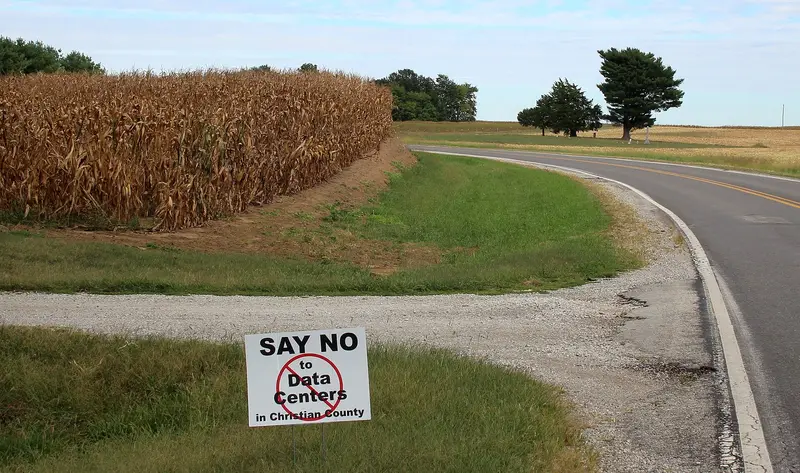
Lee Ziesche organizes with the Democratic Socialists of America in Tucson and the No Desert Data Center Coalition, which is confronting Project Blue, a massive data center in the Tucson area of Arizona. The campaign won a victory when Amazon recently withdrew from the project, although the developers are trying again to move it forward.
In their initial advice, the three organizers emphasize the speed and secrecy with which these projects move. Pearson advises mobilizing the community as quickly as possible and informing as many people as possible. Boehlke suggests starting by attending public meetings, requesting public records, speaking individually with council members and creating Facebook groups with volunteers. Ziesche recommends talking to literally everyone you know, finding local experts on water and energy, and identifying the sources of power that can say “no.”
The organizers made extensive use of social media to spread information. The Wisconsin group's page became a public group and gained 4,400 followers, with hashtags and QR codes helping messages go viral. Pearson handed out leaflets, knocked on doors and spoke with people in supermarket parking lots, highlighting the power of personal contact. In Tucson, Ziesche made short videos to counter propaganda, attended festivals and, when she realized that the large “public meetings” were propaganda sessions, organized her own events to expose misinformation.
Building alliances drew on existing networks and skills. In Wisconsin, a survey of volunteers identified experts within and outside the community and led to a statewide coalition of groups opposing data centers. In Memphis, Pearson's group has worked with environmental justice organizations since 2020 and emphasizes the importance of mapping power and setting rules for working together to avoid patriarchal dynamics. In Tucson, water quickly brought people together in a desert, while recognizing that the data center is linked to surveillance networks targeting immigrant communities and to energy poverty broadened the base.
Among the biggest challenges, Ziesche cites the fact that her group operates almost entirely through volunteers and struggles to sustain the fight over the long term. Her group's expertise is also often taken less seriously by elected officials, who see companies and private utilities as the real experts. Pearson warns that the other side runs expensive misinformation campaigns to convince people that the data center is inevitable, while keeping negotiations secret—in Memphis, it took a resolution to hold the first public hearing on an air pollution permit.
A key lesson is to get ahead of developments by closely monitoring planning boards. Ziesche also stresses that the message should be simplified into three or four main points so people are not overwhelmed, and that organizers should not be afraid to put elected officials on the spot. At meetings with around 900 people in Tucson, many stood up and shouted when they felt they were being lied to, which she considers useful. Posters by local artists helped make the resistance part of local culture.
Despite the imbalance of power, the organizers draw motivation from victories and solidarity. Boehlke describes how a small group of everyday people can win something that seems impossible, like a school of small fish coming together to become a bigger fish. For Ziesche, the struggle is about whether Tucson will remain livable and whether the community has a say in its future. Pearson points out that families in Memphis live 10 to 13 years less than those in neighboring areas and that children have higher rates of asthma; he sees the fight as a matter of life and death, but hopes that injustice cannot last forever.



Comments