Through its Prepare campaign, the British government is asking households to prepare for environmental emergencies: stockpile food, save water and wash their hands. But according to George Monbiot, this amounts to shifting state responsibilities onto citizens while government policy itself increases the risks. National resilience, he writes, may be lower than at any time since the second world war.
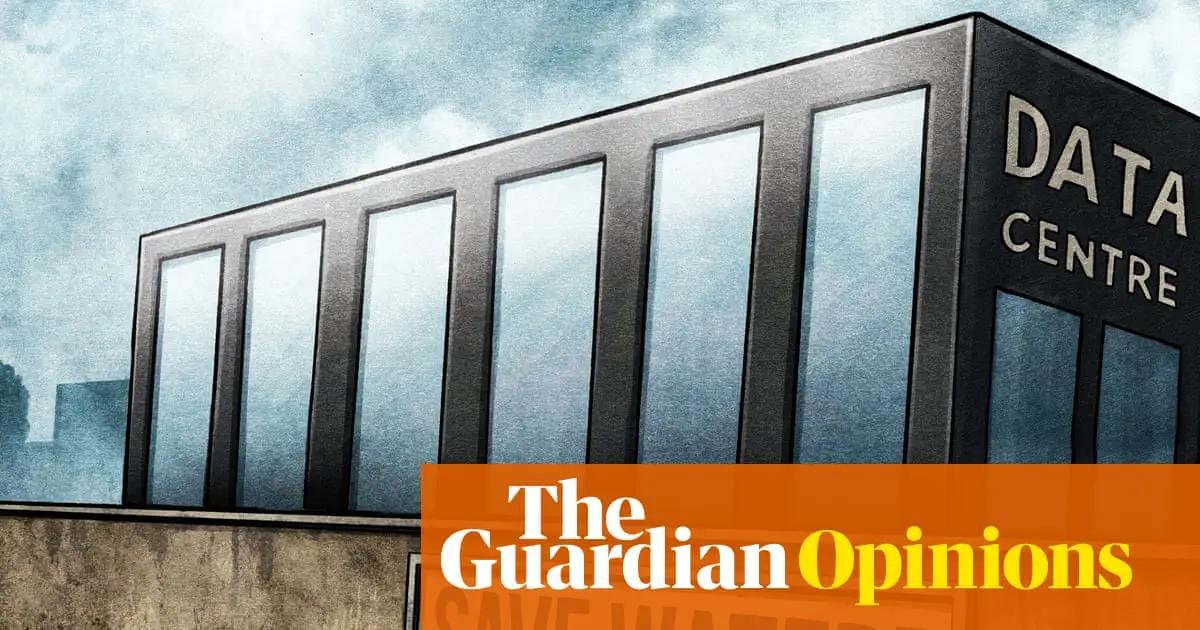
The advice is not unreasonable, but it cannot fill the gap. For drought, the campaign suggests turning off the tap while brushing our teeth or taking a shower instead of a bath. At the same time, however, the government is designating data centres as “nationally significant infrastructure projects” and pushing them through the planning system. Even Water UK, the body representing water companies, has warned that there is not enough water for the new data centres, while the government, as a response to a freedom of information request shows, does not even know what they are being used for.
The National Risk Register appears detached from reality. It puts the risk of a drought with a moderate impact over the next five years at just 0.2–1%, and the risk of a heatwave with a “significant” impact — meaning 200 to 1,000 deaths — at 1–5%. Yet the government estimates 2,877 excess deaths linked to heat in England in May and June alone, a figure similar to that of the 2022 heatwave.
The campaign urges people living in homes that overheat to contact their council or letting agency, but the “future homes standard” has been delayed until March 2028 and, according to professionals, has been weakened by lobbying from the construction industry.
For floods, citizens are asked to prepare an “emergency bag”, move valuables to a higher floor and make changes to their homes. Yet according to Aviva's figures, one in nine new homes is built in areas at risk of flooding, and a recent ruling by a higher court shows that the law prevents local authorities from blocking such developments even if they fail a crucial safety test.
The campaign advises washing hands with soap and water after feeding wild birds to limit the spread of bird flu. At the same time, however, the government is promoting a “poultry sector growth plan” that multiplies industrial chicken farms — the virus's “super-incubators”.
As the Scientific Task Force on Avian Influenza and Wild Birds points out, the highly pathogenic virus first emerged from poultry farms, while intensification and the spreading of manure create ideal conditions for new variants. Add to this the fact that the shooting industry continues to breed tens of millions of pheasants and partridges in similar conditions and release them into the countryside.
On air pollution, citizens are advised to reduce their exposure. But the government allows wood-burning stoves to be installed in new homes, is building major new roads whose usefulness Monbiot questions, and is considering a drastic delay in the transition to electric vehicles — again under pressure from lobby groups.
On food resilience, the Prepare campaign says almost nothing beyond storing “non-perishable food that does not need cooking”. Last week, anonymous senior food industry executives warned that, faced with “significant reductions in yields, quality and reliability of supply”, the sector is resorting to makeshift crisis management instead of a long-term strategy. They said companies are either lobbying against necessary regulations or staying silent, potentially leaving an existential threat unaddressed.
Monbiot welcomes part of Andy Burnham's speech at the Labour conference, particularly his identification of deregulation as one of the five great evils putting Britain on the wrong path — a break with 47 years of policy.
But Burnham, like Keir Starmer, is committed to following the fiscal rules, which, according to Monbiot, originated not with the government but with Westminster “thinktanks” and the media, and are unnecessary and self-defeating.
The threats to resilience are the same as the threats to democracy: five decades of lobbying have shaped policy, and however willing citizens are to do their duty, they cannot do the government's job.



Comments