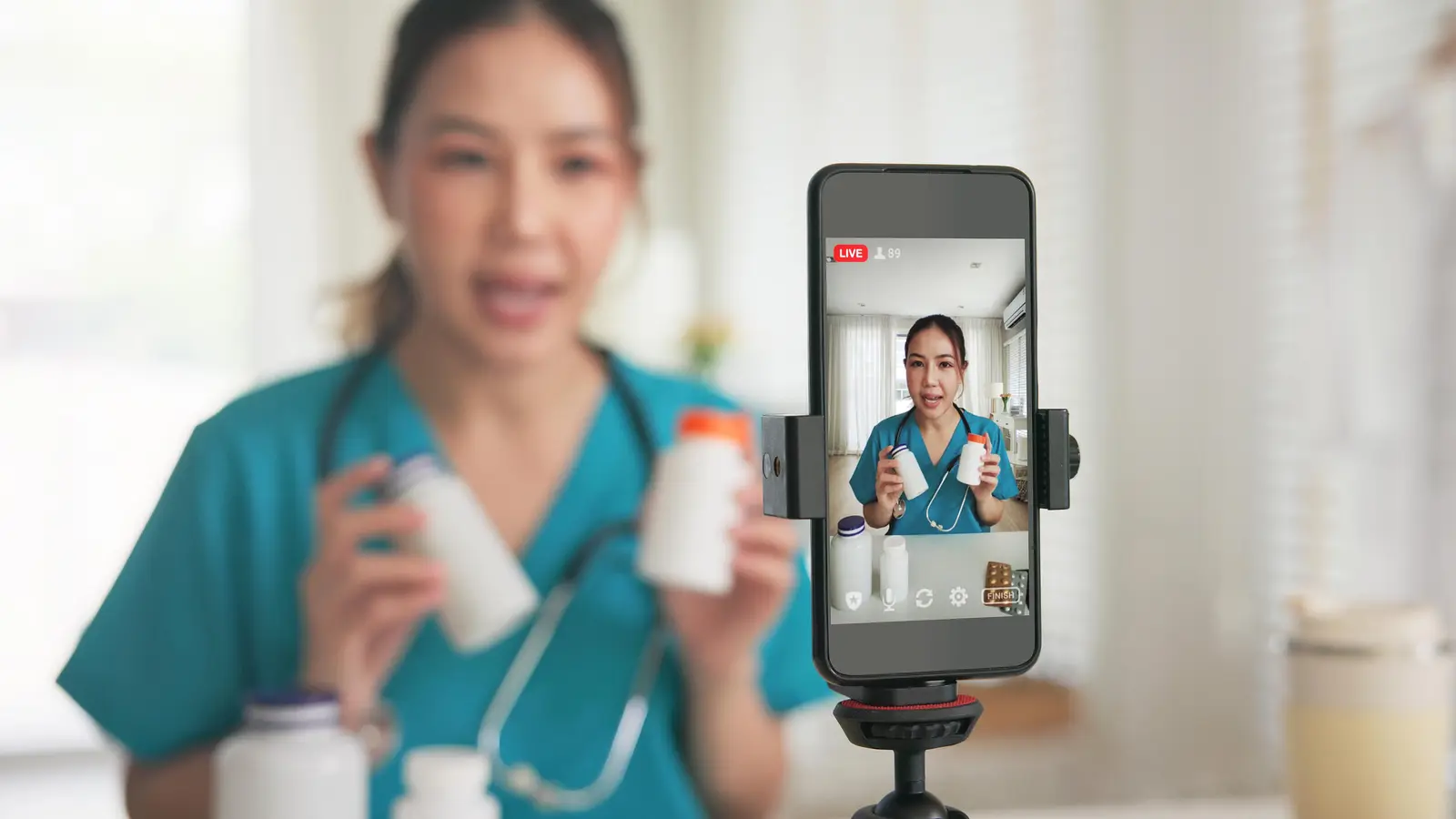
Young adults who follow doctors on TikTok consider them more accessible, credible and altruistic than their own doctor, even when the doctor influencers sell products. They have also not verified the influencers' medical credentials. These are the main findings of a new Virginia Commonwealth University study, co-authored by Suzanne Makarem and published in the Journal of Consumer Affairs.
Makarem, an associate professor of marketing at VCU's School of Business, explains that young consumers are generally familiar with influencers and commercial intent. But, she says, when a doctor is on TikTok, things change. “We're already conditioned to respond positively to credentialed experts. Now we see them as doctors with busy lives who already make a lot of money—they don't need to do this. They're taking the time to educate me,” she says.
The researchers call the phenomenon the “mere social media presence effect”: a doctor influencer's recommendation may carry more weight than what followers' own doctors tell them. “That should give us pause,” Makarem notes.
The team analyzed 330 TikTok videos, focusing on 11 licensed US physicians with a large reach and influence on the platform, known as “mega influencers.” They also interviewed 26 Gen Z participants who actively follow doctor influencers. Makarem points out that Gen Z, those born between 1997 and 2012, turn to social media for health information at significantly higher rates than previous generations, and that TikTok has become particularly influential for health information.
Doctor influencers resemble other influencers but lean more toward professionalism, the researchers report. They do not sing and dance like many others, but they share personal information and are likely to wear medical clothing even when they are not discussing medicine. For example, they may make a peanut butter and jelly sandwich in their kitchen while wearing a white coat.
That white coat and the other accessories have a powerful influence, Makarem says. When she asked participants whether they had checked that the doctors were actually doctors, the response was: “No, but I'm sure. They wear a stethoscope, there's a diploma on the wall, they wear scrubs. I don't think they'd lie about that.”
Followers also see doctor influencers practicing what they preach: they appear at the gym, use their own products and supplements, and show the books they have written. This is how the influencers make money. But young followers do not think about the financial gains; if they recognize the commercial intent, they say: “They have to do it. If they could do it for free, they would.”
Comments from other followers reinforce their influence: phrases such as “Thank you, this changed my life” indicate a positive impact. Overall, the researchers report that young people respect TikTok doctors and consider them capable, accessible experts. Compliance is very high: followers buy the products and follow the advice.
The contrast with their own doctors is striking. Participants said things such as: “My doctor doesn't care about preventive medicine. He wants me to keep seeing him because that's how he makes money. I have to pay a copay to see him, and then I get information I don't understand.”
The study highlights the need to educate consumers to check credentials and recognize commercial intent, regardless of who is selling. At the same time, Makarem notes that doctors who have avoided social media may need to reconsider. According to the Pew Research Center, only about 17% of health and wellness influencers are conventional healthcare professionals, such as doctors, dentists and nurses. Credentialed professionals may be a minority because of concerns about legal liability, but, as Makarem says, there is room for them: “I understand why doctors hesitate, but it's a way for them to be effective. Social media is a very effective platform.”


Comments