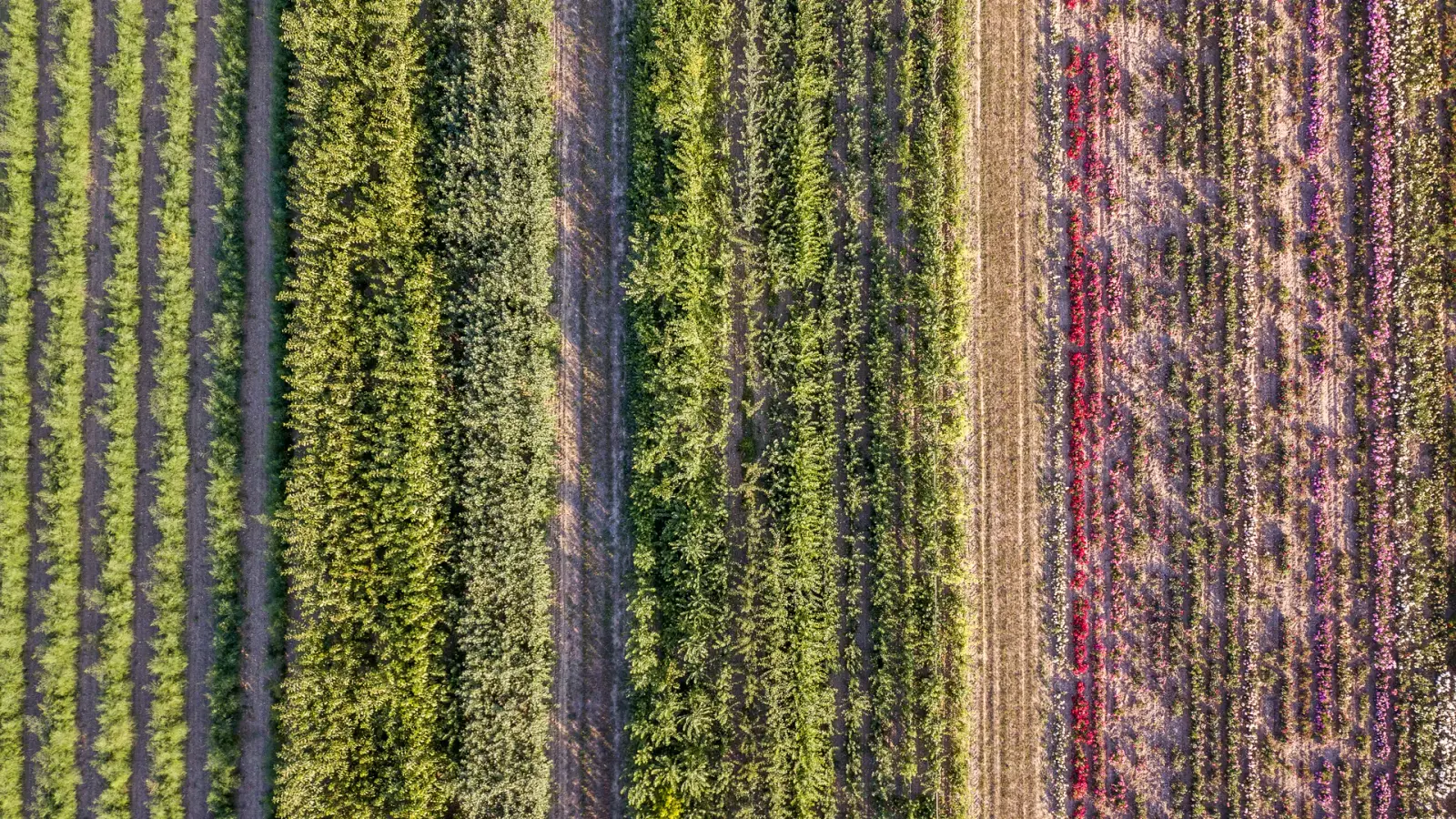
A new review in Frontiers in Sustainable Food Systems examines whether agroecology can offer a path to the sustainable transformation of agrifood systems in West Africa. The authors, from the National Agricultural University in Kétou, Benin, analyzed 484 publications from the past 25 years, drawing on databases such as Scopus, PubMed and Google Scholar, as well as gray literature. Around half were published in the past five years, a sign that the field is maturing but remains young.
Agroecology is described as a science, a set of practices and a social movement. Since Basil Bensin first used the term in 1928, the concept has moved from the analysis of farm plots to a system-wide “ecology of food systems.” Today it is based on the FAO's ten elements from 2018 and the HLPE's thirteen principles, which combine ecological, economic, political and social dimensions.
This process in West Africa did not begin recently. Farmers' movements such as Enda Pronat in Senegal and OBEPAB in Benin have promoted practices without synthetic inputs for decades, while the Nyéléni forum in 2007 brought together more than 500 organizations. In 2018, ROPPA and IPES-Food established the Alliance for Agroecology in West Africa (3AO), and in 2017 the ECOWAS Agroecology Programme began. However, political commitment remains limited, with exceptions such as Senegal.
The most frequently documented practices include agroforestry, reducing external inputs, managing soil fertility and diversifying through intercropping and crop rotation. The traditional zaï technique, which uses planting pits and organic matter, increased maize, sorghum and millet yields by up to 35% over ten years in Burkina Faso. Similarly, semicircular structures and stone bunds improved water retention, while in Ghana stone bunds increased sorghum yields by more than 35%.
Combinations of legumes and cereals increased yields. In Ghana and Nigeria, intercropping maize with pulses increased production, while agroforestry in Benin improved net profit margins. The researchers also report benefits for food autonomy and dietary diversity.
The review does not hide the limitations, however. Although conventionally grown crops often produce higher yields, the gap narrows as agroecological practices are adopted. The evidence for West Africa is unevenly distributed: most studies cover a few countries and mainly crop production, while fisheries, livestock farming and processing remain underrepresented. The authors stress that more locally driven, multidimensional research is needed to determine whether agroecology can feed sub-Saharan Africa's population, which will exceed 1.5 billion by 2030.
The barriers fall into three categories. At the institutional level, policy support and investment in agroecology remain limited. At the socioeconomic level, rural poverty and limited access to inputs and markets discourage producers. At the technical level, training and agricultural extension services are inadequate.
There are also ways to drive change. Strengthening public policies, as Senegal has begun to do, can provide momentum. Training and locally adapted extension services can help spread knowledge, while short supply chains connect producers and consumers.
The review's conclusion is cautiously optimistic: agroecological practices have real potential to support resilience, food security, biodiversity and climate change mitigation, but the scale and duration of the benefits depend on the context. Without adequate policy support, training and access to inputs and markets, scaling up faces difficulties. The researchers call for studies of the conditions for success and socioeconomic viability.



Comments