Panagiotis Manikis is an agronomist, farmer and thinker who became involved in natural farming through a personal health ordeal. According to his own account, he became seriously ill at around 18, and doctors told him he would not live for many years. Medication brought no improvement; instead, he felt that the drugs themselves were putting him at risk. He then decided to change his diet radically, shifting mainly towards a healthier, vegetarian diet, and, according to his own testimony, his health improved significantly.
This experience led him to question conventional medicine and, because he was studying agronomy, to wonder whether something similar applied to plants, soil and the land. While looking for people who had considered health to be the natural state of humans, animals and plants, he came across The One-Straw Revolution by Japanese plant pathologist Masanobu Fukuoka. He says he immediately realised this was what he had been looking for, and in 1980 he travelled to Japan to study under the originator of natural farming.
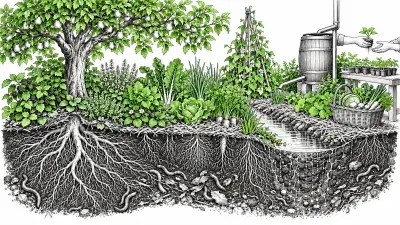
After Japan, Manikis worked on natural farms in Brazil and India before returning to Greece and acquiring a small farm in the Edessa area in 1988 or 1989. He started with around 15 stremmas and says the farm has now grown to 35 stremmas, with 120 varieties of fruit trees growing alongside forest trees, vegetables, grains and green manure plants. He describes this as a three-dimensional use of the farm.
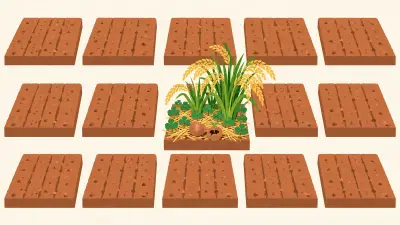
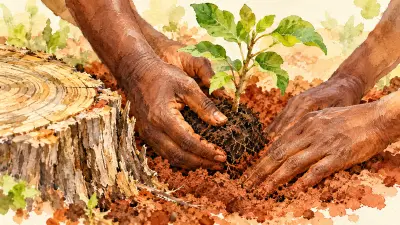
The natural farming method, as Manikis presents it, rejects fertilisers, pesticides, weed control, weeding and ploughing with machinery. There is also a fifth principle: fruit trees are not pruned. In practice, during the rainy season, a large mixture of seeds—from common trees, fruit trees and vegetables—is coated in clay soil to protect it from birds and rodents, then scattered on the ground. According to this approach, nature then decides where each plant will grow, without any need for human knowledge or technology.
He insists that natural farming is not simply an agricultural technique but a spiritual path that seeks to unite science, religion and philosophy—and ultimately God, humanity and nature. He believes that to understand natural farming, people must also be “natural people”, eating naturally and living in a way consistent with this philosophy.
Manikis is strongly critical of conventional agronomy. He argues that chemical farming has failed on all three fronts: it has worsened hunger rather than solving it, poisoned water, air and land, and left farmers sinking financially while the farming population shrinks. As an example, he says that around 100 million stremmas of land are destroyed every year by high salinity caused by excessive irrigation and fertilisation.
He also believes that even organic farming follows the same logic of intervention, since it merely replaces chemicals with organic fertilisers and pesticides.
He expresses even greater concern about genetically modified organisms. He believes GMOs could pose a greater threat than conventional chemical agriculture, as farmers will become completely dependent on the companies supplying genetically modified seeds, fertilisers and the corresponding pesticides. Regarding intervention at the genetic level, he points out that every action causes a reaction and that altering the genome could create unpredictable new diseases.
His criticism extends to medicine. He argues that medicine should aim for fewer hospitals, fewer drugs and fewer illnesses, and that health is not simply the absence of disease but includes qualities such as joy, resilience in adversity and perseverance. He believes modern medicine suppresses symptoms instead of helping the body heal itself, and that science has become detached from philosophy and life, creating problems such as pollution, floods, the ozone hole and the greenhouse effect. He also invokes Einstein's statement that the mind that creates a problem cannot solve it.
Despite his criticism, Manikis does not stop at theory. He believes that creating a small “paradise” in Edessa is not enough and that seeds must also be sown in human hearts. He promotes self-sufficiency, vegetable gardens and the use of abandoned fields, with a vision of making the mountains green and turning Greece into “one vast garden”. On visits such as his trip to Chios, working with groups that preserve traditional seed varieties, he presents natural farming as a way out of the crisis, even if only a few people ultimately take it up.
Panagiotis Manikis's journey is interesting as a real, functioning example of farming with minimal intervention and as a vision of self-sufficiency within the planet's limits. However, his claims about his recovery remain personal testimony and do not constitute medical advice. The same applies to his generalisations against conventional science: the value of his proposal lies mainly in its farming practices, its call for humility towards nature and its search for a better future.

Comments